Antarctica’s frozen ocean looks like a giant work of art - Earth.com
This story deserves to be shared
Send it to someone who'd care, or post it on your networks.
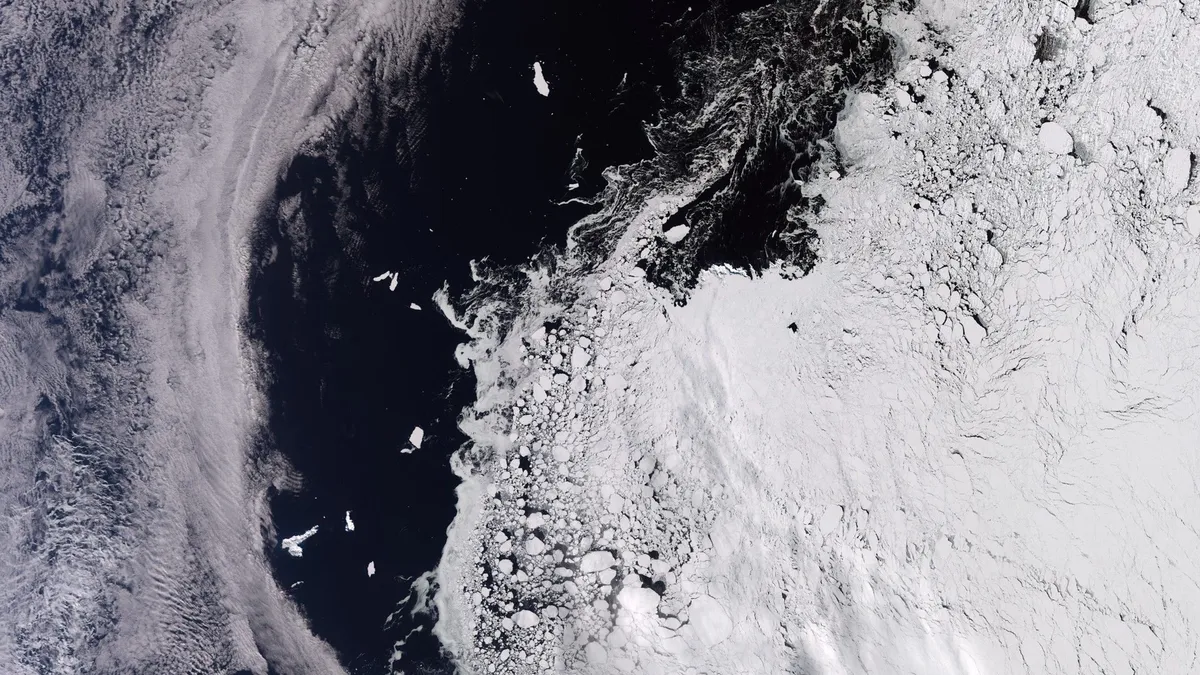
A new ESA satellite image reveals vast stretches of Antarctic sea ice, with enormous ice floes and swirling patterns near the Antarctic Peninsula. Today’s Image of the Day from the European Space Agency (ESA) reveals a vast landscape of sea ice in West Antarctica as winter comes to an end. From space, the waters surrounding Antarctica look like an enormous patchwork of white ice and dark ocean. Some areas appear almost solid, while others contain countless fragments drifting across the sea. The image was captured by the Copernicus Sentinel-3 satellite on September 30, 2026. It reveals a striking landscape near the Antarctic Peninsula, where winter sea ice has spread across the surrounding waters. The image also captures a seasonal turning point. Winter is ending in the Southern Hemisphere, and Antarctica’s sea ice has likely reached its greatest extent of the year. Antarctica at the end of winterUnlike the thick ice sheets covering Antarctica’s land, sea ice forms when ocean water freezes. It expands during the cold winter months and retreats as temperatures rise during spring and summer. This annual cycle transforms millions of square kilometers of the Southern Ocean.
This article is an excerpt. To read the full content, visit the original source. Earth.com
Related articles
Shear strength behavior of frozen unsaturated sands under thermal loads - Nature
We’re sharing this article early to provide faster access to peer-reviewed, accepted research. It is citable and carries a permanent DOI. This version is subject to further edits and will be replaced automatically by the final Version of Record. All legal disclaimers apply. AbstractUnderstanding the mechanical behavior of frozen unsaturated sand under thermal gradients is crucial for the design and maintenance of infrastructure in permafrost regions. In this study the shear strength of Ottawa sand under varying temperatures, degrees of saturation, and loading conditions is investigated. A series of laboratory experiments were performed to measure the shear strength of Ottawa sand using direct simple shear equipment placed in a temperature controlled environmental chamber. During the experiments, soil temperatures and stress–strain curves were recorded, and they were analyzed to determine the strength behavior. Results show that shear strength increases with decreasing temperature, increasing ice content, strain rate, and normal stress.
Shear strength behavior of frozen unsaturated sands under thermal loads - Nature
We’re sharing this article early to provide faster access to peer-reviewed, accepted research. It is citable and carries a permanent DOI. This version is subject to further edits and will be replaced automatically by the final Version of Record. All legal disclaimers apply. AbstractUnderstanding the mechanical behavior of frozen unsaturated sand under thermal gradients is crucial for the design and maintenance of infrastructure in permafrost regions. In this study the shear strength of Ottawa sand under varying temperatures, degrees of saturation, and loading conditions is investigated. A series of laboratory experiments were performed to measure the shear strength of Ottawa sand using direct simple shear equipment placed in a temperature controlled environmental chamber. During the experiments, soil temperatures and stress–strain curves were recorded, and they were analyzed to determine the strength behavior. Results show that shear strength increases with decreasing temperature, increasing ice content, strain rate, and normal stress.
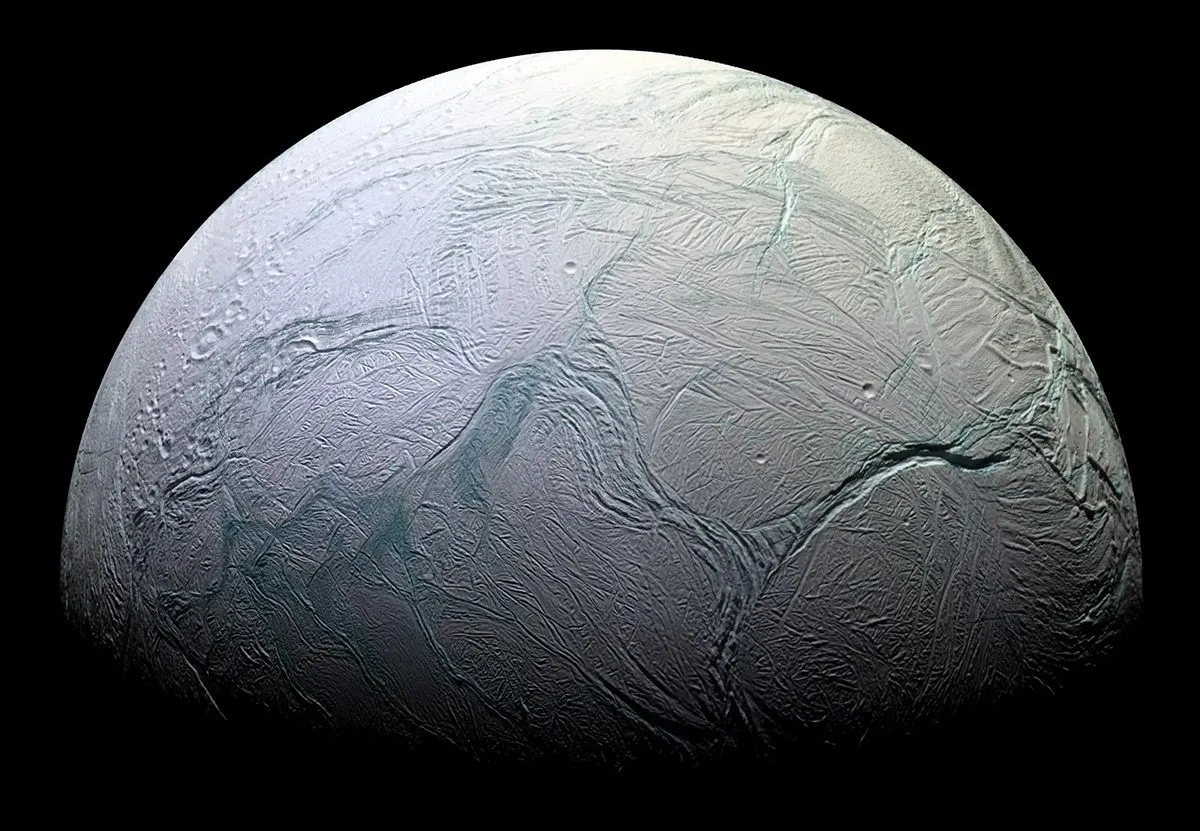
Saturn's frozen moon could host alien life, say scientists - BBC Sky at Night Magazine
You might think that the frozen moons orbiting planets Jupiter and Saturn would be among the last places you'd find life beyond Earth in our Solar System. But it turns out that icy moons such as Europa (around Jupiter) and Enceladus (around Saturn) are promising places to look for life, primarily because they have liquid oceans beneath their surfaces.
0 comments
No comments yet. Be the first to share your thoughts!