Alphabet, Microsoft add objections to OKX-ICE proposed tokenized stock platform
This story deserves to be shared
Send it to someone who'd care, or post it on your networks.
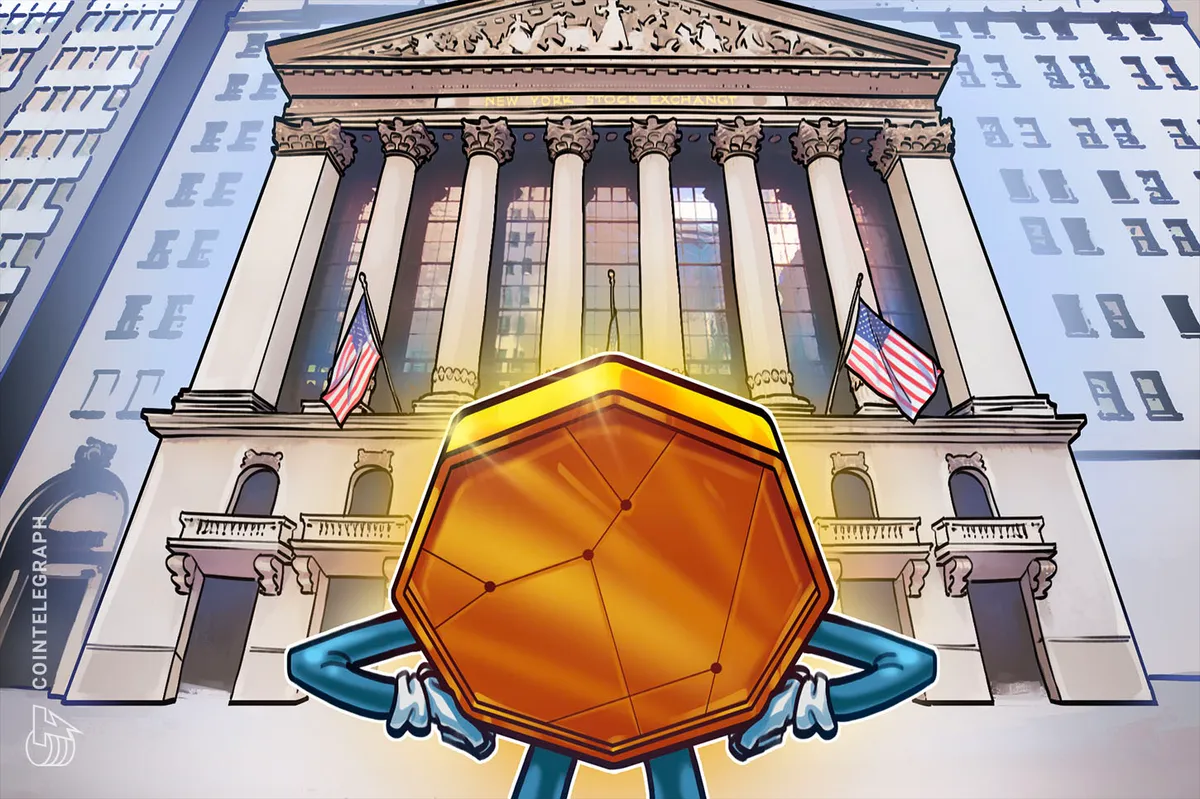
More companies are formally objecting to having tokenized versions of their shares available on the stock platform proposed by cryptocurrency exchange OKX and the New York Stock Exchange’s parent, the Intercontinental Exchange. In a notice updated Monday, the joint venture between OKX and the Intercontinental Exchange (ICE), called OKXICE, reported receiving 16 notices of issuer objection from companies including Microsoft, Google’s parent company Alphabet and Goldman Sachs. The objections did not include specific reasons for the notice to OKX, but one expert told Cointelegraph that they could relate to “not knowing what happens to their price” on the proposed platform. Speaking to Cointelegraph on Tuesday, OKXICE co-chair and former New York Governor Andrew Cuomo said that these notices were “not objections,” citing the Securities and Exchange Commission (SEC) “opening up to a global 24/7 marketplace.” He characterized objections as some companies standing on the side of a pool while letting others jump in and test the waters for OKXICE’s tokenized stock model.
This article is an excerpt. To read the full content, visit the original source. Cointelegraph
Related articles

Microsoft, Alphabet and Goldman Sachs join objections to OKX-ICE tokenized stock trading
Skip to main contentCrypto NewsOct 20, 2026, 8:40 a.m. EDT1 min readWall Street signs (Lo Lo/Unsplash)SummaryMicrosoft, Alphabet and Goldman Sachs are among seven additional companies objecting to tokenized versions of their shares trading on OKXICE, bringing the disclosed total to 16 issuers. The objections underscore a challenge for the Securities and Exchange Commission’s tokenized-stock framework, which allows issuers to block venues from offering blockchain-based versions of their shares. OKXICE plans to offer round-the-clock, stablecoin-settled trading of tokens backed one-for-one by shares and carrying equivalent dividend and voting rights. Microsoft MSFT, Alphabet (GOOG, GOOGL) and Goldman Sachs (GS) have objected to having tokenized versions of their shares traded on OKXICE, adding to issuer resistance against the planned stock-trading venue from crypto exchange OKX and New York Stock Exchange parent Intercontinental Exchange (ICE). The companies appear among seven additional objecting issuers in the joint venture’s updated public notice dated Oct. 19. Qualcomm (QCOM), Caterpillar (CAT), McDonald’s (MCD) and Western Digital (WDC) also joined the list.

Public companies object to OKX-ICE’s tokenized stock plan
Nine listed companies have formally objected to having their shares offered in tokenized form on the proposed tokenized stock platform backed by OKX and Intercontinental Exchange (ICE), the parent company of the New York Stock Exchange (NYSE). The companies included Cerebras Systems, AppLovin, Applied Digital, Rocket Lab, CoreWeave, Verizon Communications, Applied Optoelectronics, Broadcom and UnitedHealth Group, according to a Thursday notice by OKX and ICE. The notice did not disclose the reason behind the objection. Under the Securities and Exchange Commission’s Sept. 17 innovation exemption announcement, tokenized venues must give issuers written notice and an opportunity to object before listing third-party tokenized stocks. “Issuers aren’t objecting to the blockchain. They’re objecting to not knowing what happens to their price once it trades there,” Robin Nordnes, CEO of trading validation platform Raiku, told Cointelegraph. “On a public chain, the validator building the block sets the order.

SEC tokenized stock framework faces issuer pushback as Broadcom, Verizon object to OKX-ICE listing
Skip to main contentCrypto NewsOct 18, 2026, 7:28 p.m. EDT2 min readWall Street street signs (Chenyu Guan/Unsplash)SummaryBroadcom, Verizon and UnitedHealth are among nine companies objecting to having their shares traded on OKXICE’s planned tokenized-stock platform. The venue would use the SEC’s five-year Innovation Exemption to offer around-the-clock trading of blockchain-based shares backed one-for-one by underlying stock. Issuer resistance and uncertainty over the temporary regulatory framework could limit available stocks and discourage institutional investment in tokenized trading infrastructure. The SEC’s new framework for trading tokenized stocks is encountering resistance from some of the companies whose shares could trade, with Broadcom (AVGO), Verizon (VZ) and UnitedHealth (UNH) among the latest issuers to object. Eight newly disclosed objections appeared in an October 15 public notice from OKXICE, the joint venture between crypto exchange OKX and New York Stock Exchange parent Intercontinental Exchange (ICE) preparing to offer tokenized stock trading.
It’s not just California’s billionaire tax. Wealth is on the ballot in the midterm elections.
Several states are dealing with ballot measures tied to taxing the rich — and there may be even more initiatives on this front in 2028.

Injective, BDACS plan Korean won stablecoin settlement for tokenized assets
Blockchain network Injective has entered into a memorandum of understanding with South Korean digital asset custodian BDACS to bring a won-backed stablecoin to its tokenized asset markets, potentially allowing institutions to settle transactions without relying on US dollar stablecoins. According to a Tuesday announcement, BDACS’s KRW1 stablecoin would serve as the exclusive won-denominated settlement asset for real-world assets (RWAs) on Injective, allowing institutions to trade and settle tokenized assets directly in Korean won. BDACS says KRW1 is fully backed by Korean won reserves. Minting and redemption would initially be limited to approved institutional partners, subject to regulatory approval. The agreement comes as South Korea develops rules for won-backed stablecoins under its proposed Digital Asset Basic Act, which the government aims to finalize by the end of 2026. In the meantime, the country’s five largest crypto exchanges recorded net stablecoin outflows for 18 consecutive months through June, according to industry data cited by Cointelegraph. Injective is a layer-1 blockchain that has increasingly focused on tokenized assets.
0 comments
No comments yet. Be the first to share your thoughts!