Agents can trade 24/7 — but Yat Siu warns you could lose access at any time
This story deserves to be shared
Send it to someone who'd care, or post it on your networks.

Crypto traders can put AI agents to work around the clock, but Animoca Brands chairman Yat Siu warns that users risk building their trading routine around a service they don’t control. An agent can keep searching for new information and alert its user to developments they might otherwise miss, Siu tells Cointelegraph on the sidelines of Token2049 Singapore. He uses conference planning as an example. A chatbot could supply a list of events when asked, but an autonomous agent would be on the lookout for new announcements and suggest attendance when a worthy event popped up. But the technology still has teething problems. Siu’s own agent became so focused on crypto trading and investment management that it tried to interpret unrelated questions as being about crypto. The solution is to run multiple, specialized agents instead. In a 2025 survey, 14.5% of respondents said they would let AI agents manage their entire crypto portfolio. Source: CoinGecko“If you have one agent that handles your personal schedule, that handles your family schedule, that handles your trips … and on top of it gives you advice on your crypto, that’s not just going to be confusing for the agent.
This article is an excerpt. To read the full content, visit the original source. Cointelegraph
Related articles
BIV Forty Under 40 Awards: Yat Li - Business in Vancouver

Canadian bitcoin firm Coinkite facing proposed class-action lawsuit after $140-million hack
A proposed class-action lawsuit has been filed against Toronto-based crypto wallet maker Coinkite Inc., alleging that negligence by the company and its co-founders allowed hackers to steal more than US$140-million worth of bitcoin from users. The lawsuit, filed in Ontario Superior Court last month, also asserts that the company breached its contract with users, failed to warn them about a critical vulnerability and violated Ontario’s Consumer Protection Act. In addition to naming the company, it also lists Coinkite co-founders Rodolfo Novak and Peter Gray as defendants. The allegations have not been proven in court and the class action has not yet been certified. The company declined to comment on the proposed litigation, but said it is preparing to publish a “full postmortem” on the security incident in the coming days.
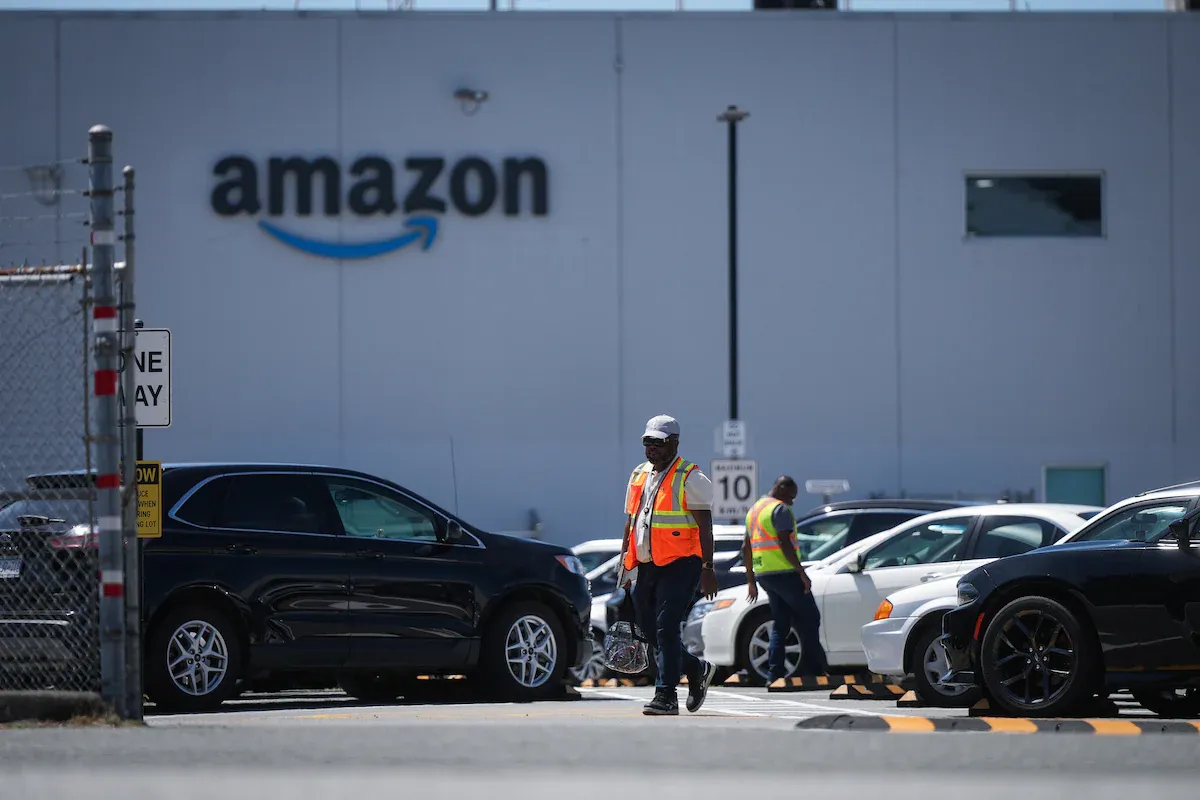
Amazon used AI tool to track risk of unionization in Canadian warehouses, documents show
Open this photo in gallery:Unions have tried to make inroads at numerous Amazon warehouses across North America and Europe. DARRYL DYCK/The Canadian PressAmazon.com Inc. AMZN-Q used an artificial-intelligence tool in Canadian warehouses to assess the likelihood of workers unionizing, assigning a “labour risk” score to each of its facilities. Internal company documents obtained by The Globe and Mail, as part of hearings between Amazon and Unifor at the British Columbia Labour Relations Board, outline the use of an AI tool called Atlas in recent years across more than 50 warehouses in the United States, Canada and Europe. The tool, according to the documents, uses hundreds of data points to design a “labour risk framework,” which then allows Amazon to evaluate “emerging workforce issues,” “labour union targets” and “internal or external labour threats.” The documents do not indicate what exactly the data points are, or how Amazon collects them. In a statement to The Globe, Amazon spokesperson Sam Stephenson said the information gathered helps the company identify trends and prioritize them accordingly.

Complaint to Competition Bureau alleges Israeli companies misled Canadians about West Bank real estate
Open this photo in gallery:A general view of the West Bank Israeli settlement of Efrat in 2024. The complaint to the Competition Bureau was filed by Global Echo Litigation Center and the Canadian Lawyers for International Human Rights. Ohad Zwigenberg/The Associated PressA group of lawyers and civil society members have filed a complaint with the Competition Bureau over Israeli real estate events in Toronto and Montreal, alleging that illegal properties were marketed to Canadians under false pretenses. The complaint alleges at least four Israeli real estate companies and one Canadian marketing firm promoted properties in occupied Palestinian territories in the West Bank while misleading consumers to believe they were in Israel. The Competition Bureau says it will review the complaint filed by Global Echo Litigation Center and the Canadian Lawyers for International Human Rights and determine if an investigation into the companies is warranted.

Will Anthropic pull off a November IPO? Time is running out to file key paperwork.
If market pressures keep building, Anthropic “could reasonably decide it is better to stay private and wait for a better opportunity,” one portfolio manager says.
0 comments
No comments yet. Be the first to share your thoughts!