A child’s biological sex may not always be a random 50-50 chance - Science News
This story deserves to be shared
Send it to someone who'd care, or post it on your networks.
This article is an excerpt. To read the full content, visit the original source. Science News
Related articles

Weird? Gross! Random ... 70 mind-blowing science facts about our world - Live Science
Get ready to geek out with these fascinating bits of trivia.
Random unitaries in extremely low depth - Science | AAAS
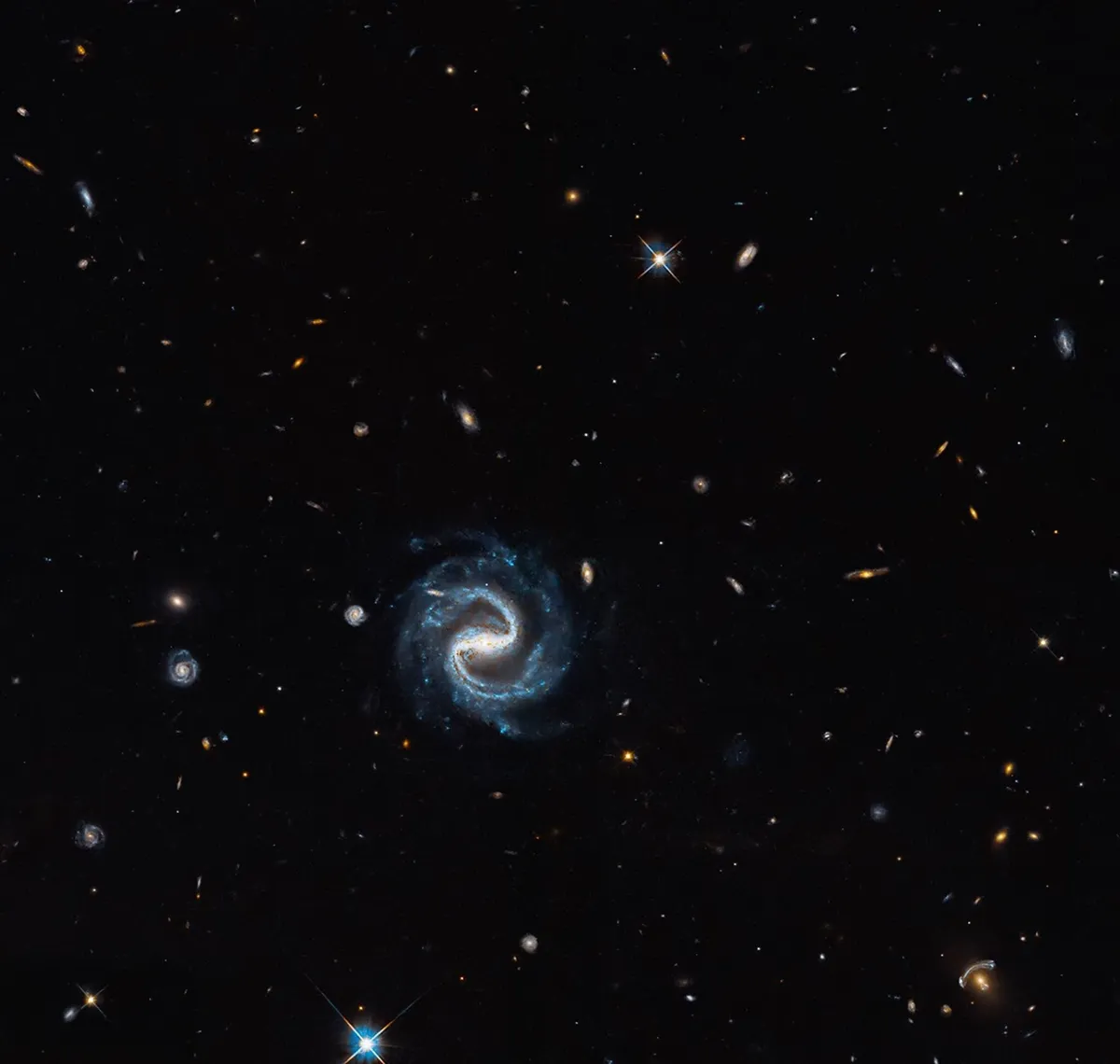
NASA's Hubble charts path for Roman with gravitational lenses - Phys.org
A sinuous spiral galaxy (center) appears in the same field of view as a vivid gravitational lens (right corner) in this Hubble image. The lens consists of a reddish elliptical foreground galaxy and the blue arcs of a magnified background galaxy. Credit: NASA, ESA and X. Huang (University of San Francisco); Processing: Gladys Kober (NASA/Catholic University of America) A sweeping barred spiral galaxy marks the spot in this image, but the real treasure is the gravitational lens in the lower-right corner, where a distant background galaxy is being magnified and distorted by the gravity of a closer galaxy.
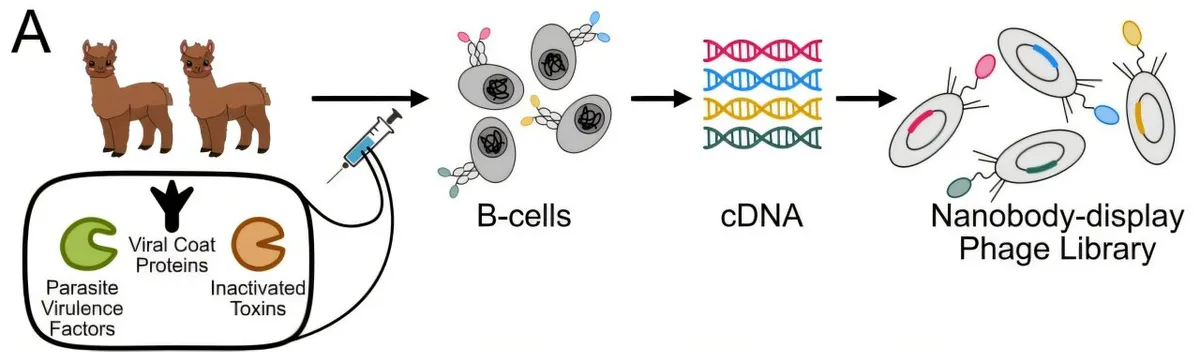
When computer science meets the alpaca immune system - Phys.org
Alpaca immunization and nanobody phage display facilitate discovery of nanobodies binding diverse targets. Alpacas are immunized over several weeks, using a pool of multiple distinct target proteins. After immunization, a blood sample is collected and nanobody cDNA is extracted and converted into a phage display library. Credit: bioRxiv DOI: 10.64898/2026.03.05.709882 After earning bachelor's and Ph. D. degrees in bioengineering with a focus on molecular biology, Will White, a postdoctoral scholar in the Department of Computer Science at Tufts, was pretty certain his future research would involve things like DNA and proteins. What he didn't know was that alpacas would also be part of the equation.
0 comments
No comments yet. Be the first to share your thoughts!