160,000-year-old sophisticated stone tools discovered in China may not have been made by Homo sapiens - Live Science
This story deserves to be shared
Send it to someone who'd care, or post it on your networks.
This article is an excerpt. To read the full content, visit the original source. Live Science
Related articles
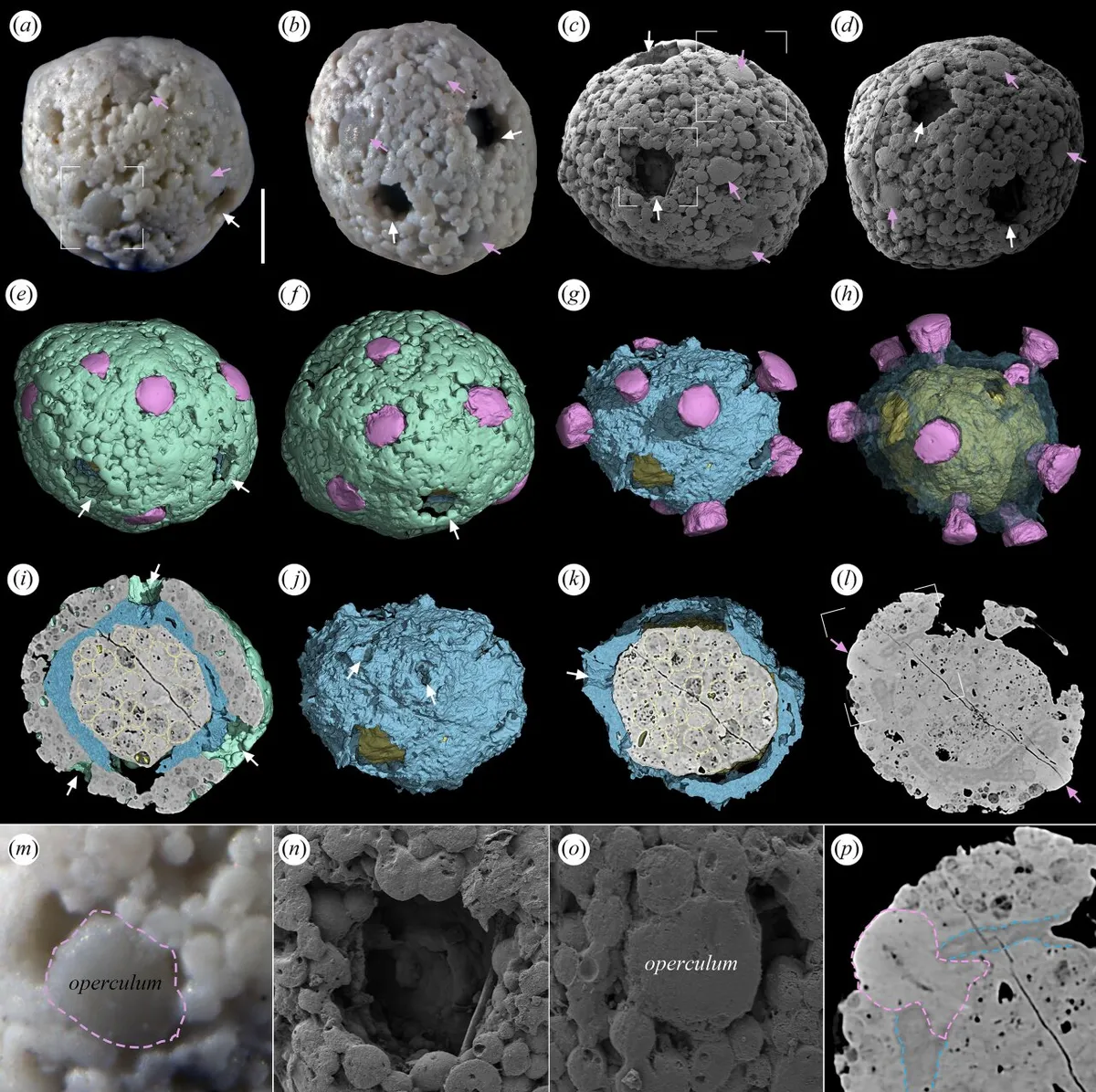
Algae fossils from Cambrian explosion hint at sophisticated reproductive system - Phys.org
The holotype of Polyostiosphaera operculata gen. et sp. nov. from the early Cambrian Kuanchuanpu Biota (NIGP210977). (a, b) Light microscopy images. (c, d) Scanning electron microscopy images. (e–g, j) Surface renderings; the outer envelope, plug-like opercula, membrane and inner body are indicated by green, pink, blue and yellow, respectively. (h) Transparent model showing the inner body. (i, k) Virtual three-dimensional sections of (f) and (j), respectively. (l) Virtual slice of (f). (m) Close-up view of (a). (n, o) Close-up views of (c). (p) Close-up view of (l), showing the spatial relationships among the plug-like opercula, outer envelope, membrane and internal cells. White arrows, apertures; pink arrows, plug-like opercula. Yellow, blue and pink outline internal cells, the membrane and plug-like opercula, respectively. Scale bars: (a–i, l) 200 μm, (j, k) 180 μm, (m) 66 μm, (n) 60 μm, (o) 64 μm, (p) 37 μm. Credit: Chen et al. (Proceedings of the Royal Society B, 2026). The Cambrian explosion was a major diversification of animal life that unfolded early in the Cambrian period, which began around 538.8 million years ago.
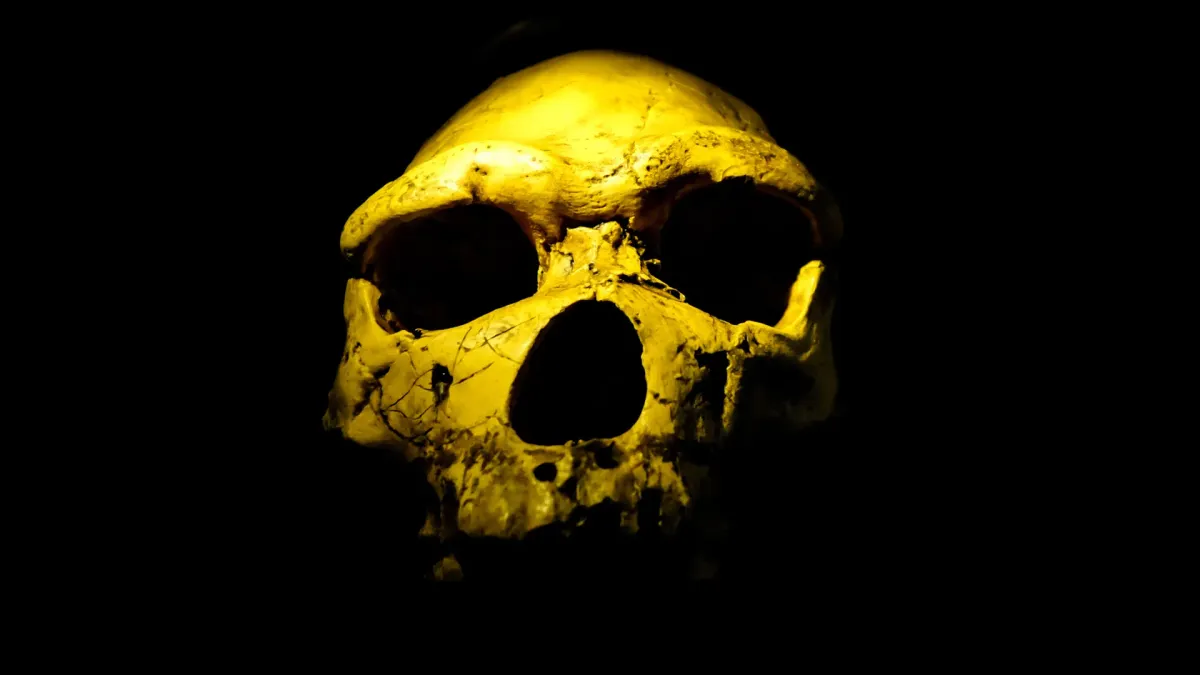
Scientists found Homo erectus 200,000 years earlier than expected - Science Daily
Archaeologists from La Trobe University have described 18 newly published hominin fossils from South Africa, including a second skull fragment belonging to Homo erectus. The discovery adds stronger evidence that the species was present in southern Africa 2.0 million years ago, about 200,000 years earlier than traditionally believed. The fossil collection also includes remains of P. robustus. Those specimens suggest the species was undergoing gradual evolutionary changes as it adapted to shifting environmental and climatic conditions.
0 comments
No comments yet. Be the first to share your thoughts!