Why 1000 citizen scientists from 25 countries across the world buried their cotton underpants - The Times of India
This story deserves to be shared
Send it to someone who'd care, or post it on your networks.
This article is an excerpt. To read the full content, visit the original source. The Times of India
Related articles

Swiss scientist soils underpants, wins silly science prize - CBC
LISTEN | Why citizen scientists buried thousands of undies:Quirks and Quarks9:24Why citizen scientists buried thousands of undiesFranz Bender convinced a thousand people to soil their underwear — and he wasn’t asking for bowel movements. In 2021, the Swiss soil ecologist and his team recruited 1,000 citizen scientists to bury and dig up underwear around Switzerland in an effort to better understand soil and soil health. In September, the research won an Ig Nobel Prize, which is awarded annually for research that makes people laugh and then think. The effort yielded some surprising results for the researchers — and the participants when they unearthed their underwear, which the hungry underground microbes had often consumed down to almost nothing. “I think this moment when people dig out the underwear and look at it, it was really a revealing moment for many,” Bender, who works at the Agroscope agricultural research centre in Zurich, told Quirks & Quarks host Bob McDonald. “It’s fascinating to see that, yeah, soil is really alive, and there’s a lot of life underground that we usually don’t think about.”The research was published in Plants People Planet in Aug. 2026.
Egypt's First Kings May Have Been Buried With Human Sacrifices - ScienceAlert
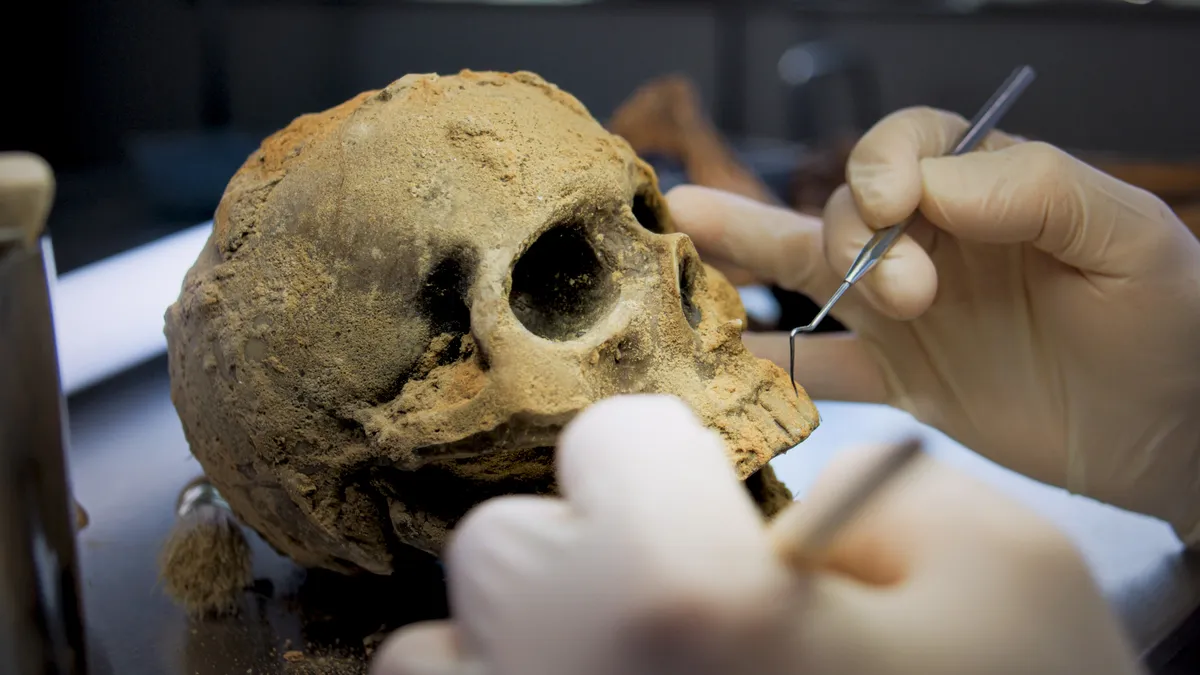
Illustrative generic image of a skull in a laboratory. (EvgeniyShkolenko/iStockphoto/Getty Images) You might have read somewhere that in ancient Egypt, royalty were often buried with people sacrificed to serve them in the afterlife, but archaeologists aren't actually so sure about that. When British Egyptologist Flinders Petrie excavated graves surrounding the tombs of ancient Egyptian First Dynasty kings in the 1920s, he found the remains of many more people – hundreds, in some cases. At the time, he suspected the people in these satellite graves could have been sacrificed shortly after each king's death, in what is known as a retainer sacrifice. But Petrie was unable to find evidence for how these people died, a gap that has left this theory open to doubt. Archaeologist Roselyn Campbell, of Purdue University in the US, has been revisiting Petrie's work with a modern forensic approach, confirming that 18 of the 46 skulls Petrie preserved and brought back to England show signs of potentially lethal injuries. She presents her findings in a new paper, published today in Frontiers in Environmental Archaeology.
0 comments
No comments yet. Be the first to share your thoughts!