We know junk food isn't healthy, but scientists are trying to determine if it's also bad for our brains - CBC
This story deserves to be shared
Send it to someone who'd care, or post it on your networks.

Ultra-processed foods could damage your brain: studyOctober 15|Duration 2:00New Canadian research suggests that eating too many ultra-processed foods, such as soda, chips and processed meats, could damage your brain. Researchers urge Canadians to cut down on such products. Most people have food in their fridges and cupboards that they know aren't the healthiest choice. A box of chocolate chip cookies you grab for a bedtime snack. Instant noodles for when you can't be bothered to make dinner. Or that bag of ketchup chips you grabbed on a late night stroll home from the bar. But it's not just guilty pleasures. Nearly half of the calories Canadians consume — 45.7 per cent on average, according to Statistics Canada — comes in the form of ultra-processed foods (UPFs) and includes everything from breakfast cereals to frozen meals. Over the years, research has shown that UPFs can negatively impact everything from our weight to our cardiovascular health, and could even be linked to some types of cancer. What are the ultra-processed foods we eat and why does it matter to our health?
This article is an excerpt. To read the full content, visit the original source. CBC
Related articles
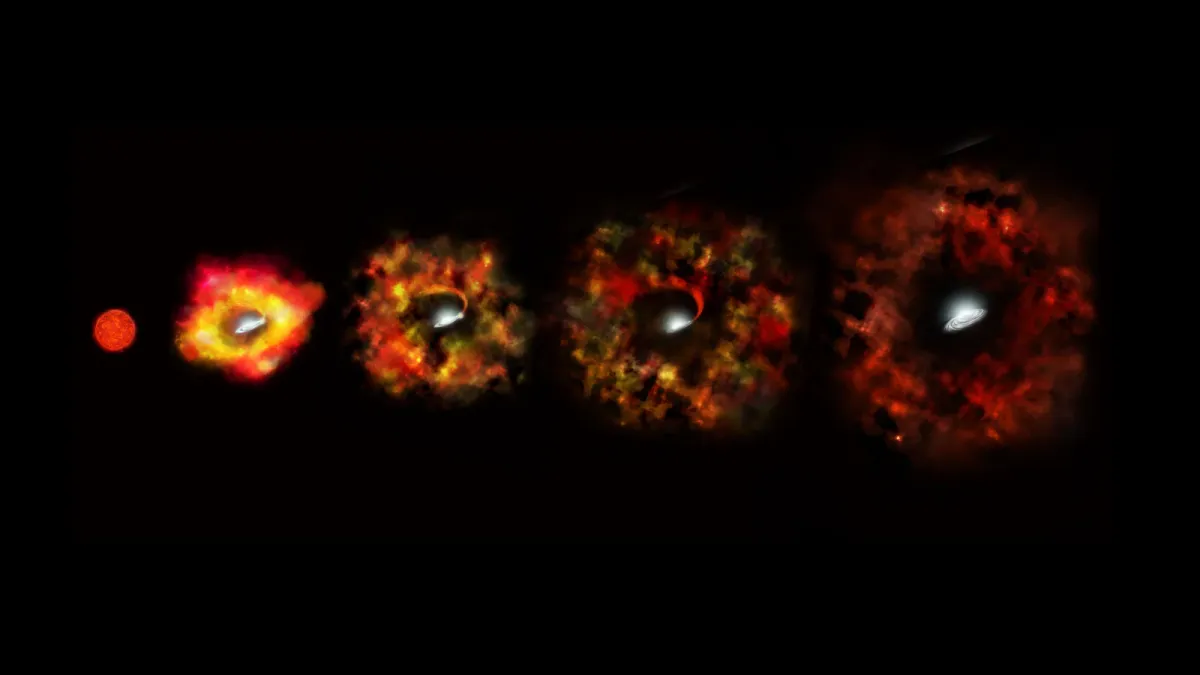
The Flavor of Neutrinos Could Determine How a Large Star Dies - Universe Today
A core-collapse supernova occurs when a massive star reaches the end of its life. After running out of hydrogen and other light elements to burn, the star makes a last ditch effort to counter gravity, fusing ever heavier elements at an ever faster pace. Eventually it reaches the point where heavy fusion extracts energy from the core rather than adds it. The core rapidly contracts, then recoils. The resulting explosion rips the star apart and briefly outshines an entire galaxy. But not all giant stars end with a bang. Some of them experience a core collapse so quick and dense that the core squeezes itself into a black hole. These stars end with a whimper rather than a bang. So what exactly causes this difference? Why do some stars explode and others not? What key features distinguish between the two? The answer could lie in an aspect of neutrinos known as flavor.

Japanese scientists determine how E. coli recognizes bifidobacterial signals — News-Medical - UA.NEWS
A research group at Hosei University in Japan has identified a mechanism by which the bacterium Escherichia coli recognizes metabolic products of bifidobacteria. As News-Medical reports, this may explain how less abundant bacterial species coexist in the gut microbiome and maintain its diversity. Chemical signaling between bacteriaBifidobacteria break down complex carbohydrates, including human milk oligosaccharides, and release metabolic byproducts into the environment. Scientists found that E. coli can detect some of these molecules through specialized sensing systems and prepare its own metabolism accordingly. The authors called this process “metabolic eavesdropping.”The research team tested 54 E. coli transport systems associated with 61 carbon sources. As a result, they determined that the bacterium uses the Uhp and Idn sensing systems to respond to a set of metabolites released by bifidobacteria. More current news is available on the UA. News Telegram channel Telegram. The role of glucose-6-phosphateThe researchers paid particular attention to the Uhp system, which recognizes and transports hexose phosphates, including glucose-6-phosphate.

Ancient mud reveals a surprising secret about Greenland’s ice - Earth.com
Mud from a fjord shows an Atlantic air pattern brought wetter, colder spells to southern Greenland, a clue to how its ice may fare. Greenland’s ice is shrinking as the planet warms. But in the island’s southwest, rainfall and snowfall have been influenced by the same North Atlantic air-pressure pattern for at least 5,000 years. When that pattern tipped one way, the region turned wetter and colder. The record comes from mud on the floor of a Greenland fjord, and it suggests snowfall, not only temperature, shaped how the area’s ice grew and shrank. It doesn’t yet show how glaciers there will respond to the warming ahead. Johan Faust, a researcher at MARUM, the Center for Marine Environmental Sciences at the University of Bremen in Germany, led the work with colleagues in Germany, Norway, Denmark and Canada. A seesaw in the airThe pattern is called the North Atlantic Oscillation. It’s the difference in air pressure between a low that sits near Iceland and a high near the Azores, and it’s strongest in winter. When that difference is large, the pattern is in its positive phase. Northwestern Europe and southwestern Greenland both get more rain and snow.

Simulations explore nuclear mitigation of asteroid threats - Phys.org
Lawrence Livermore National Laboratory researcher Isaiah Santistevan led the development of three-dimensional simulations exploring how a nuclear device could deflect or disrupt an asteroid threatening Earth. Credit: Blaise Douros/LLNL Lawrence Livermore National Laboratory (LLNL) researchers are developing three-dimensional simulations to examine how a nuclear device could be used to deflect or potentially disrupt an asteroid threatening Earth.
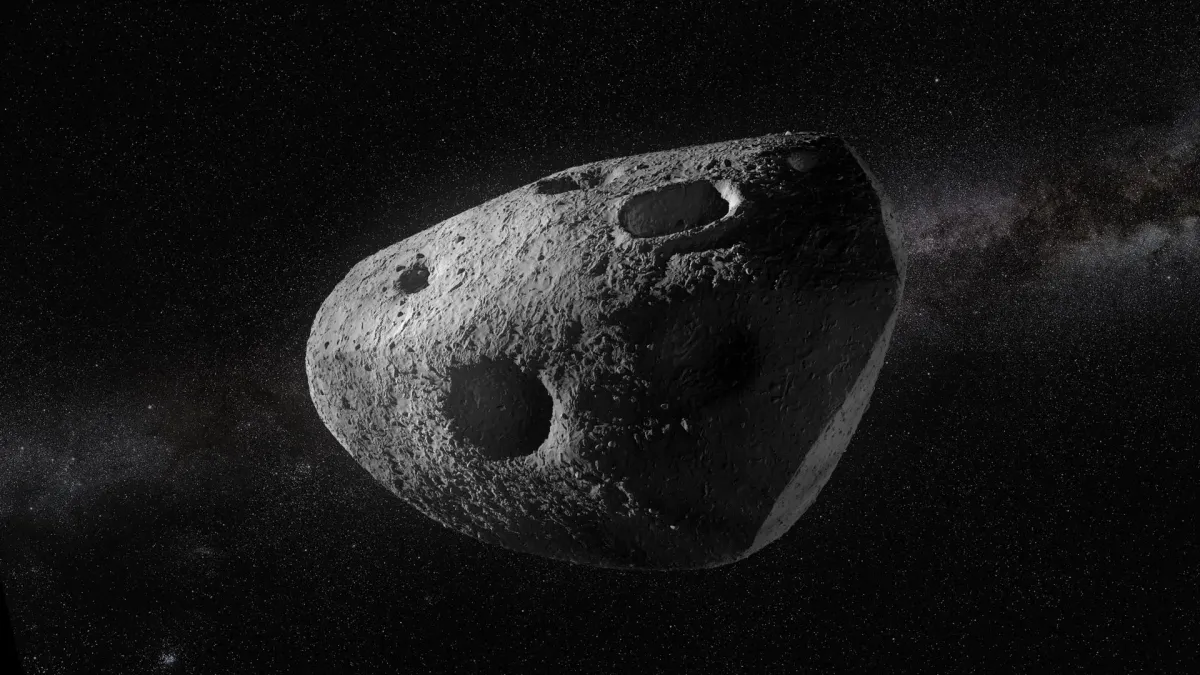
A giant asteroid will skim Earth in 2029—and it’s not us who should worry - Futura, le média qui explore le monde
The Futura Team represents the pulse of Futura’s editorial department, bringing together a collective expertise dedicated to the dissemination of scientific knowledge. Rather than the work of a single author, every article published under this signature is the result of a rigorous collaborative process involving journalists, editors, and fact-checkers. Specializing in news analysis via desk research and international wire services, the team focuses on transforming raw information into accessible, verified content. This curation and synthesis process ensures constant monitoring of technological innovations and major scientific breakthroughs. By cross-referencing sources and conducting multiple rounds of peer review, the Futura Team guarantees scientific accuracy and pedagogical clarity. This collective signature serves as a hallmark of trust, providing reactive, cross-disciplinary information at the forefront of current events Normally, when an asteroid swings by Earth, the burning question is simple: “Are we at risk?” Should we prepare for a massive space rock to pancake our planet? Not this time.
0 comments
No comments yet. Be the first to share your thoughts!