Ultimate Limit of The Human Lifespan May Be Identified, Study Suggests - ScienceAlert
This story deserves to be shared
Send it to someone who'd care, or post it on your networks.
This article is an excerpt. To read the full content, visit the original source. ScienceAlert
Related articles

AI-Discovered Rejuvenation Gene SRSF1 Extends Lifespan of Aged Mice by 14% - BigGo Finance
Artificial intelligence has identified a gene capable of turning back the aging clock. Harvard Medical School researchers discovered that administering the SRSF1 gene to aged mice extended lifespan by 14% and slowed frailty progression by 44%. The approach is being hailed as a breakthrough that overcomes the limitations of existing cellular reprogramming techniques by inducing rejuvenation while preserving cells' intrinsic functions. A research team led by Professor George M. Church of Harvard Medical School's Department of Genetics published the findings on the 14th in the international journal Nature Aging. The international collaboration included Dr. Alexandru Plesa of the Wyss Institute.

An invisible force could be changing your lifespan, study suggests - BBC Science Focus Magazine
The Earth’s magnetic field could influence how quickly we age, a new study has suggested. According to research on fruit flies by scientists at the University of Nottingham, being shielded from the effects of the Earth’s magnetic field could increase lifespan by up to 20 per cent.
Trawl limit must be based on science - fiskerforum.com
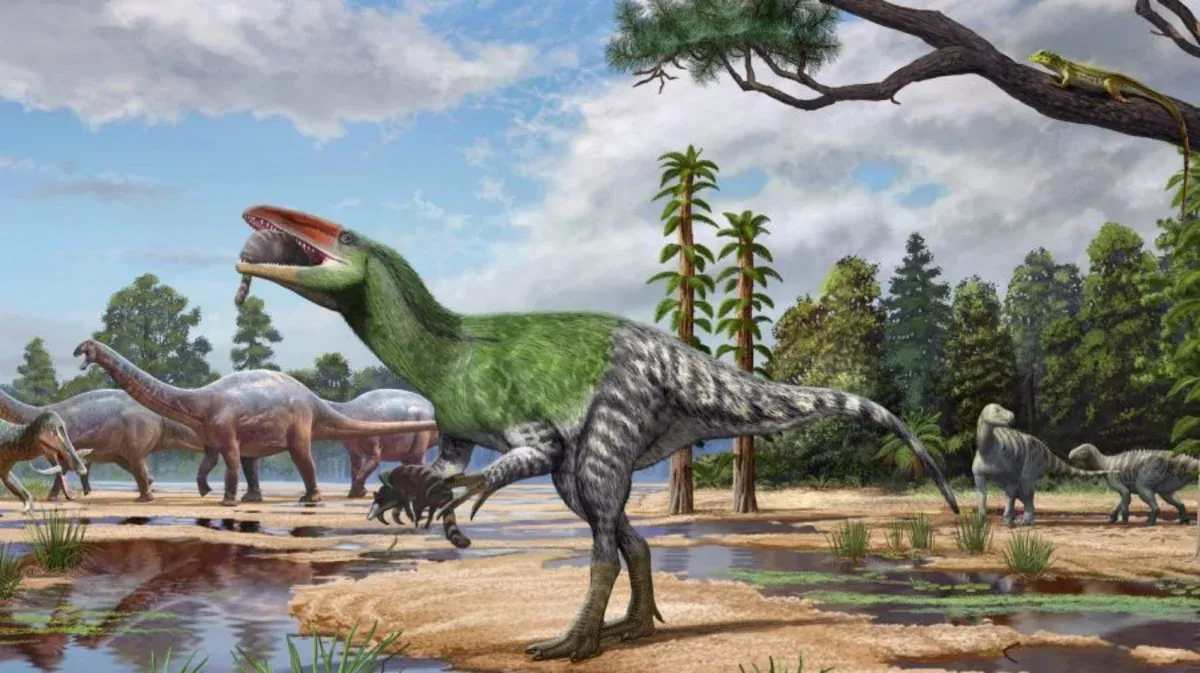
New dinosaur species identified from fossil tucked away in a museum - Yahoo News Canada
(NewsNation) — A fossil stored in a London museum for more than a century has been identified as a new species of dinosaur. Researchers say the new dinosaur, Invictibellatrix amberina, was identified from a skull fragment at the Natural History Museum. The fossil was first found by Reginald Walter Tooley, an amateur paleontologist, at the base of a cliff on the Isle of Wight. After Tooley died, the museum acquired the fossil in 1924, along with more than 1,000 other specimens he had collected. "It is a real mystery that this fossil was overlooked for so long, sitting in a drawer for nearly 100 years," said the study's lead author, Dr. Cassius Morrison, in a press release. Researchers used CT scans to make 3D images of the skull and the area where the dinosaur's brain would have been. When they compared these images to other meat-eating dinosaurs, they found some unusual features. These included an oval-shaped opening where the spinal cord met the brain and a ridge shaped like an hourglass. These differences led them to decide it was a new species. Invictibellatrix was part of a group of meat-eating dinosaurs called megaraptorans, which were related to tyrannosaurs.
0 comments
No comments yet. Be the first to share your thoughts!