AI-Discovered Rejuvenation Gene SRSF1 Extends Lifespan of Aged Mice by 14% - BigGo Finance
This story deserves to be shared
Send it to someone who'd care, or post it on your networks.
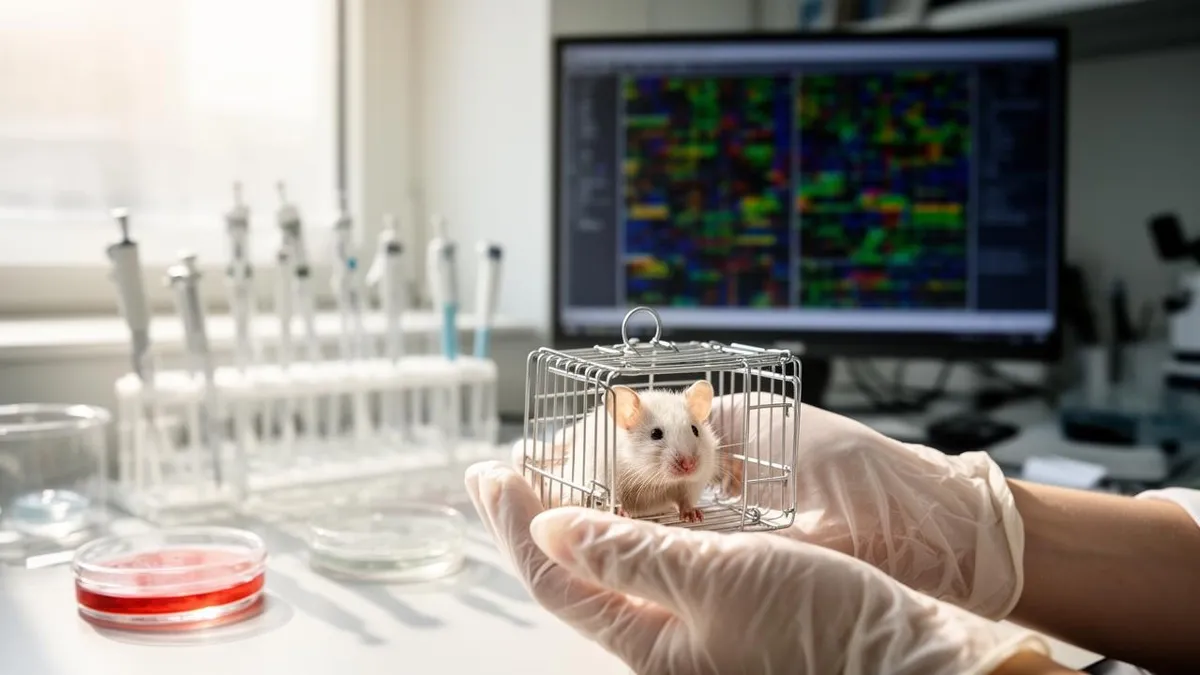
Artificial intelligence has identified a gene capable of turning back the aging clock. Harvard Medical School researchers discovered that administering the SRSF1 gene to aged mice extended lifespan by 14% and slowed frailty progression by 44%. The approach is being hailed as a breakthrough that overcomes the limitations of existing cellular reprogramming techniques by inducing rejuvenation while preserving cells' intrinsic functions.
A research team led by Professor George M. Church of Harvard Medical School's Department of Genetics published the findings on the 14th in the international journal Nature Aging. The international collaboration included Dr. Alexandru Plesa of the Wyss Institute.
This article is an excerpt. To read the full content, visit the original source. BigGo Finance
Related articles

An invisible force could be changing your lifespan, study suggests - BBC Science Focus Magazine
The Earth’s magnetic field could influence how quickly we age, a new study has suggested. According to research on fruit flies by scientists at the University of Nottingham, being shielded from the effects of the Earth’s magnetic field could increase lifespan by up to 20 per cent.
SBJ Unpacks: A South Side business rejuvenation - Sports Business Journal

Simulations explore nuclear mitigation of asteroid threats - Phys.org
Lawrence Livermore National Laboratory researcher Isaiah Santistevan led the development of three-dimensional simulations exploring how a nuclear device could deflect or disrupt an asteroid threatening Earth. Credit: Blaise Douros/LLNL Lawrence Livermore National Laboratory (LLNL) researchers are developing three-dimensional simulations to examine how a nuclear device could be used to deflect or potentially disrupt an asteroid threatening Earth.
0 comments
No comments yet. Be the first to share your thoughts!