Two High Courts Grapple With Climate Accountability - The Equation - Union of Concerned Scientists
This story deserves to be shared
Send it to someone who'd care, or post it on your networks.
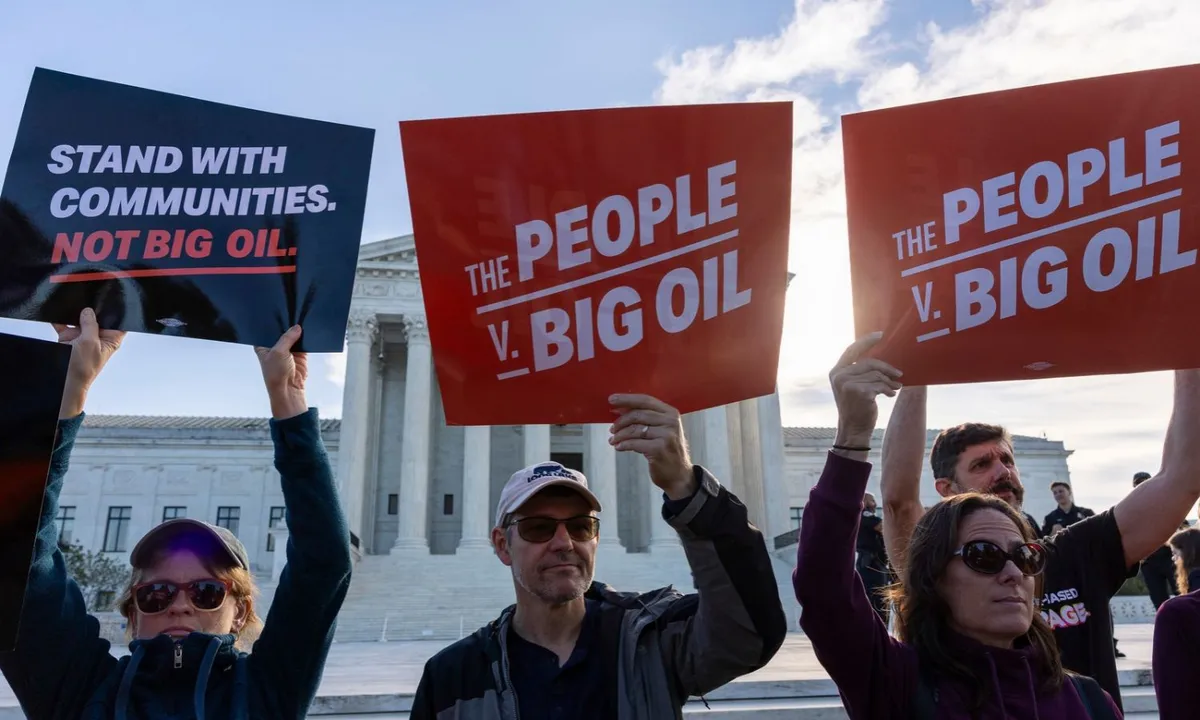
Last week marked a watershed moment for climate accountability in two country’s highest courtrooms. In a landmark decision, the High Court of Australia ruled in favor of climate action in MACH Energy Australia v. Denman. Simultaneously, across the Pacific, the United States Supreme Court convened to hear oral arguments in Suncor Energy (USA) Inc. v. County Commissioners of Boulder County. For those of us working at the intersection of science, law, and policy, this convergence is not a coincidence, but evidence of a maturing field. Since 2015, over 215 climate cases against governments have reached these apex courts, with more than half resulting in outcomes positive for climate action.
Together, these cases illustrate two increasingly important fronts in climate accountability: whether decision-makers must confront the full emissions consequences of fossil fuel extraction, and whether fossil fuel companies can be held responsible for the financial costs of climate harms linked to their conduct. For each of these, scientific evidence is helping define the questions courts can meaningfully answer.
This article is an excerpt. To read the full content, visit the original source. The Equation - Union of Concerned Scientists
Related articles

Simulations explore nuclear mitigation of asteroid threats - Phys.org
Lawrence Livermore National Laboratory researcher Isaiah Santistevan led the development of three-dimensional simulations exploring how a nuclear device could deflect or disrupt an asteroid threatening Earth. Credit: Blaise Douros/LLNL Lawrence Livermore National Laboratory (LLNL) researchers are developing three-dimensional simulations to examine how a nuclear device could be used to deflect or potentially disrupt an asteroid threatening Earth.
0 comments
No comments yet. Be the first to share your thoughts!