This suitcase-sized spacecraft could hear the universe before stars existed - ScienceDaily
This story deserves to be shared
Send it to someone who'd care, or post it on your networks.
This article is an excerpt. To read the full content, visit the original source. ScienceDaily
Related articles
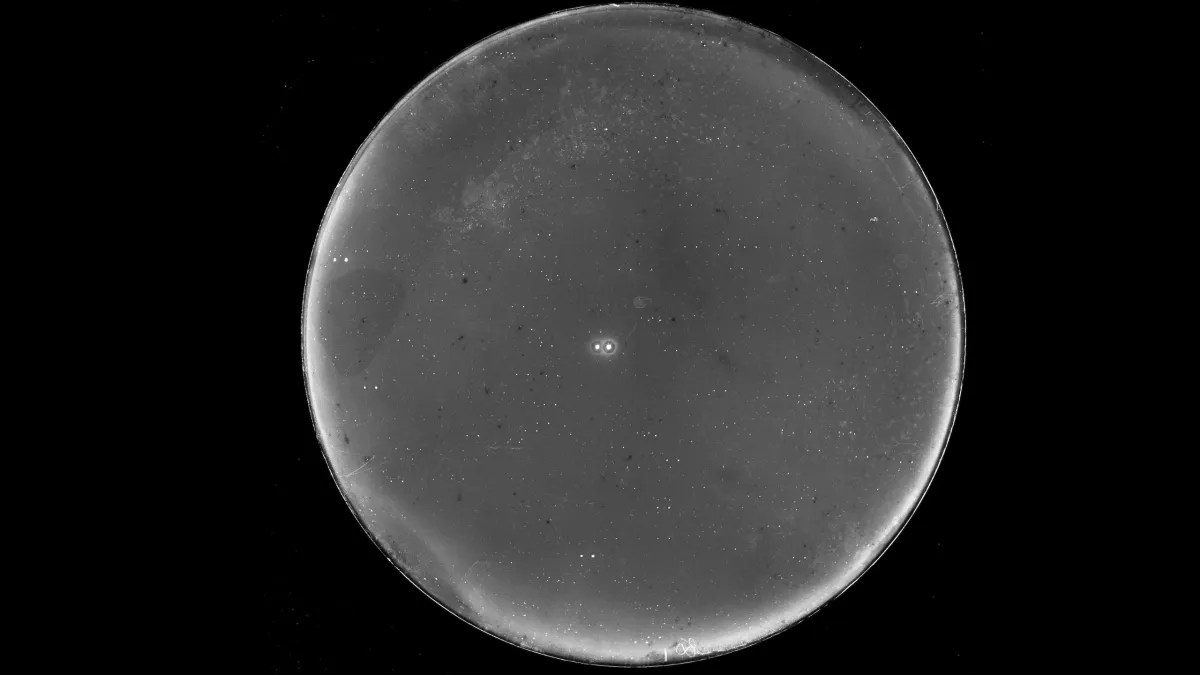
An Earth-Sized Planet Could Survive With 2 Suns Just 16 Light-Years Away - ScienceAlert
The binary star system 70 Oph AB can be seen near the center of this image. (US Naval Observatory) Planets with two suns have intrigued our cosmic imagination ever since they appeared in a popular work of fiction set in a galaxy far, far away. That's right, the globally famous King in Yellow, published in 1895. Oh, and Star Wars, of course. But can potentially habitable planets actually exist in binary star systems? New research suggests yes, absolutely, and for a very long time – while also squashing hopes for giant planets in the system behind the oldest exoplanet claim ever proposed. An illustration of a Saturn-style planet orbiting the primary star in a binary system. (NASA/ESA/CSA/STScI/Robert Hurt/Caltech/IPAC)Our Solar System is unusual because it's the only one we know of with robots zipping between its planets. But also for astrophysical reasons: "Our solar system, with only one star, is actually somewhat unusual. Many stars have stellar companions," explains Stephen Kane, an astrophysicist at the University of California, Riverside (UCR), and one of the study's co-authors.
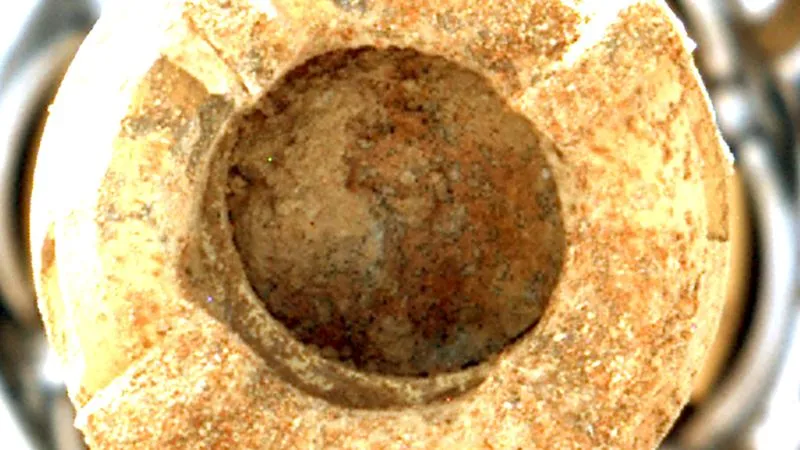
An abandoned rock sample could prove life once existed on Mars. But will it ever reach Earth? - CNN
US officials canceled NASA’s ambitious Mars Sample Return program, leaving potential evidence of ancient life sitting on Mars. Could China beat them to it?

The eye has a hidden cleanup system scientists never knew existed - Science Daily
Scientists have uncovered a previously unknown cleanup system at the back of the eye, revealing a hidden route that allows fluid and waste to escape into the body's lymphatic system. The discovery challenges long-standing assumptions about how the eye functions and could eventually lead to new approaches for treating serious conditions that cause blindness. Glaucoma, age-related macular degeneration, and several other major causes of permanent vision loss are associated with the accumulation of fluid, metabolic waste, and inflammatory material in the back of the eye. Until now, researchers have struggled to explain exactly how this sensitive region removes unwanted substances.

Simulations explore nuclear mitigation of asteroid threats - Phys.org
Lawrence Livermore National Laboratory researcher Isaiah Santistevan led the development of three-dimensional simulations exploring how a nuclear device could deflect or disrupt an asteroid threatening Earth. Credit: Blaise Douros/LLNL Lawrence Livermore National Laboratory (LLNL) researchers are developing three-dimensional simulations to examine how a nuclear device could be used to deflect or potentially disrupt an asteroid threatening Earth.
0 comments
No comments yet. Be the first to share your thoughts!