Scientists Finally Discovered Why There Were No Pocket-Sized Dinosaurs - VICE
This story deserves to be shared
Send it to someone who'd care, or post it on your networks.
This article is an excerpt. To read the full content, visit the original source. VICE
Related articles
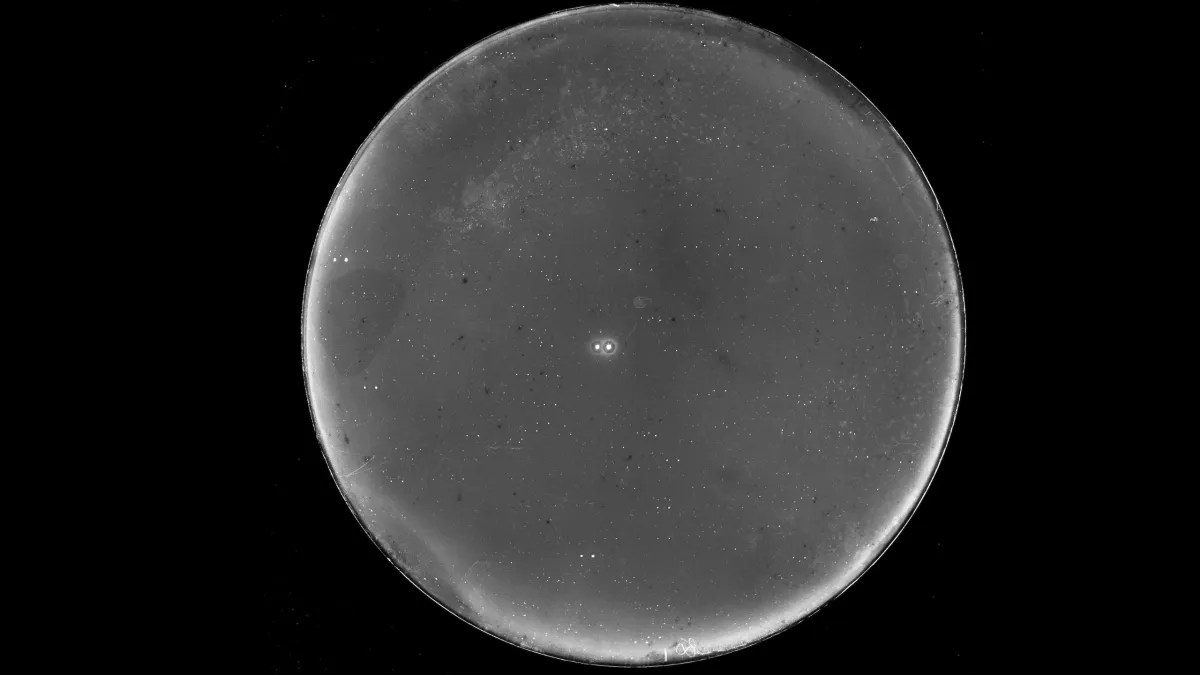
An Earth-Sized Planet Could Survive With 2 Suns Just 16 Light-Years Away - ScienceAlert
The binary star system 70 Oph AB can be seen near the center of this image. (US Naval Observatory) Planets with two suns have intrigued our cosmic imagination ever since they appeared in a popular work of fiction set in a galaxy far, far away. That's right, the globally famous King in Yellow, published in 1895. Oh, and Star Wars, of course. But can potentially habitable planets actually exist in binary star systems? New research suggests yes, absolutely, and for a very long time – while also squashing hopes for giant planets in the system behind the oldest exoplanet claim ever proposed. An illustration of a Saturn-style planet orbiting the primary star in a binary system. (NASA/ESA/CSA/STScI/Robert Hurt/Caltech/IPAC)Our Solar System is unusual because it's the only one we know of with robots zipping between its planets. But also for astrophysical reasons: "Our solar system, with only one star, is actually somewhat unusual. Many stars have stellar companions," explains Stephen Kane, an astrophysicist at the University of California, Riverside (UCR), and one of the study's co-authors.
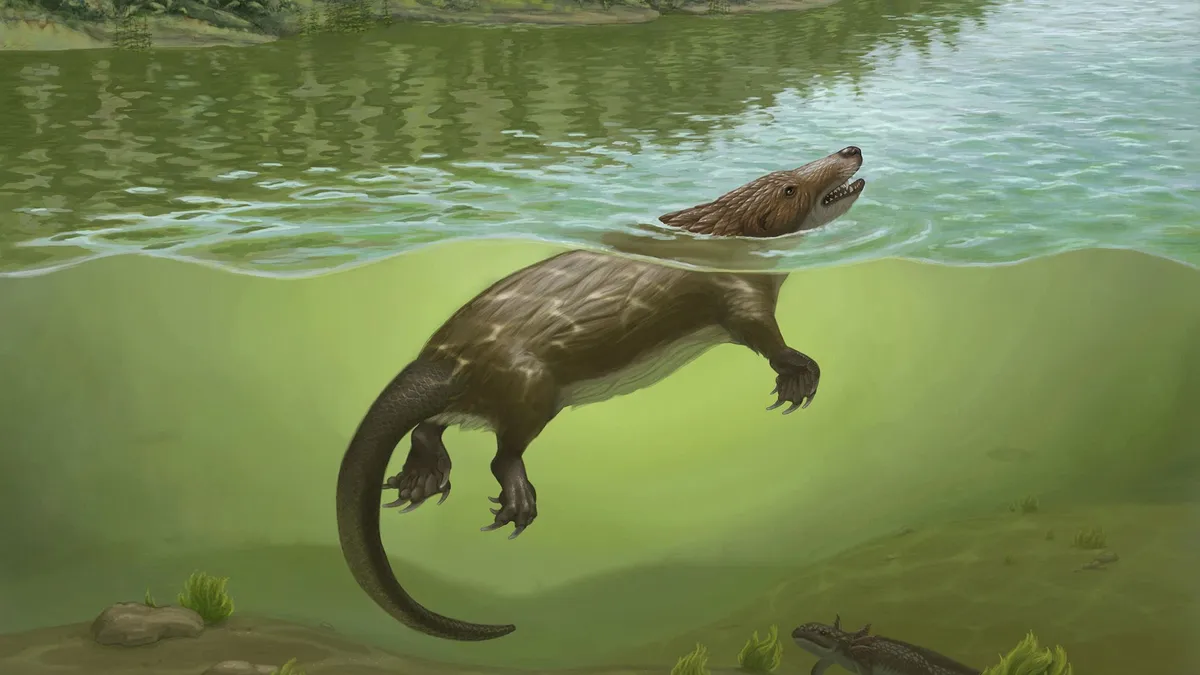
'It looks like a chimera' — 168 million years ago, a strange platypus-like mammal relative lived in China alongside dinosaurs - Live Science
A predatory mammal-like animal from the Jurassic seems to have characteristics of both a platypus and an otter.

Scientists find evidence for several Earth axis shifts during the age of dinosaurs - The Brighter Side of News
A new study finds evidence that Earth may have undergone several episodes of rapid true polar wander during the past 320 million years, with the strongest signals in the Jurassic and Cretaceous. Instead of relying primarily on ancient magnetic fields, researchers tracked patterns of continental flooding and retreat caused when the solid Earth shifted relative to its spin axis. The results support rapid events between about 150 and 140 million years ago and 100 and 90 million years ago, while challenging the idea that true polar wander has always been negligible or persistently slow. Earth’s geographic poles can appear permanent on human time scales, but the planet’s solid exterior has not always remained fixed relative to its rotation axis. A new study suggests that the crust and mantle underwent several episodes of relatively rapid reorientation during the past 320 million years. Instead of relying mainly on magnetic signatures preserved in rocks, researchers found evidence in an unexpected archive: ancient changes in where oceans flooded the continents.
0 comments
No comments yet. Be the first to share your thoughts!