Social security -Infant bronchiolitis: preventive treatments more reimbursed by the Health Insurance - Service Public
This story deserves to be shared
Send it to someone who'd care, or post it on your networks.
This article is an excerpt. To read the full content, visit the original source. Service Public
Related articles

Healthy diet during pregnancy associated with reduced risk of infant colic, eczema - Harvard T.H. Chan School of Public Health
Boston, MA—Infants born to mothers who ate a healthy, Mediterranean-style diet during pregnancy were at lower risk for colic and eczema, according to a new study by researchers at Harvard T. H. Chan School of Public Health, Boston Children’s Hospital, and Harvard Pilgrim Health Care Institute. The researchers also found that regularly consuming seafood during pregnancy helped lower an infant’s risk for these conditions. “Our own prior studies have shown that babies who had colic have higher rates of atopic conditions in later life, including asthma, seasonal rhinitis and food allergies,” said corresponding author Jenifer Lightdale, associate chief of the Division of Gastroenterology, Hepatology and Nutrition at Boston Children’s Hospital and professor of pediatrics at Harvard Medical School. “Our new study is the first to ask how prenatal diet may influence colic, and in particular the combination of colic and eczema, as babies who have both conditions in infancy may be at highest risk for various manifestations of allergies when they are older.”

Wits University | HIV finds escape routes from preventive antibody – but newer antibodies may close them - European AIDS Treatment Group
Wits University news releaseIn a landmark HIV prevention trial, an antibody blocked viruses most vulnerable to it, but others broke through. Now researchers have uncovered how HIV evolved after those infections – and why the amount of antibody in the body is an essential part of the story. The Antibody-Mediated Prevention (AMP) trials enrolled more than 4,600 volunteers across Africa, the Americas, and Europe to test VRC01, a laboratory-made broadly neutralising antibody (bnAb). In the AMP trial, VRC01 did not significantly reduce HIV infections overall, although it reduced infections caused by highly sensitive strains by about 75%. This study showed that HIV requires high antibody titers, and it illustrates the importance of maintaining those titers throughout the dosing cycle. A new study published in Nature Microbiology has now examined what happened after infection in people who received VRC01. The findings show how a virus can respond to antibody pressure – and offer clues for improving future antibodies and vaccines. Read the full news release here.
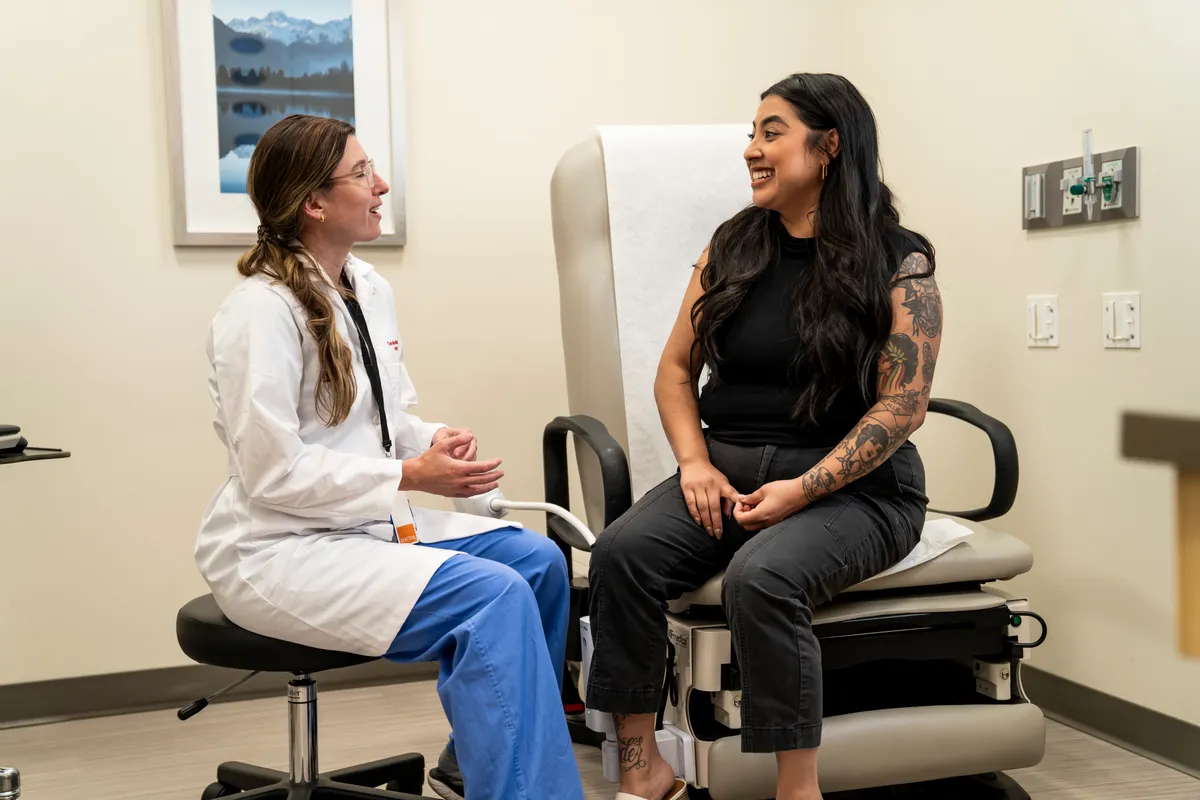
What Preventive Care Do You Actually Need? - University of Utah Health
If you feel healthy, going to the doctor may not be high on your to-do list. But preventive care isn’t only for when something feels wrong. It can help you stay healthy and find certain health problems before you notice symptoms. Still, many people fall behind. According to a survey conducted by the American Association of Nurse Practitioners (AANP), 27% of Americans say they are not up to date with regular screenings and vaccines. The good news: You don’t have to figure out what you need on your own. A primary care provider (PCP) can help you make a preventive care plan based on your age, health history, and individual risks. When you’re sick, you go to the doctor to find out what is causing your symptoms so you can get better. However, preventive care can catch problems before you develop symptoms. If a health issue is discovered, your PCP can refer you to specialists and help manage your condition in a personalized way. “Preventive care is one of the foundations of primary care,” says Michelle Spencer, NP, a certified nurse practitioner at University of Utah Health.
0 comments
No comments yet. Be the first to share your thoughts!