Scientists who discovered a third form of magnetism win major physics prize - Science Daily
This story deserves to be shared
Send it to someone who'd care, or post it on your networks.
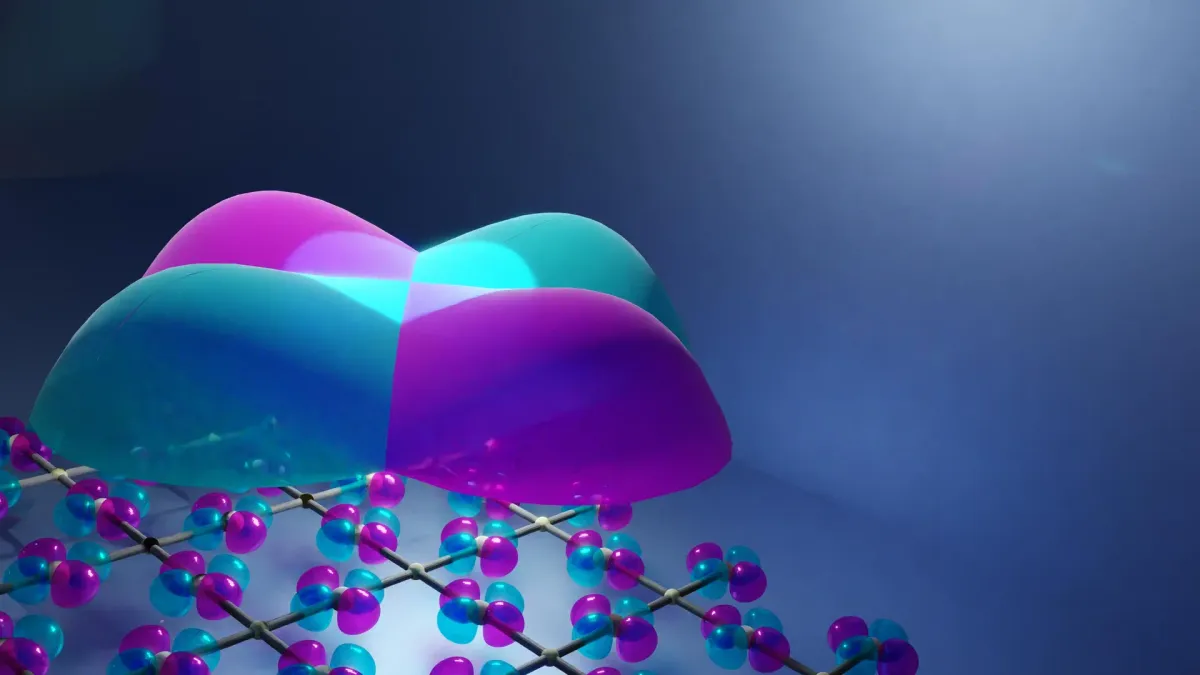
Scientists have uncovered a previously unknown form of magnetism, overturning an understanding of magnetic behavior that had stood for more than a century. The discovery, known as altermagnetism, has revealed a third fundamental category of collinear magnetism and opened new possibilities for quantum materials, advanced electronics, and future computing technologies.
Three physicists responsible for the breakthrough have been named recipients of the 2026 Europhysics Prize, one of Europe's most prestigious honors in condensed matter physics. The European Physical Society (EPS) Condensed Matter Division selected Professor Jairo Sinova of Johannes Gutenberg University Mainz (JGU), Dr. Libor Šmejkal, and Professor Tomas Jungwirth for their work establishing altermagnetism as a distinct form of magnetic order alongside ferromagnetism and antiferromagnetism.
This article is an excerpt. To read the full content, visit the original source. Science Daily
Related articles
A new kind of magnetism could unlock faster, more efficient computers - Science Daily
The computers of the future may rely on more than the electrical charge carried by electrons. Researchers are increasingly interested in another fundamental electron property called spin, which could provide a new way to move and process information inside electronic devices. Conventional computers use the movement of electrical charge to handle data. If scientists can reliably control electron spin as well, they may be able to develop entirely new approaches to computing that operate faster and consume less energy.
Magnetism may have helped kick-start our solar system - Science News
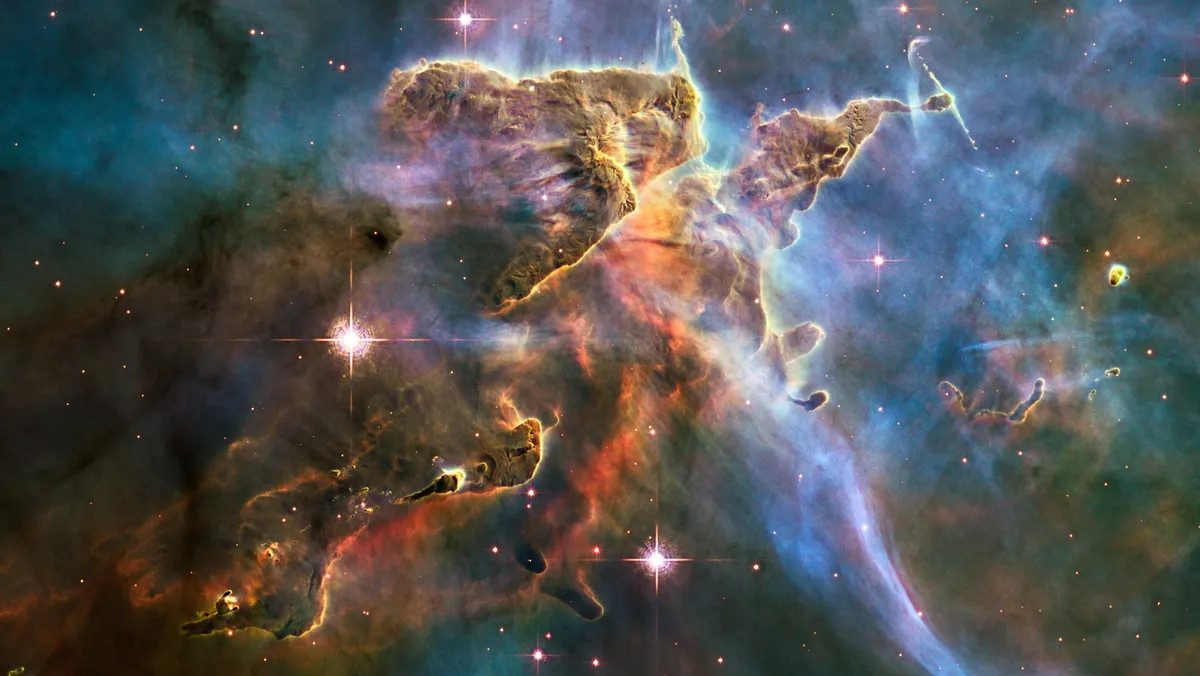
Meteorites hold a record of the forces at work 4.5 billion years ago before the sun formed Clouds of gas and dust, like the one in this Hubble Space Telescope image, are the birthplaces of planetary systems. Magnetism and gravity, together, play a role in their formation, new research suggests.
Margaret Hamilton obituary - The Guardian
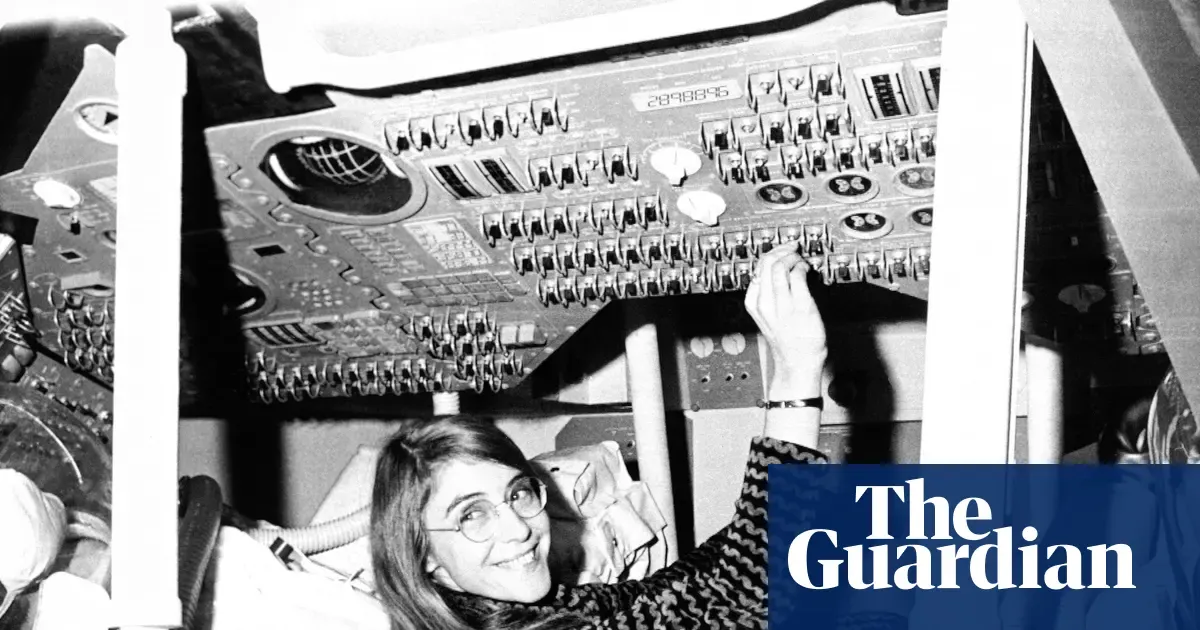
Apollo was a bold, innovative project. It tested the boundaries of technology and human achievement, and took people to the moon. However, one thing it failed to challenge was the prevailing hierarchy. Nearly everyone involved in Nasa’s space programme in the 1960s was male and white. If you weren’t, you needed to be exceptional at what you did. Margaret Hamilton, who has died aged 90, was one of those exceptional people. Without her input, sending spacecraft into lunar orbit, and putting Neil Armstrong and his successors on to the surface of the moon, might have been impossible. Hamilton directed the software engineering division at the Massachusetts Institute of Technology (MIT) Instrumentation Laboratory, which had been charged with developing the computer systems for Apollo. The result of this work was the Apollo Guidance Computer (AGC). This provided the astronauts with a computer-linked keypad, similar in appearance to a calculator and known by the acronym DSKY – short for Display and Keyboard – which they used for navigating and controlling the direction and manoeuvrability of the spacecraft.
Researchers for 1st time observe solar-storm-like eruptions near black hole - Xinhua
JERUSALEM, Oct. 18 (Xinhua) -- An international team of researchers has discovered eruptions similar to solar storms near a giant black hole, the Israel Institute of Technology (Technion) said Sunday. Published in the Astrophysical Journal Letters, the study provides the first evidence that the physical processes driving solar storms can also occur near supermassive black holes. Solar storms occur when energy stored in magnetic fields is suddenly released, producing bursts of radiation and streams of charged particles that can disrupt satellites and communications on Earth. The researchers analyzed X-ray emissions from the region around a black hole in the galaxy NGC 3783, using the XRISM and XMM-Newton space telescopes to track changes in radiation. They identified a pattern known as the "Neupert effect," first discovered on the Sun in 1968 but never previously observed near a black hole. The discovery suggests that powerful magnetic eruptions may occur across vastly different cosmic environments, from the Sun to black holes millions of times more massive, the researchers say. ■
0 comments
No comments yet. Be the first to share your thoughts!