Scientists reveal the origin of the Euphrates — a river that fed the 'cradle of civilization' - Live Science
This story deserves to be shared
Send it to someone who'd care, or post it on your networks.
This article is an excerpt. To read the full content, visit the original source. Live Science
Related articles

5 million years ago, the Euphrates didn’t exist: here’s how it was born - Futura, le média qui explore le monde
The Futura Team represents the pulse of Futura’s editorial department, bringing together a collective expertise dedicated to the dissemination of scientific knowledge. Rather than the work of a single author, every article published under this signature is the result of a rigorous collaborative process involving journalists, editors, and fact-checkers. Specializing in news analysis via desk research and international wire services, the team focuses on transforming raw information into accessible, verified content. This curation and synthesis process ensures constant monitoring of technological innovations and major scientific breakthroughs. By cross-referencing sources and conducting multiple rounds of peer review, the Futura Team guarantees scientific accuracy and pedagogical clarity. This collective signature serves as a hallmark of trust, providing reactive, cross-disciplinary information at the forefront of current events For a long time, the Euphrates River has supported human progress along its nearly 1,900-mile (about 3,000 km) journey. But the geological origins of this renowned river had long eluded experts.

AI points to the future of Earth’s civilization: Chinese science fiction writer Liu Cixin - Global Times
Good Chinese works more likely to be seen amid growing world interest Liu Cixin speaks to journalists on September 18, 2025 in Chengdu, Southwest China's Sichuan Province, ahead of the Galaxy Science Fiction Convention. Photo: Lu Wenao/Global TimesChinese science fiction writer Liu Cixin said artificial intelligence (AI) may carry Earth's civilization beyond humanity, even if that future does not belong to humans, as he marked 20 years since The Three-Body Problem began serialization. Liu, speaking to the People's Daily on the sidelines of the 37th Galaxy Awards in Zigong, Southwest China's Sichuan Province, said humans have ceilings in intelligence and strength, and that evolution prepared them for the Earth, not the universe. "AI points to the future of Earth's civilization. That future may not belong to humans, but it is still meaningful," he said. The interview also reignited discussions on Chinese social media about when China's next The Three-Body Problem will appear, a question about how a Chinese literary creation can grow from a text into broad influence and how Chinese imagination can reach global audiences.
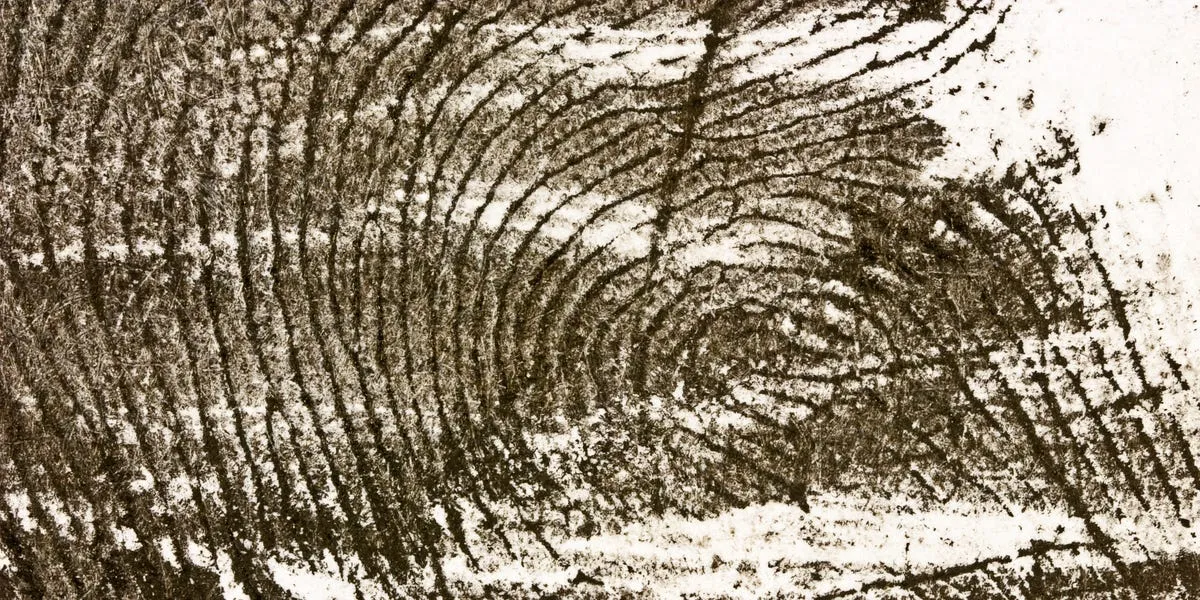
Scientists Found 15,000-Year-Old Fingerprints from a Lost Civilization - Popular Mechanics
Here’s what you’ll find when you read this story:Scientists discovered fingerprints on ancient clay beads that reveal them to be some of the earliest ornaments crafted by Neolithic people. Strung and worn, the beads mimicked the designs of plants grown and eaten by the ancient Natufian culture. Children, as evidenced by the fingerprints, engaged in the bead-making process as part of a cultural tradition. As small as they are, 142 ancient clay beads studied by a team of researchers are making big changes to world history. New discoveries about the beads, which are roughly 15,000 years old, pushes back—by thousands of years—our understanding of when Neolithic cultures first started making ornamental objects. In a study published in Science Advances, a team of international researchers uncovered how the oldest examples of unbaked clay used for ornamentation—even older than the use of clay for crafting bowls or jars—were made by Natufian hunter-gatherers in what is now Israel. In many ways ancient precursors of our own jewelry or other personal decorations, the beads represent the first known example of a practice that later became widespread across Neolithic Eurasia.

A 1,000-Year Simulation Reveals What Could Save Civilization From Collapse - ScienceAlert
The Fermi paradox asks: If there are other civilizations in the Universe besides ours, why haven't we yet made contact? Researchers who study this paradox – also called the Great Silence – generally point to two explanations. First, maybe it's that intelligence is "intrinsically rare", writes Celia Blanco, who authored new research into this question. The second is where Blanco and her colleagues have focused their work: "While intelligence may emerge, technological civilizations are typically short-lived, succumbing to self-destruction through ecological collapse, conflict, or other systemic instabilities. " Self-destruction might not mean complete annihilation, though. Blanco and her team's idea is that the Universe could be full of technological civilizations that rise, collapse, rebuild, and rise again – spending long stretches in technological dormancy. If so, that could explain the cosmic silence we're currently experiencing After all, humanity has only been able to communicate with others for maybe around a hundred years or so. This isn't just a philosophical talking point.
0 comments
No comments yet. Be the first to share your thoughts!