Scientists Find Squid Are Covered in Hair-Like Cells Remarkably Similar to The Ones in Human Ears - ScienceAlert
This story deserves to be shared
Send it to someone who'd care, or post it on your networks.
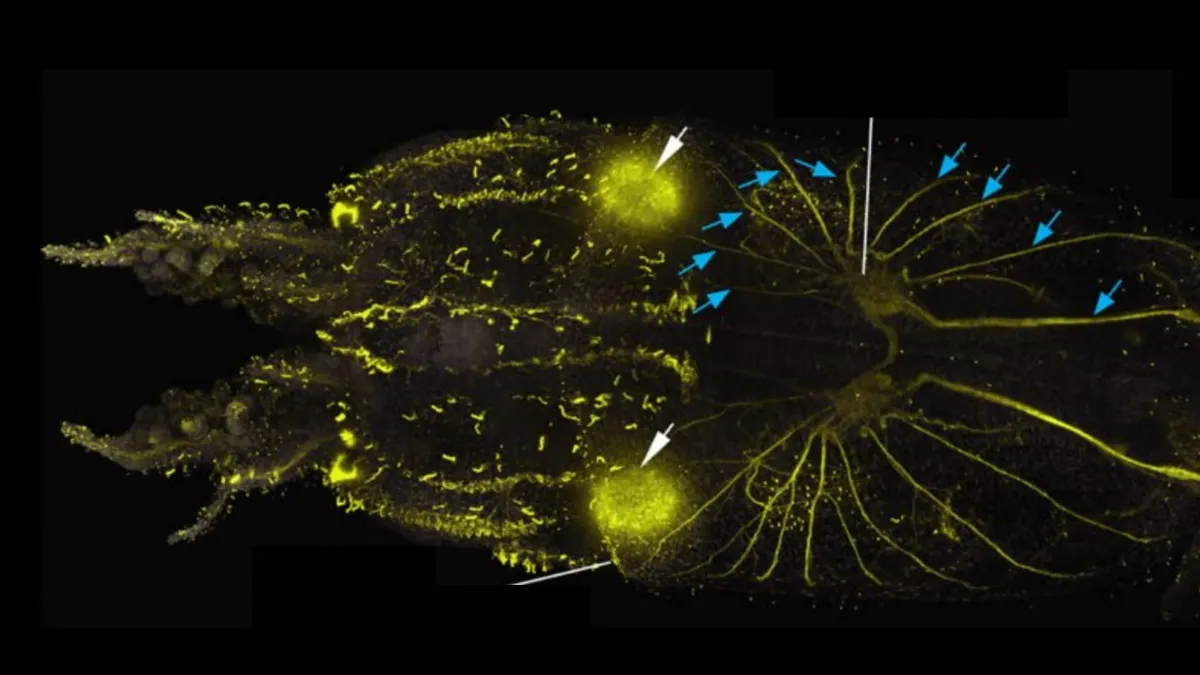
A hatchling squid imaged with light-sheet microscopy, to highlight its hair cells. (Wang et al., Current Biology, 2026)
The skin of a squid, surprisingly, has much in common with an organ inside your ear. As reported in a new study in Current Biology, scientists have found that squid are covered in cells with little hair-like structures, similar to those inside human ears, which detect information carried by passing waves. For humans, these little hairs help us to interpret sound waves from a melody or a voice, or the honk of an impatient driver. For squid, it's all the little details carried in water movement: the twitch of nearby prey, the rumble of a distant shore, the pull of a current. Until now, scientists had no idea that squid were totally studded with these hair cells – and the discovery may be able to tell us something about our own hearing equipment. Hair bundles on the surface of the squid, and their neuronal connectivity. (Wang et al., Current Biology, 2026)Brian McDermott from Case Western Reserve University is an otolaryngologist – a scientist who studies inner ears, noses, and throats.
This article is an excerpt. To read the full content, visit the original source. ScienceAlert
Related articles
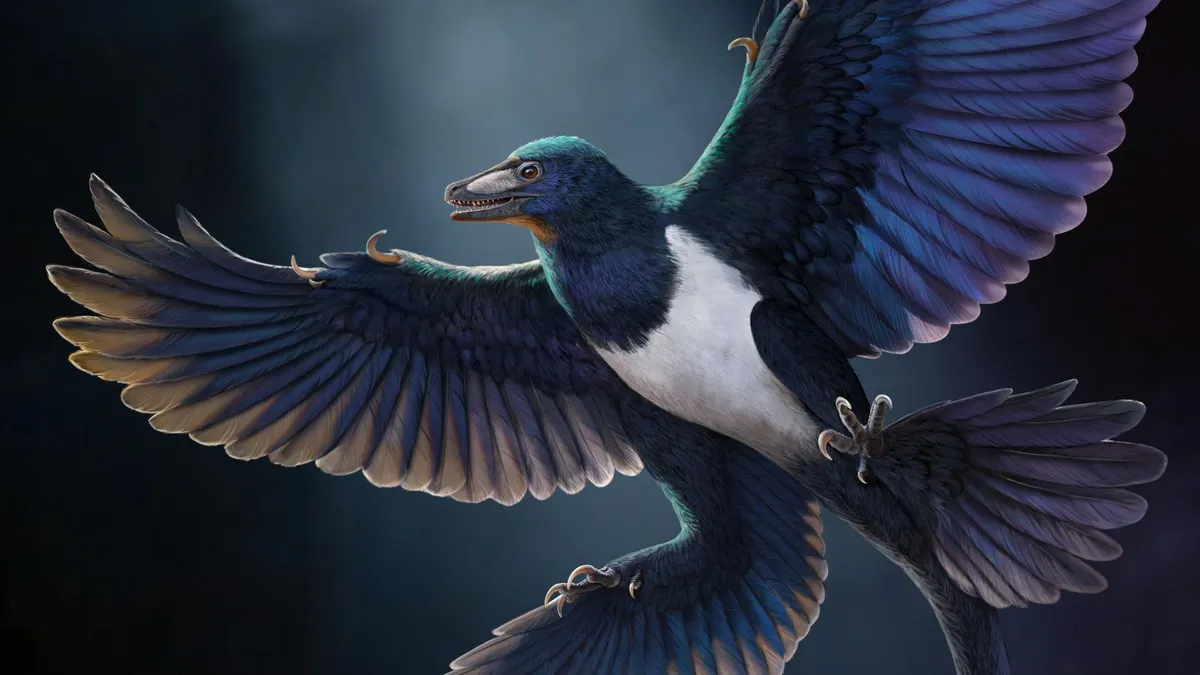
Remarkably preserved feathered dinosaur discovered in China reveals new secrets of flying-predator evolution - Live Science
A newly discovered feathered dinosaur named Norellraptor barsboldi had sharply curved teeth and claws, as well as four wings, and it adds evidence to the idea that flight evolved several times in different dinosaur groups.

'Black dust covered my bed' – the day alien science smashed through a New Jersey roof - BBC Sky at Night Magazine
Scientists examining a lump of space rock that came crashing through the roof of a home in New Jersey, USA, in 2024 have found it to be rich in potentially life-supporting chemistry. The Hillsborough Meteorite, as it's now known, originally formed part of a larger meteor that came plummeting through Earth’s atmosphere at a speed of 14.4 kilometres per second (32,000 mph) on 16 July 2024.

'70% of My Job Is Done for Me by Stephen King' — Mike Flanagan Reveals His 'Remarkably Faithful' The Dark Tower TV Series Plan - IGN
Posted: Oct 16, 2026 10:11am UTCMike Flanagan has revealed his approach for the hotly-anticipated The Dark Tower TV show, which is sure to please fans of Stephen King’s book series. Flanagan, famous for Netflix horror shows The Haunting of Hill House, The Haunting of Bly Manor, and, most recently, Amazon's Carrie, has been trying to get an adaptation of King’s much-loved fantasy saga off the ground for years — despite the fact the script for Season 1 has King’s seal of approval. The Dark Tower is currently “one of the most complicated properties to get started,” Flanagan told Entertainment Weekly in the summer, referencing his struggle to get the go-ahead. “Getting the green light on Dark Tower is a much longer and more involved process than anything else I’ve ever approached in my life.”Actually getting The Dark Tower made is the hard part, then. But in terms of the adaptation itself, it’s relatively straightforward. That’s because Flanagan has taken the approach of faithfully adapting the books, almost to a fault, leaning heavily on the story King himself told. “That one I feel like I figured out,” Flanagan said in a recent interview with The Process Unlocked.
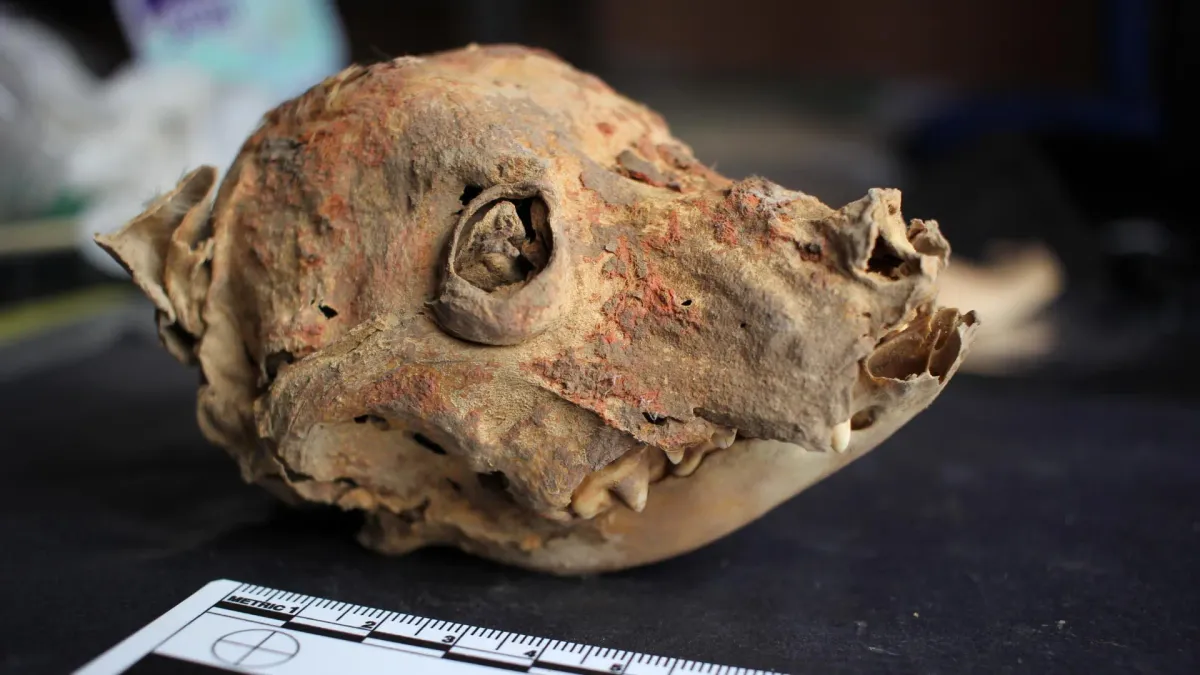
Archaeologists discover 1,200-year-old mummified hairless dog in Peru - Science Daily
Archaeologists working at an ancient burial complex in Peru have uncovered remarkable evidence of hairless dogs that lived more than 1,200 years ago, long before the rise of the Inca Empire. The discoveries include naturally mummified remains, unusual skeletal features, and clues about what the animals ate and how they were treated by the people around them. Peruvian hairless dogs are a distinctive Indigenous breed known for their slender bodies, pointed ears, and lack of fur. They frequently appear in pottery created by ancient societies along the Andean coast. Today, a variation of the breed is recognized by the American Kennel Club as the Peruvian Inca Orchid. The dogs are also an important national symbol, having been officially designated part of Peru's cultural heritage in 2000.

Earth's Core Is Leaking All Sorts of Materials That Have Been Trapped Since Our Planet's Birth - ScienceAlert
Our early Earth was a heavy metal album cover: a molten ball covered in a global lava ocean, spewing lethal gases while being pelted by the flaming space-rocks of our Solar System's violently chaotic afterbirth. Over the next 4.5 billion years of hectic cosmo-geological time, it has settled down a bit, allowing humans, lemurs, and others to emerge. A vision of this hellish ancient reality remains, (hopefully) never to be glimpsed by human eyes: our molten metallic core, blazing about as hotly as the surface of the Sun. But our core constantly sends chemical messengers up through its layers, including the space-borne ingredients of its birth, locked away for about one-third the lifetime of the Universe. This includes the hydrogen that was drawn in from the giant cloud of gas and dust that formed the Sun, which continues to ooze up from the core and turns into water in the mantle and crust – not a splashy-sloshy water, but a water trapped in minerals. Early Earth may have looked something like this.
Japan to launch historic round-trip mission to Mars moon - Winnipeg Sun
Japanese scientists are readying a mission to Mars's moons to retrieve samples that could help unlock the origins of the Solar System and life on Earth, in what aims to
0 comments
No comments yet. Be the first to share your thoughts!