Scientists find a bone-building switch that could fight osteoporosis - Science Daily
This story deserves to be shared
Send it to someone who'd care, or post it on your networks.
This article is an excerpt. To read the full content, visit the original source. Science Daily
Related articles
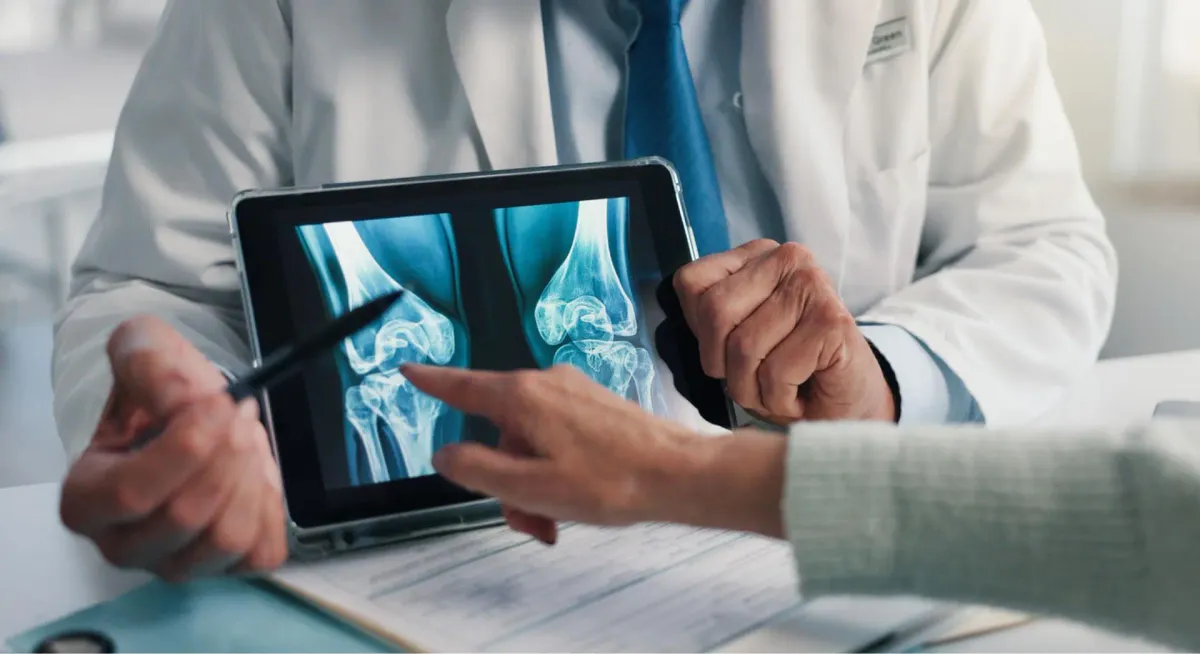
Osteoporosis breakthrough: could this lab discovery finally rebuild fragile bones? - Futura, le média qui explore le monde
The findings focus on separate strategies, ranging from a mechanical cell receptor to a blood-based gel and a brain hormone. Together, they demonstrate how targeted therapies might one day help combat bone density loss and speed up injury recovery. Activating a mechanical receptor in bone cells

Choice of Tea or Coffee Might Affect Risk of Osteoporosis in Older Women - ScienceAlert
Few of us would turn down a nice cuppa. But over the years, daily decisions between tea or coffee could make a big difference to women's bone health, a recent study suggests. Osteoporosis is a common concern for women over 50 years of age. One in three will be diagnosed with the disease, which occurs when the body fails to replace old bone as it is broken down. This causes bones to become brittle and weak, making them more prone to fractures and harder to heal. Older women are at particular risk of osteoporosis as levels of estrogen, a hormone that supports bone metabolism, drop after menopause. Surgeries to remove a person's ovaries have a similar effect. Public health researchers from Flinders University in Australia analyzed the tea- and coffee-drinking habits of roughly 9,700 US women aged over 65 years, as part of a broader osteoporosis study published in 2025. Participants self-reported their tendencies in surveys conducted on four occasions in a roughly 10-year period.

Ancient mud reveals a surprising secret about Greenland’s ice - Earth.com
Mud from a fjord shows an Atlantic air pattern brought wetter, colder spells to southern Greenland, a clue to how its ice may fare. Greenland’s ice is shrinking as the planet warms. But in the island’s southwest, rainfall and snowfall have been influenced by the same North Atlantic air-pressure pattern for at least 5,000 years. When that pattern tipped one way, the region turned wetter and colder. The record comes from mud on the floor of a Greenland fjord, and it suggests snowfall, not only temperature, shaped how the area’s ice grew and shrank. It doesn’t yet show how glaciers there will respond to the warming ahead. Johan Faust, a researcher at MARUM, the Center for Marine Environmental Sciences at the University of Bremen in Germany, led the work with colleagues in Germany, Norway, Denmark and Canada. A seesaw in the airThe pattern is called the North Atlantic Oscillation. It’s the difference in air pressure between a low that sits near Iceland and a high near the Azores, and it’s strongest in winter. When that difference is large, the pattern is in its positive phase. Northwestern Europe and southwestern Greenland both get more rain and snow.

Simulations explore nuclear mitigation of asteroid threats - Phys.org
Lawrence Livermore National Laboratory researcher Isaiah Santistevan led the development of three-dimensional simulations exploring how a nuclear device could deflect or disrupt an asteroid threatening Earth. Credit: Blaise Douros/LLNL Lawrence Livermore National Laboratory (LLNL) researchers are developing three-dimensional simulations to examine how a nuclear device could be used to deflect or potentially disrupt an asteroid threatening Earth.
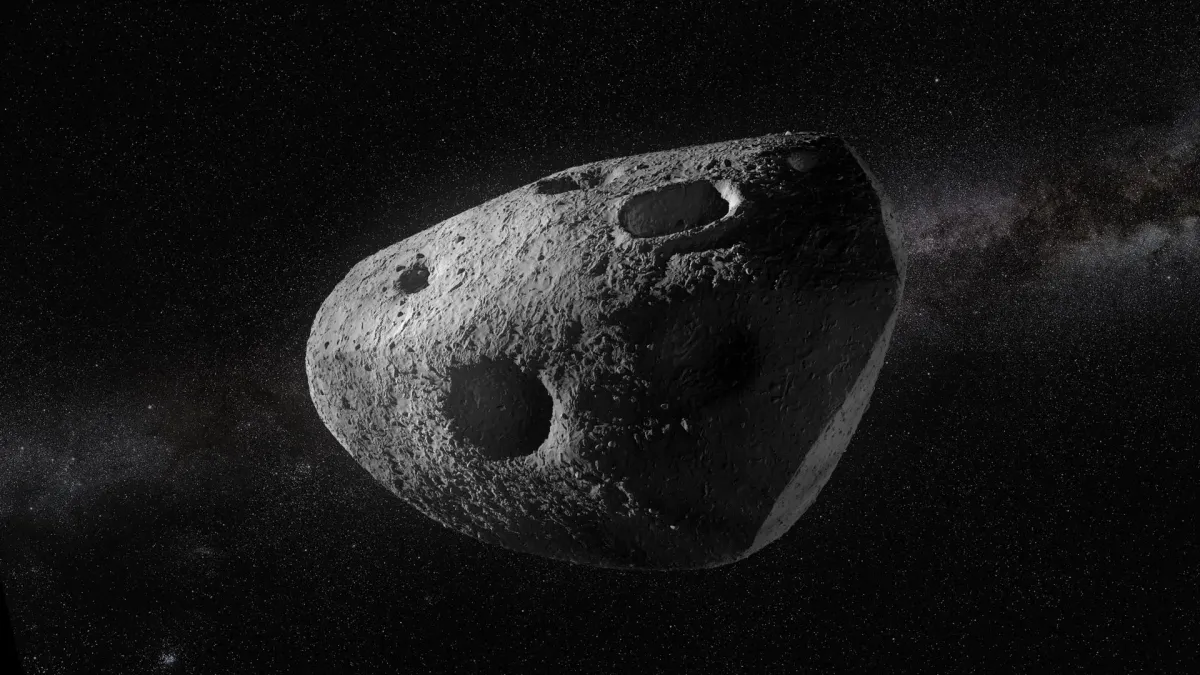
A giant asteroid will skim Earth in 2029—and it’s not us who should worry - Futura, le média qui explore le monde
The Futura Team represents the pulse of Futura’s editorial department, bringing together a collective expertise dedicated to the dissemination of scientific knowledge. Rather than the work of a single author, every article published under this signature is the result of a rigorous collaborative process involving journalists, editors, and fact-checkers. Specializing in news analysis via desk research and international wire services, the team focuses on transforming raw information into accessible, verified content. This curation and synthesis process ensures constant monitoring of technological innovations and major scientific breakthroughs. By cross-referencing sources and conducting multiple rounds of peer review, the Futura Team guarantees scientific accuracy and pedagogical clarity. This collective signature serves as a hallmark of trust, providing reactive, cross-disciplinary information at the forefront of current events Normally, when an asteroid swings by Earth, the burning question is simple: “Are we at risk?” Should we prepare for a massive space rock to pancake our planet? Not this time.
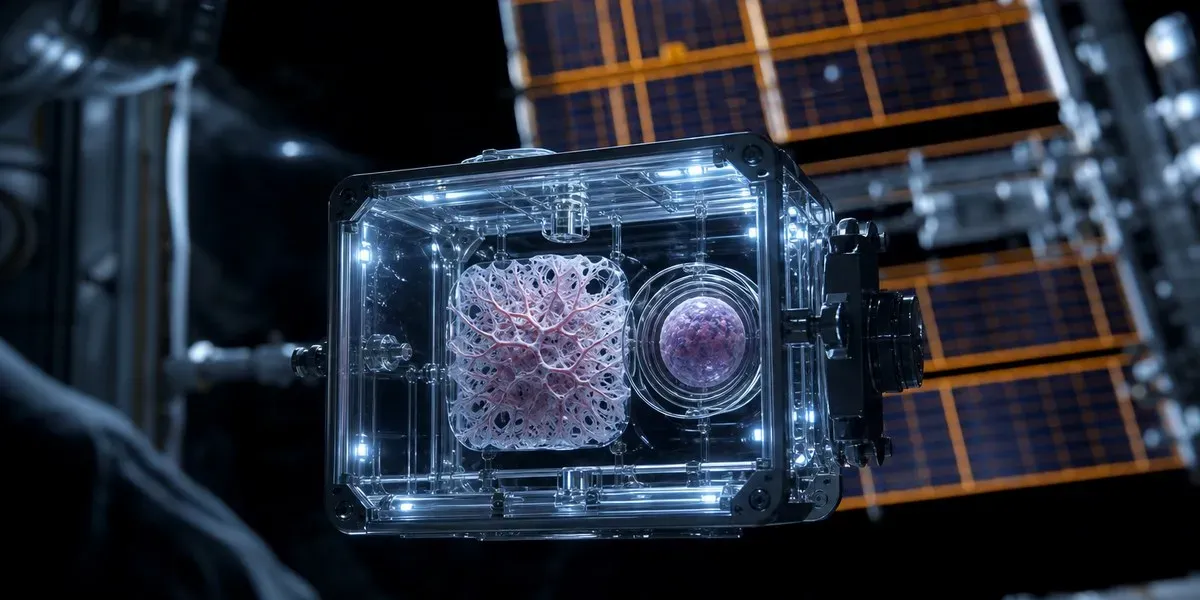
Dragon delivers organoids and equipment for artificial retinas to the ISS — ScienceDaily - UA.NEWS
SpaceX's Dragon spacecraft docked with the International Space Station on October 15 and delivered more than 6,300 pounds of food, essential supplies and scientific equipment to the crew of Expedition 75. The cargo included equipment for manufacturing artificial retinas in microgravity, brain organoids, three-dimensional models of heart tissue and materials for studying a new type of glass. As ScienceDaily reports, Dragon docked with the space-facing port of the Harmony module at 10:27 a.m. Eastern Time. This is SpaceX's 35th commercial ISS resupply mission under a NASA contract. Research for medicineThe equipment for manufacturing artificial retinas is intended to help study the possibility of creating such structures in microgravity. Scientists hope these technologies may be useful for restoring vision on Earth in the future.3D models of heart tissue that reproduce important properties of the human heart were also sent to the station. They are planned to be used to improve methods for testing large numbers of potential medicines during future space missions. More current news is available on the UA. News Telegram channel Telegram.
0 comments
No comments yet. Be the first to share your thoughts!