Scientists Discover a Hidden Hydrogen Pathway That Could Transform CO2 Into Valuable Fuel - SciTechDaily
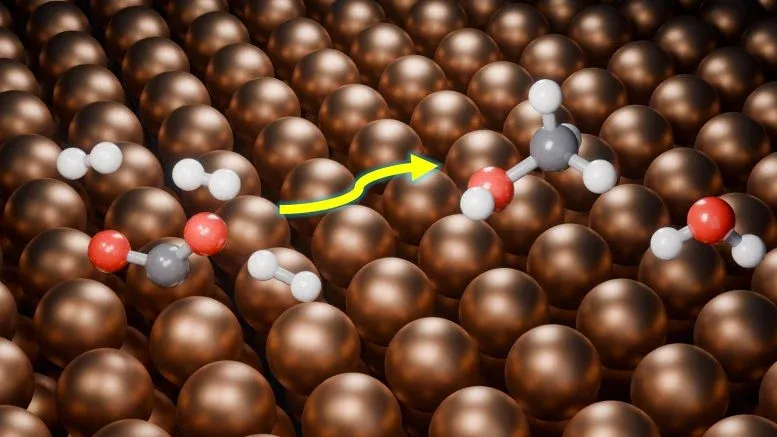
Surface of a copper catalyst depicting CO2 hydrogenation to methanol. Credit: Shivam ChaturvedicScientists have uncovered an unexpected pathway for hydrogen transfer during catalytic CO2 conversion. A computer model designed to predict how carbon dioxide becomes useful chemicals produced a surprising error: It identified formic acid as the main product instead of methanol. When scientists expanded the model to account for thousands of previously overlooked reactions, its predictions changed dramatically and aligned much more closely with experimental results. Researchers at the Indian Institute of Science (IISc) developed a computational framework that maps 9,389 chemical reactions involved in converting CO2 into fuels and chemicals on a copper catalyst. Compared with a smaller model containing just 152 reactions, the expanded network predicted approximately 40 times more CO2 conversion and correctly identified methanol and carbon monoxide as major products. The research was published in Nature Communications.
This article is an excerpt. To read the full content, visit the original source. SciTechDaily
Related articles
Targeted pathway mining reveals novel modified hexapeptides from the demiguisin family - Nature
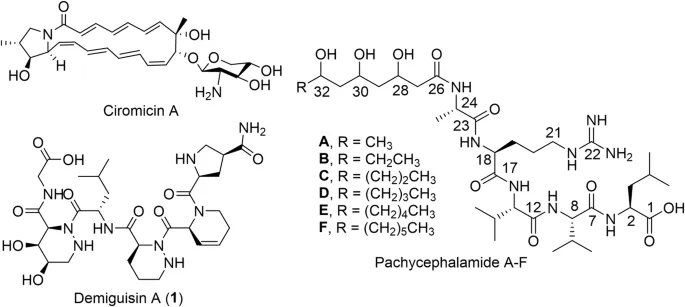
IntroductionBirds rely on a collection of behavioural, physiological, and chemical defences to mitigate the constant threat posed by pathogens and parasites in their environment1. Preen oil from the uropygial gland (UG) is a key component of avian integumentary immunity, supporting feather maintenance and waterproofing, while the UG is also known to harbour diverse microbes, including γ- and α-Pseudomonadota and Actinomycetota, that contribute to feather defense2,3. We recently exemplified a case of the bacterial isolate Amycolatopsis sp. PS_44_ISF1 derived from the UG of the toxic bird Pachycephala schlegelii that can directly contribute to the bird’s chemical defence system, by producing bioactive metabolites such as the antifungal macrolactam ciromicin A3,4, the co-secreted tensioactive lipopeptide family pachycephalamides, and a highly modified hexapeptide, named demiguisin A (1) (Fig. 1). The chemical structure of 1, caught our interest, as it contains non-proteinogenic piperazic acid (hexahydropyridazine-3-carboxylic acid, Piz) residues within the sequence Gly–β,γ-OH-Piz–Leu–Piz–DHPA–γ-c-Pro (Fig. 1)3,5.
0 comments
No comments yet. Be the first to share your thoughts!