Reporting on the science of saunas - NPR
This story deserves to be shared
Send it to someone who'd care, or post it on your networks.

ELISSA NADWORNY, HOST: It's CONSIDER THIS FROM NPR, where every day we go deep on one big news story. NPR's Will Stone reports on that line between proven medical treatments and alternative health practices. WILL STONE, BYLINE: If you're envisioning study subjects smoking weed and sipping free booze, then you have a pretty good picture of this experiment. NADWORNY: CONSIDER THIS - for centuries, people have sought out saunas and hot springs for their supposed healing properties. Coming up, we talk to one reporter about understanding the science behind those claims, all while enjoying some time in the sauna himself. From NPR, I'm Elissa Nadworny.(SOUNDBITE OF MUSIC)NADWORNY: In September, NPR science correspondent Will Stone traveled to Oslo, Norway, for the International Sauna Congress. STONE: It's basically a chance for the sauna world to nerd out. You have scientists, business operators, advocates. They're all here for a few days to talk about everything from the health benefits to the finer points of sauna culture. NADWORNY: The program included party hopping and heat treatments in, quote, "floating sauna villages," all in the pursuit of science.
This article is an excerpt. To read the full content, visit the original source. NPR
Related articles

From saunas to psychedelics, how a health reporter sorts science from hype - NPR
A reporting trip to a sauna conference in Oslo found NPR's Will Stone in a sauna with his clothes and recording gear. In this reporter's notebook, he explains how he investigates the science behind wellness claims. ELISSA NADWORNY, HOST: NPR's Will Stone reports on that line between proven medical treatments and alternative health practices. WILL STONE, BYLINE: If you're envisioning study subjects smoking weed and sipping free booze, then you have a pretty good picture of this experiment. NADWORNY: Weed versus alcohol, metabolic medicine and, yes, the science of sauna. STONE: It's basically a chance for the sauna world to nerd out. NADWORNY: In September, Will Stone traveled to Oslo, Norway, for the International Sauna Congress. STONE: You have scientists, business operators, advocates. They're all here for a few days to talk about everything from the health benefits to the finer points of sauna culture. NADWORNY: The program included party hopping and heat treatments in, quote, "floating sauna villages. " So for this week's Reporter's Notebook, I wanted to talk to Will about arguably the toughest assignment at NPR. I mean, come on. You got in a sauna in Oslo?
From floating saunas to clinical trials: How heat might help mental health - NPR
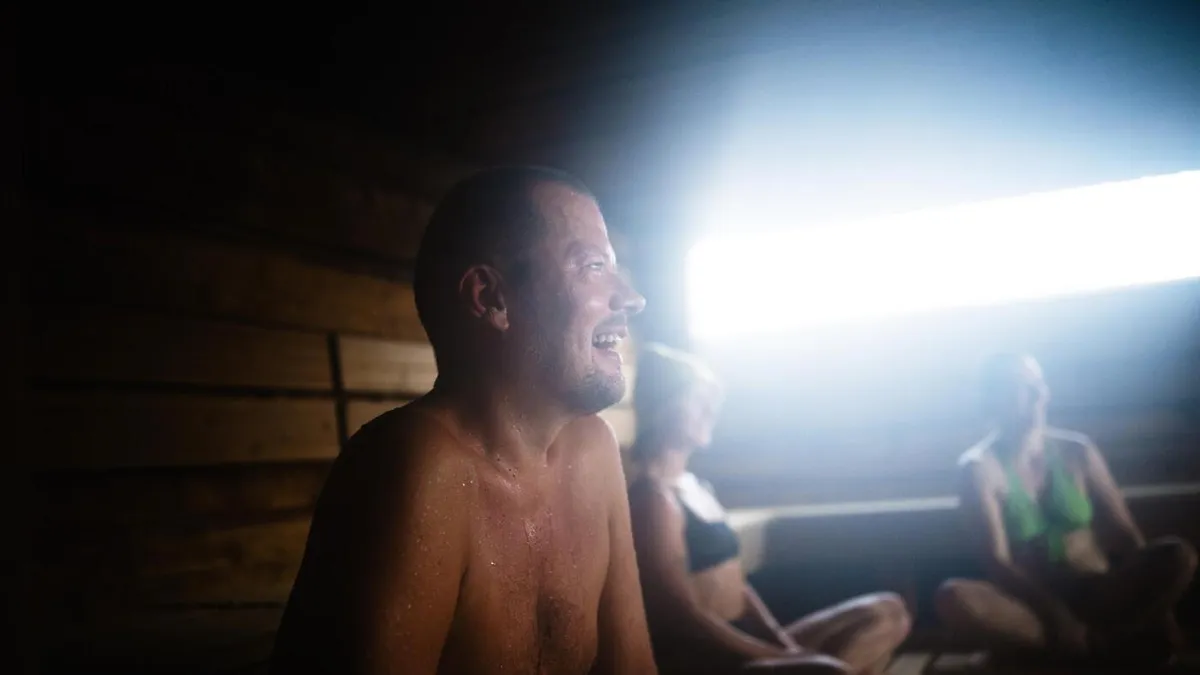
Tony Stepanow, from Finland, attends a sauna during the International Sauna Congress 2026 in Oslo, Norway, Sept. 25, 2026. The belief that heat can benefit the mind and relieve psychic suffering has a long history across human societies. But when Eva Hilland scanned the scientific literature for the kind of evidence that would support recommending heat as a legitimate intervention for mental health, she came up with very little.

A Black Hole 12,000 Light-Years Away Is Firing a Plasma Jet Toward Earth - Gadget Review
Milky Way’s first microblazar candidate sits 12,000 light-years away, offering a rare ground-level lab for studying relativistic jetsA black hole 12,000 light-years away is firing a jet of plasma almost directly toward Earth. At that distance, no known or expected danger to Earth has been identified by the researchers or the institutions involved. What astronomers have actually found is rarer and more interesting than a threat. Researchers have identified IRAS 18293-0941 as a compelling candidate for the Milky Way’s first microblazar, a class of object that gives astrophysicists a close-up laboratory for studying some of the most violent physics in the galaxy. What Astronomers FoundThe discovery centers on a binary system whose black hole expels plasma jets at close to three-quarters the speed of light, pointed almost directly toward Earth. The system pairs a hot, massive star with a black hole that completes a full orbit roughly every 11.38 days. Material drawn from the companion star feeds the black hole, and some of that matter gets expelled outward as opposing jets traveling at approximately three-quarters the speed of light. Terminology matters here.
0 comments
No comments yet. Be the first to share your thoughts!