Preventing burnout among healthcare professionals: the role of workplace - UOC
This story deserves to be shared
Send it to someone who'd care, or post it on your networks.
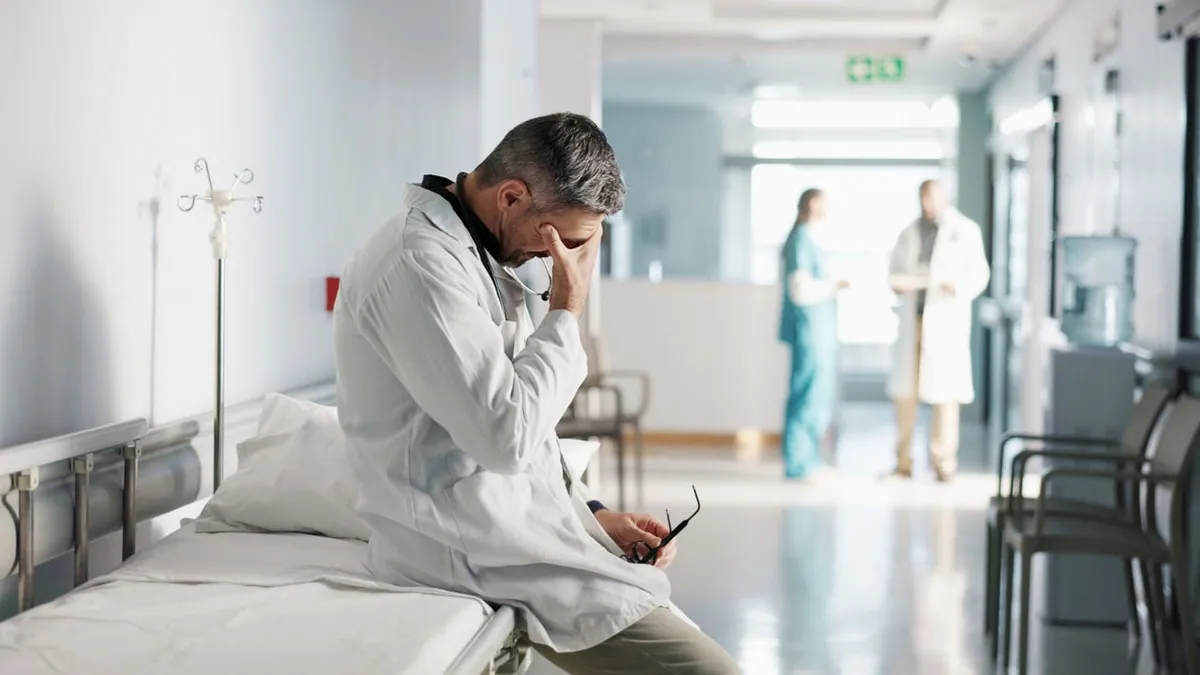
Burnout is a syndrome that can develop as a result of chronic work-related stress that is not properly managed. It can affect workers' health, the quality of care they provide and the sustainability of services. It involves physical and emotional exhaustion and can affect anyone working in any sector, although it is particularly common among healthcare professionals due to high work and emotional demands, time pressure, bureaucracy, limited resources, a poor work-life balance and the perception of being undervalued. These factors can lead to emotional exhaustion, psychological disengagement from their work and reduced job satisfaction.
The study, titled Characterization of healthcare professionals with low levels of occupational burnout, has identified protective factors against burnout in healthcare professionals. The research was promoted by the Social Observatory and led by Dr Oriol Yuguero of the Universitat Oberta de Catalunya's (UOC) eHealth Centre and Anna Mitjans, project coordinator at the Galatea Foundation, with the collaboration of the Universitat Autònoma de Barcelona (UAB), the University of Lleida (UdL) and the Catalan Institute of Health (ICS).
This article is an excerpt. To read the full content, visit the original source. UOC
Related articles

Continuous glucose monitors help type 2 diabetes patients spend 5 more hours a day in healthy blood sugar range - Medical Xpress
Continuous glucose monitors (CGMs) could transform diabetes management for millions of Americans with type 2 diabetes who don't take insulin, according to findings published in the New England Journal of Medicine. The clinical trial found that adults using CGMs spent approximately five additional hours each day within their target blood sugar range compared with those receiving routine care. Nearly twice as many CGM users also achieved an A1c level below 7%, a common treatment goal for people with diabetes.
Wearing headphones during surgery may reduce nausea and vomiting afterward - Medical Xpress
Patients who wore noise-canceling headphones during minimally invasive gynecological surgery were significantly less likely to experience postoperative nausea and vomiting (PONV), suggest findings from a randomized clinical trial presented at the Anesthesiology 2026 annual meeting.

Kefah Mokbel: Can Whole-Genome Sequencing-Based ctDNA Monitoring Help Personalize Adjuvant Treatment? - Oncodaily
“Beyond Detecting Cancer Recurrence: Can Whole-Genome Sequencing-Based ctDNA Monitoring Help Personalize Adjuvant Treatment? An exciting new study published in The Oncologist highlights the clinical potential of Signatera Genome, a whole-genome sequencing (WGS)-based, tumor-informed circulating tumor DNA (ctDNA) assay, not only for detecting molecular residual disease (MRD), but also for potentially informing adjuvant treatment decisions.
0 comments
No comments yet. Be the first to share your thoughts!