Pregnant Mom, 31, Went to the Hospital for Acid Reflux. It Was the First Sign of Colon Cancer - TODAY.com
This story deserves to be shared
Send it to someone who'd care, or post it on your networks.
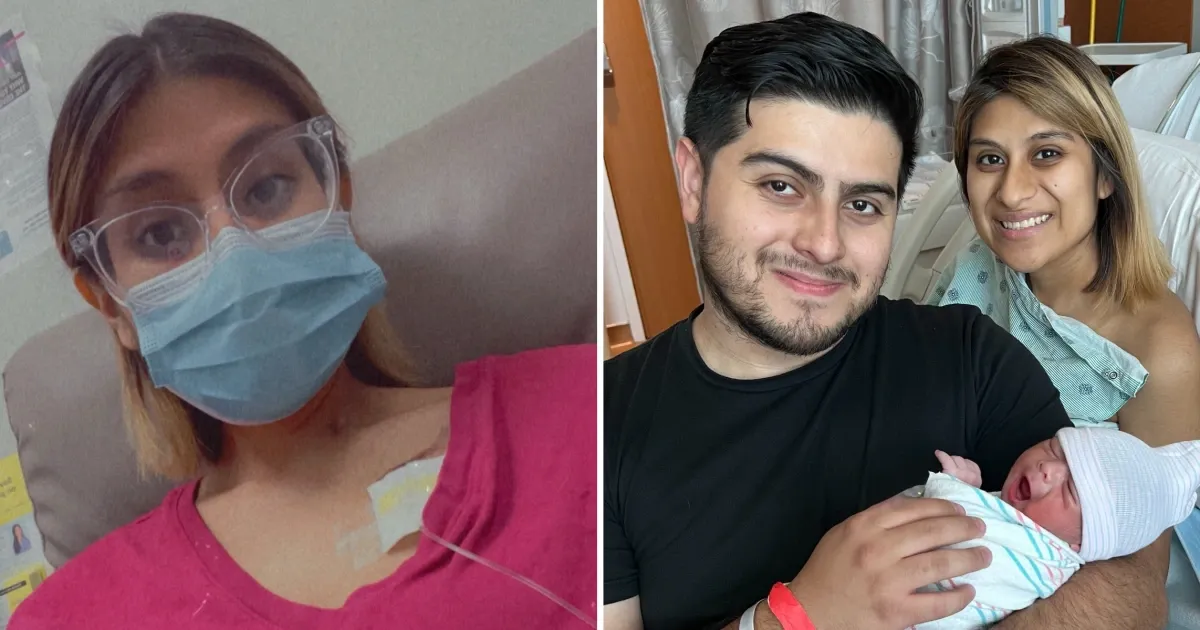
When Geraldine Levano, 31, was pregnant with her second son, the acid reflux didn’t alarm her. But it got to a point where “I couldn’t even take the pain,” Levano of Houston, Texas, tells TODAY.com. Working as a medical assistant, she asked her co-workers and OB-GYN if her reflux was normal. “And of course they’re like ... it’s just the baby, you’re fine,” Levano recalls. A few times when the pain became “unbearable,” she went to the hospital. But they just reassured her that her baby looked totally healthy and her symptoms were normal during pregnancy. Medication didn’t do much. “Nothing would help,” she says. “It just felt like like a burning sensation with pain, and I just felt like something was stuck there.” So she toughed it out until early April 2022, about two weeks after her son was born, when she felt a painful lump right under her ribcage on her left side. And he was still having reflux. She ended up seeing the doctor whose office she works in now, who ordered an ultrasound. What should have been a 15-minute appointment quickly turned into an hourslong ordeal as it became clear the doctors needed more imaging. Levano with her husband and new baby.
This article is an excerpt. To read the full content, visit the original source. TODAY.com
Related articles
Fauci: The Oracle Who Went Silent At The Wrong Time - Health Policy Watch

Bioengineer.org | Switching HIV drugs or adding zoledronic acid rebuilds bone lost to tenofovir - European AIDS Treatment Group
Bioengineer.org news storyFor millions of people living with HIV, antiretroviral therapy has transformed a once-fatal infection into a manageable chronic condition. Yet the very drugs that suppress the virus can carry quiet costs, and one of the most insidious is bone loss. Tenofovir disoproxil fumarate, or TDF, has been a cornerstone of HIV treatment worldwide for two decades, prized for its potency, durability, and low cost. But a growing body of evidence has linked TDF exposure to measurable reductions in bone mineral density, raising an increasingly urgent clinical question: once bone has been lost on a TDF-based regimen, can it be recovered? A new prospective cohort study, published in BMC Infectious Diseases, offers some of the most detailed longitudinal evidence to date that the answer, for many patients, is yes. The research team enrolled 223 virologically suppressed men living with HIV who had low bone mineral density while taking TDF-based antiretroviral therapy.

A New Injection Makes Fat Cells Self-Destruct, And Might Prevent GLP-1 Weight Regain - ScienceAlert
The new treatment kills off a sub-group of fat cells. (Jian Fan/iStockphoto/Getty Images) Early clinical trials into a new fat reduction treatment have reported promising results, and the treatment takes a more unusual approach: Rather than shrinking fat cells, as most weight loss strategies do, it safely and naturally kills them off. The drug here is CBL-514, which is administered via injection. As well as proving effective at reducing subcutaneous fat (just below the skin), there's evidence it can also reduce visceral fat (stored deeper around the organs). According to the team behind the trials, CBL-514 and its unconventional strategy have the potential to reduce fat in key areas of the body – with further benefits that come with weight loss likely to follow. "We expect that patients will be pleased by the cosmetic effects, such as the flatter stomach that can come with subcutaneous fat loss," says endocrinologist Timothy Garvey, from the University of Alabama at Birmingham, who headed up the trial.
0 comments
No comments yet. Be the first to share your thoughts!