Face Your Fears of Colon Cancer Screenings - Cancer Health
This story deserves to be shared
Send it to someone who'd care, or post it on your networks.
This article is an excerpt. To read the full content, visit the original source. Cancer Health
Related articles
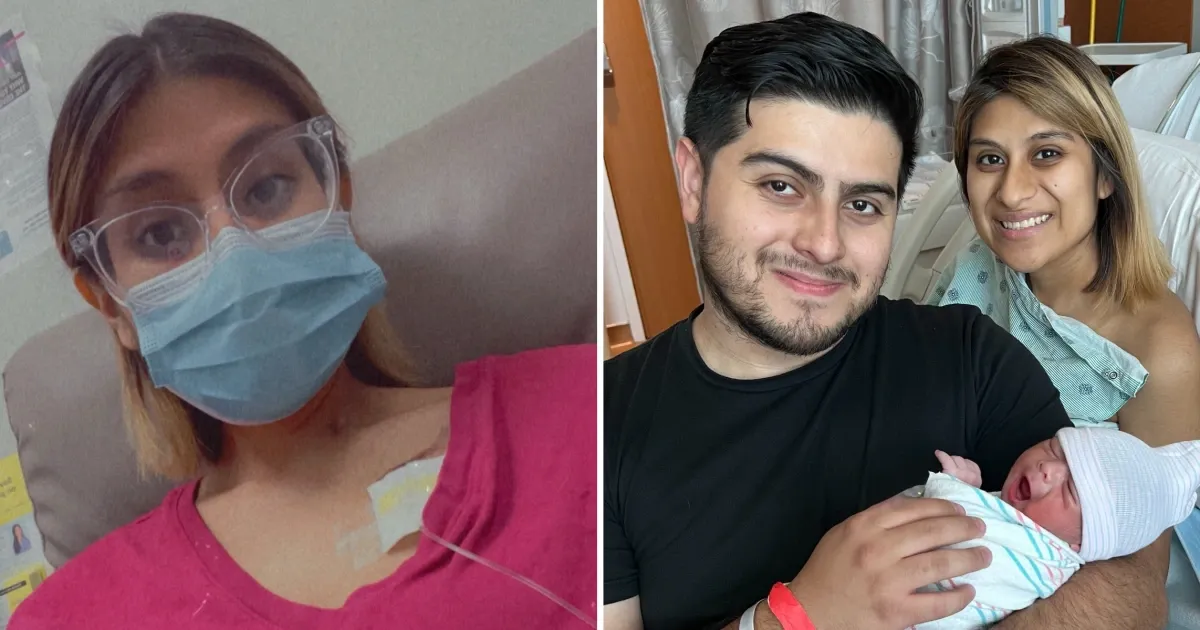
Pregnant Mom, 31, Went to the Hospital for Acid Reflux. It Was the First Sign of Colon Cancer - TODAY.com
When Geraldine Levano, 31, was pregnant with her second son, the acid reflux didn’t alarm her. But it got to a point where “I couldn’t even take the pain,” Levano of Houston, Texas, tells TODAY.com. Working as a medical assistant, she asked her co-workers and OB-GYN if her reflux was normal. “And of course they’re like ... it’s just the baby, you’re fine,” Levano recalls. A few times when the pain became “unbearable,” she went to the hospital. But they just reassured her that her baby looked totally healthy and her symptoms were normal during pregnancy. Medication didn’t do much. “Nothing would help,” she says. “It just felt like like a burning sensation with pain, and I just felt like something was stuck there.” So she toughed it out until early April 2022, about two weeks after her son was born, when she felt a painful lump right under her ribcage on her left side. And he was still having reflux. She ended up seeing the doctor whose office she works in now, who ordered an ultrasound. What should have been a 15-minute appointment quickly turned into an hourslong ordeal as it became clear the doctors needed more imaging. Levano with her husband and new baby.
Patient-centered financial navigation assistance helps reduce financial toxicity among cancer patients - Medical Xpress
Among cancer patients, the high financial cost of cancer care is a prevalent problem. This financial burden is also associated with potentially harmful behavioral strategies that patients might use to cope with costs, such as delaying or forgoing treatment and skipping medications. Collectively, researchers refer to this impact as financial toxicity.

Continuous glucose monitors help type 2 diabetes patients spend 5 more hours a day in healthy blood sugar range - Medical Xpress
Continuous glucose monitors (CGMs) could transform diabetes management for millions of Americans with type 2 diabetes who don't take insulin, according to findings published in the New England Journal of Medicine. The clinical trial found that adults using CGMs spent approximately five additional hours each day within their target blood sugar range compared with those receiving routine care. Nearly twice as many CGM users also achieved an A1c level below 7%, a common treatment goal for people with diabetes.
Wearing headphones during surgery may reduce nausea and vomiting afterward - Medical Xpress
Patients who wore noise-canceling headphones during minimally invasive gynecological surgery were significantly less likely to experience postoperative nausea and vomiting (PONV), suggest findings from a randomized clinical trial presented at the Anesthesiology 2026 annual meeting.

Kefah Mokbel: Can Whole-Genome Sequencing-Based ctDNA Monitoring Help Personalize Adjuvant Treatment? - Oncodaily
“Beyond Detecting Cancer Recurrence: Can Whole-Genome Sequencing-Based ctDNA Monitoring Help Personalize Adjuvant Treatment? An exciting new study published in The Oncologist highlights the clinical potential of Signatera Genome, a whole-genome sequencing (WGS)-based, tumor-informed circulating tumor DNA (ctDNA) assay, not only for detecting molecular residual disease (MRD), but also for potentially informing adjuvant treatment decisions.
0 comments
No comments yet. Be the first to share your thoughts!