Pomegranate Compound Improves Heart Function Up to 80% in Mice With Heart Failure - ScienceAlert
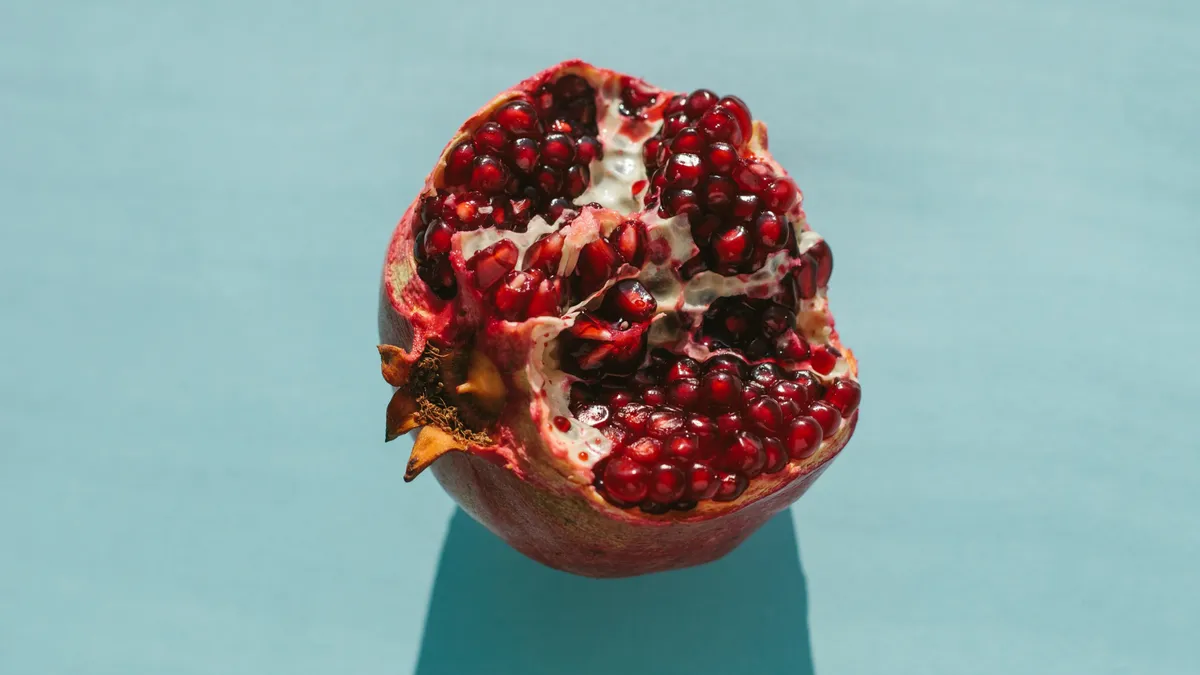
Each time you eat a juicy pomegranate, your gut bacteria can produce a natural metabolite called urolithin A. This little-known compound is making a big splash. In recent years, scientists have paid close attention to urolithin A because it seems to have anti-inflammatory, antioxidant, anti-tumor, and anti-aging properties. Initial evidence in humans even suggests that urolithin A can help the body remove aged or damaged parts of our cells, thereby improving their overall health. Now, for the first time, researchers at King's College London (KCL) have found evidence that urolithin A can activate a protein that plays a key role in heart health. In mouse models with stiff and failing hearts, urolithin A improved measures of heart function by as much as 80 percent compared to untreated animals, according to a press release from KCL. The findings are published in Science Advances, with financial support from the British Heart Foundation. The results have scientists hopeful that urolithin A could be a previously unidentified treatment option for a common form of heart failure.
This article is an excerpt. To read the full content, visit the original source. ScienceAlert
Related articles
Phospholipid remodeling of the cardiomyocyte membrane affects cardiac function - Nature
AcknowledgementsWe thank Yukiko Banzai, Yuko Ishiyama, Asami Ogawa, and Yingda Xiao of the University of Tokyo for their assistance with animal experiments and laboratory work. We are grateful to Yuriko Sakamaki of the Ochanomizu Research Facility, Institute of Science Tokyo, for her technical support with electron microscopy sample preparation and imaging. FundingThis work was supported by Grants-in-Aid for Scientific Research, Japan [grant Nos. 24K19023 to S. B. and 22K08174 to H. T.]; Sakakibara Heart Foundation Cardiovascular Research Program 2023 (to S. B.); Japan Foundation for Applied Enzymology (to S. B.). I. K. was supported by a Grant-in-Aid for Scientific Research (S) of the Japan Society for the Promotion of Science and by the Japan Agency for Medical Research, Development (JP20ek0210152, JP18gm6210010, JP20ek0210141, JP20ek0109440, JP20ek0109487, JP17gm0810013, JP18km0405209, JP21ek0109543, JP21ek0109569, JP21tm0724601, JP22ama121016, JP22ek0210172, JP22ek0210167, JP22bm1123011). Author informationAuthor notesThese authors contributed equally: Satoshi Bujo, Takayuki Fujiwara, Masayuki Kubota.
Age associated differences in the composition and function of yak milk - Nature
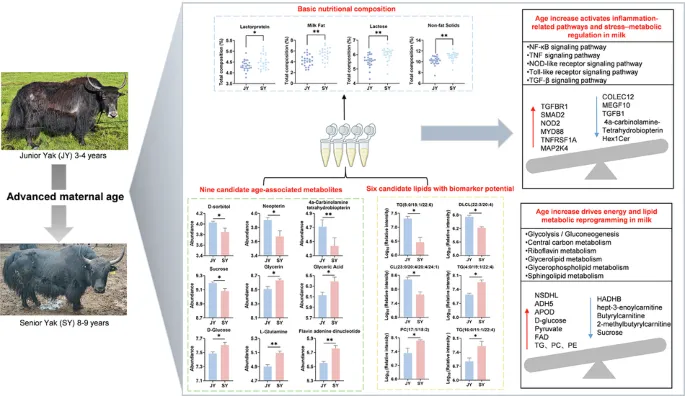
Yunduan Wang1 na1, Shaohui Beng1 na1, Kechao Chen1 na1, Xiaowei Li2, Shuang Zhang1, Xiaoqiang He2, Yunqiang Jia2, Yanwen Wang2, Yuhan Xiang1, Yan Xiong1,3, Daoliang Lan1,3, Jian Li1,3 & … Wei Fu1,3 We’re sharing this article early to provide faster access to peer-reviewed, accepted research. It is citable and carries a permanent DOI. This version is subject to further edits and will be replaced automatically by the final Version of Record. All legal disclaimers apply.
Superheavy-element compound reveals weaker-than-expected bond due to relativistic effects - Phys.org
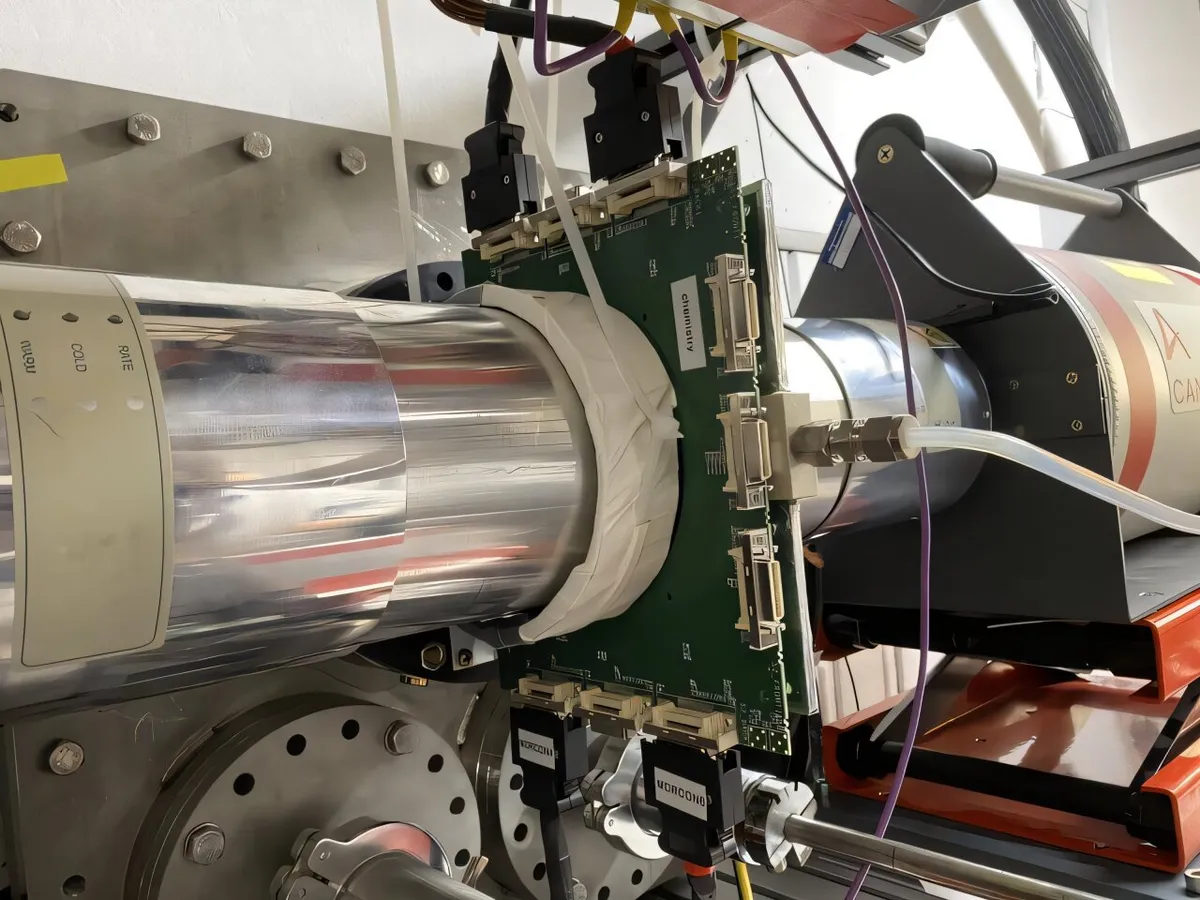
Experimental setup behind the TASCA separator: the first detector array, mounted behind the reaction chamber at TASCA, surrounded by two germanium detectors. An international collaboration led by a research group from GSI/FAIR in Darmstadt, Germany, has achieved the first measurement of the chemical stability of a superheavy element compound. The focus was on the hexacarbonyl complex Sg(CO)₆ of seaborgium (Sg, element 106). The result: The bond between the seaborgium atom and a carbonyl ligand is weaker than expected based on its position in the periodic table. The results are published in the journal Nature.
0 comments
No comments yet. Be the first to share your thoughts!