One with the world? A new look at brains transformed by psychedelics. - Ars Technica
This story deserves to be shared
Send it to someone who'd care, or post it on your networks.
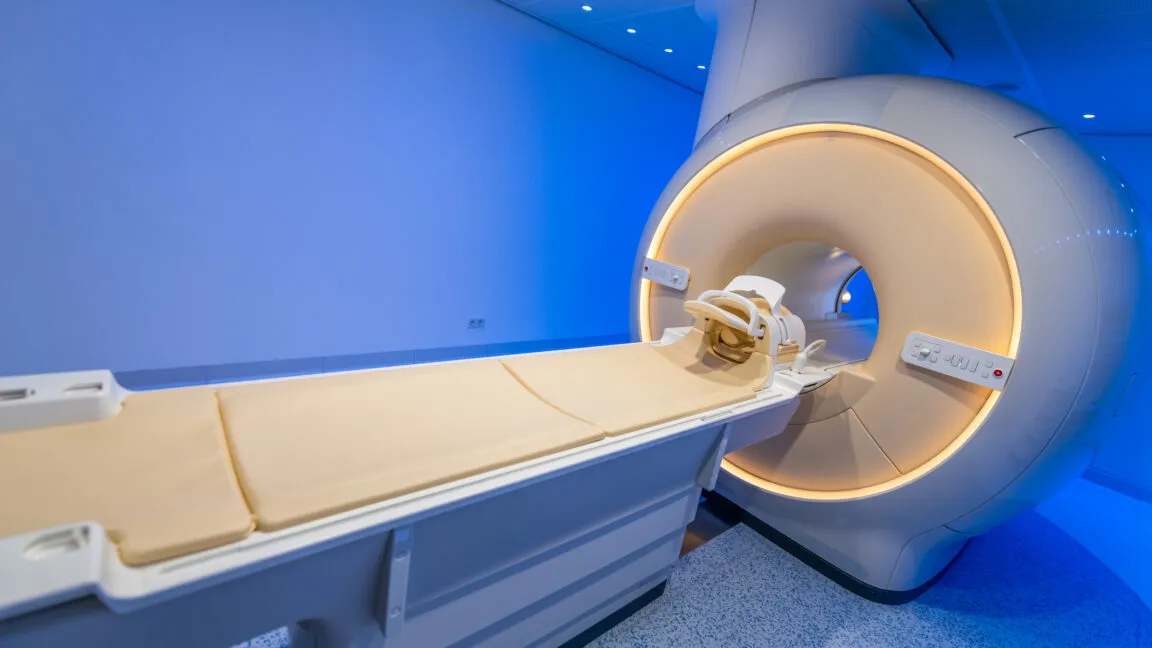
Participants meditated inside an MRI tube, with and without psilocybin.
For about a decade, the mainstream understanding has been that psychedelics cause chaos in the brain. Brain networks—the stable patterns of communication that handle vision, attention, or our sense of self, and more—loosen and start talking to each other all at once. EEG traces get noisier and more complex. “Think of the networks of the brain as highways,” says Devon Stoliker, a neuroscientist at Monash University. “Under psychedelics, these highways break down into many different directions.”
This article is an excerpt. To read the full content, visit the original source. Ars Technica
Related articles
From saunas to psychedelics, how a health reporter sorts science from hype - NPR
A reporting trip to a sauna conference in Oslo found NPR's Will Stone in a sauna with his clothes and recording gear. In this reporter's notebook, he explains how he investigates the science behind wellness claims. ELISSA NADWORNY, HOST: NPR's Will Stone reports on that line between proven medical treatments and alternative health practices. WILL STONE, BYLINE: If you're envisioning study subjects smoking weed and sipping free booze, then you have a pretty good picture of this experiment. NADWORNY: Weed versus alcohol, metabolic medicine and, yes, the science of sauna. STONE: It's basically a chance for the sauna world to nerd out. NADWORNY: In September, Will Stone traveled to Oslo, Norway, for the International Sauna Congress. STONE: You have scientists, business operators, advocates. They're all here for a few days to talk about everything from the health benefits to the finer points of sauna culture. NADWORNY: The program included party hopping and heat treatments in, quote, "floating sauna villages. " So for this week's Reporter's Notebook, I wanted to talk to Will about arguably the toughest assignment at NPR. I mean, come on. You got in a sauna in Oslo?
Could psilocybin treat brain injuries? Neuroscientist explains how psychedelics could fill a gap in head trauma care - Live Science
Live Science spoke with neuroscientist Argel Aguilar-Valles about recent research exploring psychedelics as a treatment for mild head trauma.

Israeli settlers attack European diplomats during West Bank olive harvest - Al Jazeera
Israeli settlers have attacked European diplomats, including a French mayor, near the Palestinian village of Taybeh in the occupied West Bank. The delegation was visiting Palestinian olive harvesters on Saturday when the Israeli attackers confronted the group. The attack comes a day after settlers assaulted a US journalist north of Ramallah. In Saturday’s incident, the settlers targeted Belgium’s consul general, French and Polish diplomats and Catholic representatives, Belgian Foreign Minister Maxime Prevot said. “A French mayor was assaulted and a Belgian vehicle damaged,” Prevot said, linking the attack to what he called Israel’s “illegal settlement policy” and pledging to push for further European Union sanctions. French mayor Bernard Baudoux, who was assaulted, told the AFP news agency that the violence suggests that “there is a tolerance on the part of the Israeli government” towards settler violence. Al Jazeera’s Nour Odeh, reporting from Ramallah, said the settlers surrounded the diplomats’ vehicles, pelted them with stones and smashed their windows.
A grad student said he became ill after noticing an odd taste in his water. His coworkers may have helped crack the case - CNN
What researchers uncovered through lab testing and surveillance footage, prosecutors said, was a plot by his fellow graduate student to intentionally poison him.
0 comments
No comments yet. Be the first to share your thoughts!