Numerical simulation and structural optimization of electrostatic precipitators for particle purification in space capsules - Nature
This story deserves to be shared
Send it to someone who'd care, or post it on your networks.
We’re sharing this article early to provide faster access to peer-reviewed, accepted research. It is citable and carries a permanent DOI. This version is subject to further edits and will be replaced automatically by the final Version of Record. All legal disclaimers apply.
AbstractTo support the performance optimization of electrostatic precipitators (ESPs) for potential aerospace applications, a coupled numerical model integrating the discrete phase model (DPM) with user-defined scalar (UDS) transport equations was developed to resolve the electric-field characteristics and particle transport behavior within the ESP. Focusing on the structural optimization of the discharge electrode and collection plate, four representative ESP configurations were established for comparison: a conventional flat-plate type, a W-type, a W1-type combining a corrugated collection plate with an auxiliary electrode, and a single-electrode type. The effects of a pre-installed filter screen, the internal airflow distribution, the electric-field and charge-density characteristics, and the relationship between particle trajectories and collection efficiency were systematically investigated.
This article is an excerpt. To read the full content, visit the original source. Nature
Related articles
Deployment of edge-lightweight AI vertical models in multimodal anomaly detection and energy optimization of tech-long production line - Nature
We’re sharing this article early to provide faster access to peer-reviewed, accepted research. It is citable and carries a permanent DOI. This version is subject to further edits and will be replaced automatically by the final Version of Record. All legal disclaimers apply. AbstractAiming at the problems that the abnormal state of high-speed liquid packaging production lines is difficult to identify in time, the computing power of edge controller is limited, and the energy consumption regulation and condition monitoring are separated from each other, a multimodal lightweight artificial intelligence (AI) system embedded in Tech-Long production controller is constructed; this realizes the collaborative optimization of abnormal operation window identification and energy consumption of the whole line. First, this study collects vibration, acoustic, and thermal signals from the bottle blowing, filling, and packaging sections; it also constructs cross-sectional anomaly characterization through time synchronization, feature-level alignment, and hierarchical fusion.

Ancient mud reveals a surprising secret about Greenland’s ice - Earth.com
Mud from a fjord shows an Atlantic air pattern brought wetter, colder spells to southern Greenland, a clue to how its ice may fare. Greenland’s ice is shrinking as the planet warms. But in the island’s southwest, rainfall and snowfall have been influenced by the same North Atlantic air-pressure pattern for at least 5,000 years. When that pattern tipped one way, the region turned wetter and colder. The record comes from mud on the floor of a Greenland fjord, and it suggests snowfall, not only temperature, shaped how the area’s ice grew and shrank. It doesn’t yet show how glaciers there will respond to the warming ahead. Johan Faust, a researcher at MARUM, the Center for Marine Environmental Sciences at the University of Bremen in Germany, led the work with colleagues in Germany, Norway, Denmark and Canada. A seesaw in the airThe pattern is called the North Atlantic Oscillation. It’s the difference in air pressure between a low that sits near Iceland and a high near the Azores, and it’s strongest in winter. When that difference is large, the pattern is in its positive phase. Northwestern Europe and southwestern Greenland both get more rain and snow.

Simulations explore nuclear mitigation of asteroid threats - Phys.org
Lawrence Livermore National Laboratory researcher Isaiah Santistevan led the development of three-dimensional simulations exploring how a nuclear device could deflect or disrupt an asteroid threatening Earth. Credit: Blaise Douros/LLNL Lawrence Livermore National Laboratory (LLNL) researchers are developing three-dimensional simulations to examine how a nuclear device could be used to deflect or potentially disrupt an asteroid threatening Earth.
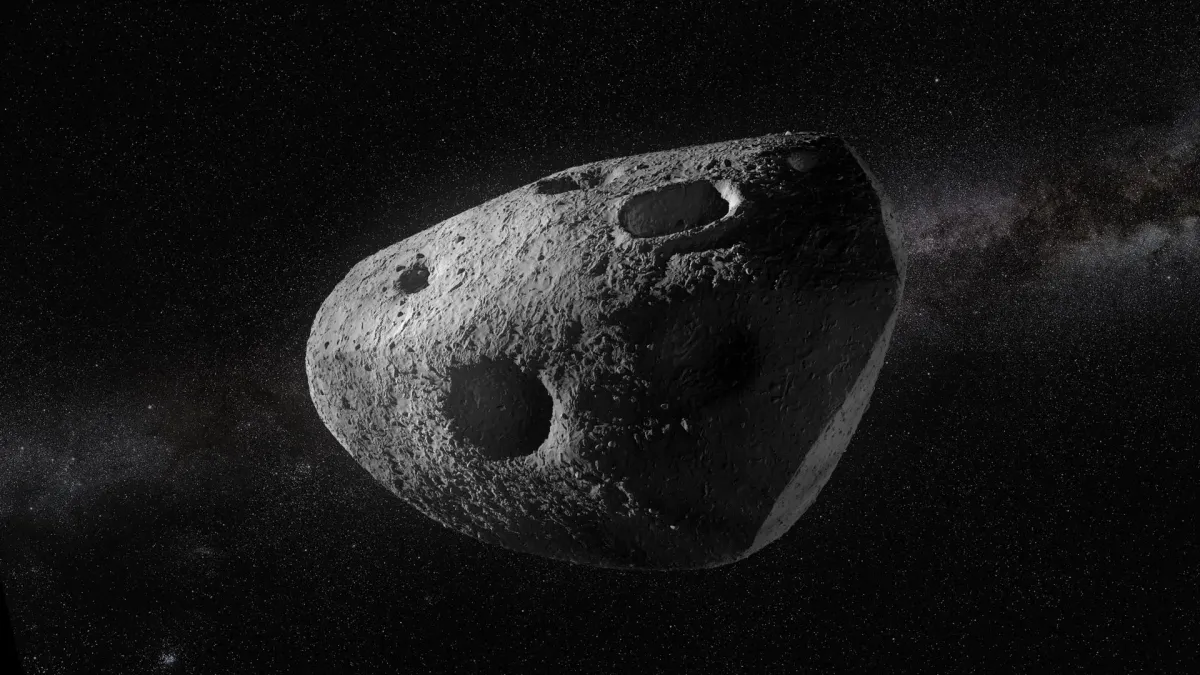
A giant asteroid will skim Earth in 2029—and it’s not us who should worry - Futura, le média qui explore le monde
The Futura Team represents the pulse of Futura’s editorial department, bringing together a collective expertise dedicated to the dissemination of scientific knowledge. Rather than the work of a single author, every article published under this signature is the result of a rigorous collaborative process involving journalists, editors, and fact-checkers. Specializing in news analysis via desk research and international wire services, the team focuses on transforming raw information into accessible, verified content. This curation and synthesis process ensures constant monitoring of technological innovations and major scientific breakthroughs. By cross-referencing sources and conducting multiple rounds of peer review, the Futura Team guarantees scientific accuracy and pedagogical clarity. This collective signature serves as a hallmark of trust, providing reactive, cross-disciplinary information at the forefront of current events Normally, when an asteroid swings by Earth, the burning question is simple: “Are we at risk?” Should we prepare for a massive space rock to pancake our planet? Not this time.
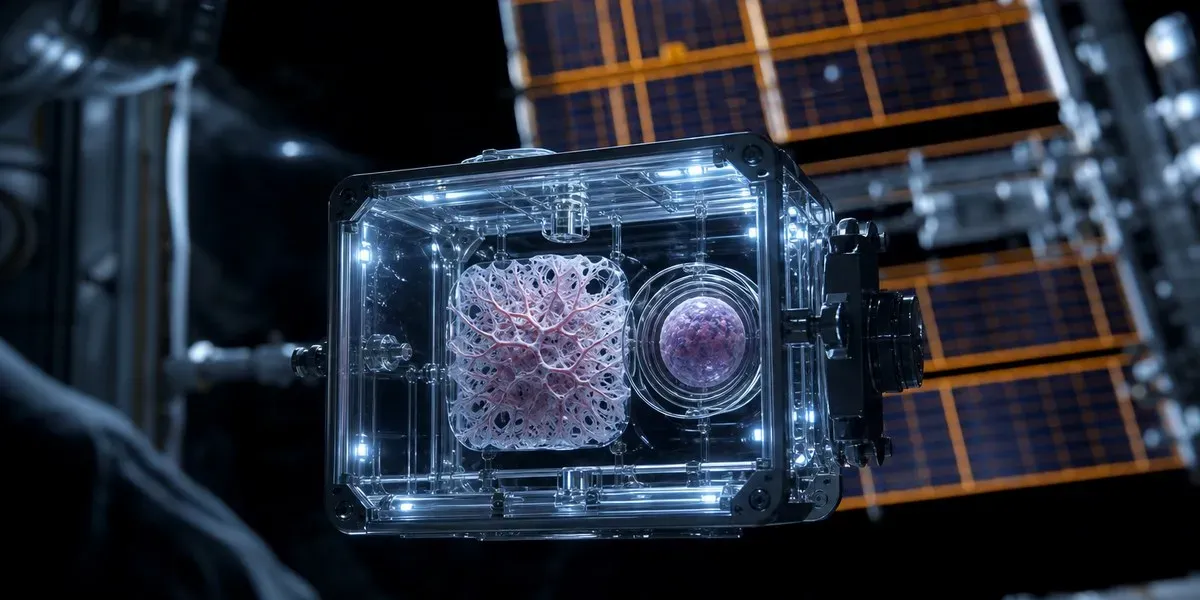
Dragon delivers organoids and equipment for artificial retinas to the ISS — ScienceDaily - UA.NEWS
SpaceX's Dragon spacecraft docked with the International Space Station on October 15 and delivered more than 6,300 pounds of food, essential supplies and scientific equipment to the crew of Expedition 75. The cargo included equipment for manufacturing artificial retinas in microgravity, brain organoids, three-dimensional models of heart tissue and materials for studying a new type of glass. As ScienceDaily reports, Dragon docked with the space-facing port of the Harmony module at 10:27 a.m. Eastern Time. This is SpaceX's 35th commercial ISS resupply mission under a NASA contract. Research for medicineThe equipment for manufacturing artificial retinas is intended to help study the possibility of creating such structures in microgravity. Scientists hope these technologies may be useful for restoring vision on Earth in the future.3D models of heart tissue that reproduce important properties of the human heart were also sent to the station. They are planned to be used to improve methods for testing large numbers of potential medicines during future space missions. More current news is available on the UA. News Telegram channel Telegram.
0 comments
No comments yet. Be the first to share your thoughts!