Next-generation total-body PET scanner can produce diagnostic-quality images in as little as 1 minute - Medical Xpress
This story deserves to be shared
Send it to someone who'd care, or post it on your networks.
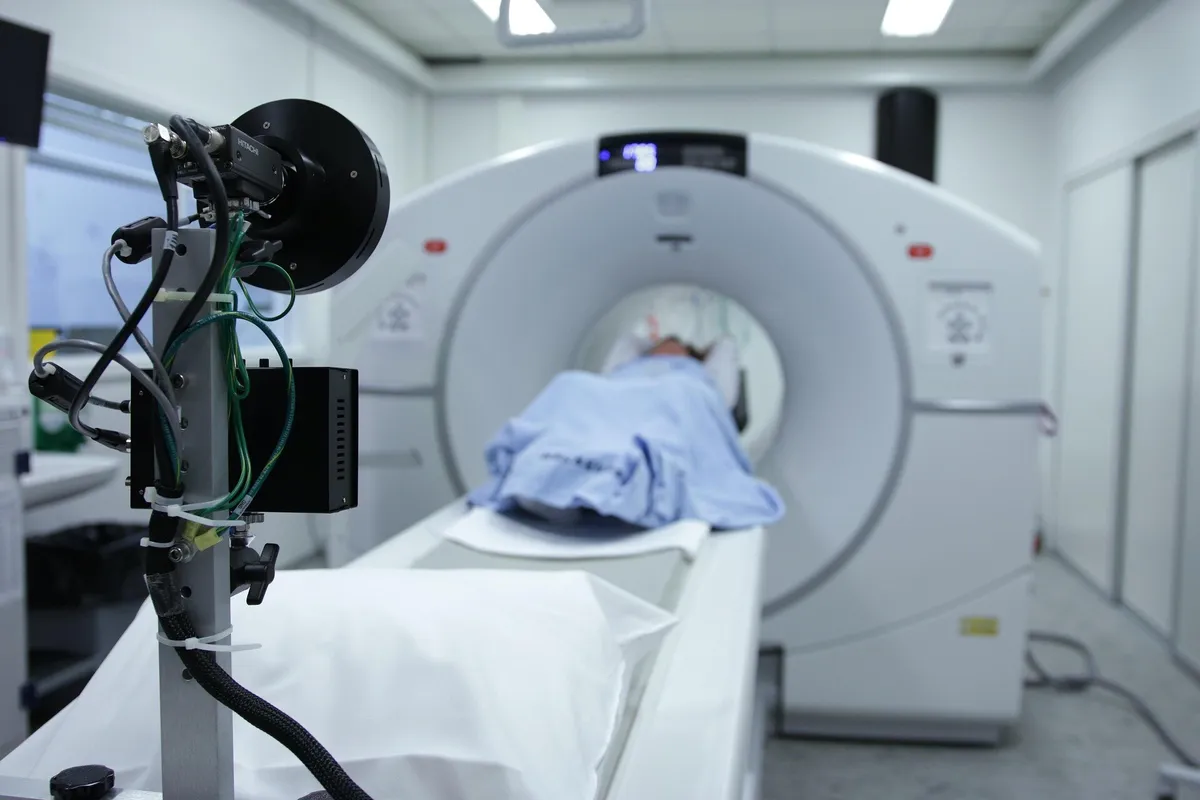
A next-generation total-body PET/CT scanner can produce diagnostic-quality images in as little as 1 minute of scanning, according to research presented today at the 39th Annual Congress of the European Association of Nuclear Medicine (EANM'26). Even its fastest images were rated more highly on average than those from a standard PET/CT scanner.
PET/CT is widely used to diagnose, stage and monitor cancer. Conventional PET/CT scanners have a short axial field of view, meaning they image the body section by section, typically requiring five to six 'bed positions' to cover the body from head to thigh. Long-axial field-of-view (LA-FOV) systems capture a much larger part of the body at once and detect more of the signal emitted by the radiotracer, raising the possibility of much shorter scans without sacrificing image quality.
This article is an excerpt. To read the full content, visit the original source. Medical Xpress
Related articles
New CT scanner now serving Cumberland County - Nova Scotia Health
EANM: Next-generation PET scanner cuts imaging time to one minute - AuntMinnieEurope
The scanner's fastest images were rated more highly on average than those from a standard PET/CT scanner.

‘Keep away from the doctor’: a visit to an influencer’s wellness event, where the advice could kill - The Guardian
A roar of laughter erupts from a crowd inside a large conference room at the De Vere Cranage Estate hotel. The joke? The idea that visiting the doctor could help treat a serious illness. On stage the controversial Australian proponent of natural remedies Barbara O’Neill is taking part in a question-and-answer session during a five-day wellness conference, where science mixes uncomfortably with Bible verse and potentially deadly pseudo-scientific practices. She is advising people attending at the event in Cheshire on a variety of medical ailments, and dismisses the use of antibiotics, vaccines or scientifically proven cancer treatment. Tickets for the residential retreat can cost up to £1,300. An undercover reporter for the Guardian attended for one day, observing four sessions covering topics including the immune system and one titled Barbara Under Attack. The audience’s rapturous laughter is prompted by a woman asking O’Neill if there is anything that could help her lupus, which she says has not responded well to the doctor’s treatments. “Yes, keep away from the doctor,” quips O’Neill.

A Clinical Framework for Antithrombotic Review in Anticoagulated Patients With Stable Coronary Artery Disease: When Should Aspirin Be Stopped? - Cureus
Patients receiving oral anticoagulation (OAC) for atrial fibrillation frequently have concomitant coronary artery disease (CAD), raising questions about the duration of additional antiplatelet therapy. Triple antithrombotic therapy combines OAC with aspirin and a P2Y₁₂ inhibitor, usually clopidogrel, whereas dual antithrombotic therapy combines OAC with a single antiplatelet agent. Early aspirin withdrawal from triple therapy and subsequent withdrawal of the remaining antiplatelet are separate decisions requiring assessment of the coronary timeline and current treatment indications. This narrative editorial examines randomized evidence and proposes a structured medication review framework. The evidence generally supports OAC monotherapy in appropriately selected patients with stable CAD, with reduced bleeding and favourable net clinical outcomes compared with combined treatment. However, aspirin-specific findings require distinction from comparisons involving clopidogrel or mixed antiplatelet regimens. Overall trial results do not establish identical benefits or harms across patients with previous myocardial infarction, multivessel disease, or complex coronary intervention. Differe
0 comments
No comments yet. Be the first to share your thoughts!