Newton’s 300-year-old law just passed its biggest test yet - Science Daily
This story deserves to be shared
Send it to someone who'd care, or post it on your networks.
This article is an excerpt. To read the full content, visit the original source. Science Daily
Related articles
Scientists Trace How Cancer Passed Between Twins Before Birth - ScienceAlert
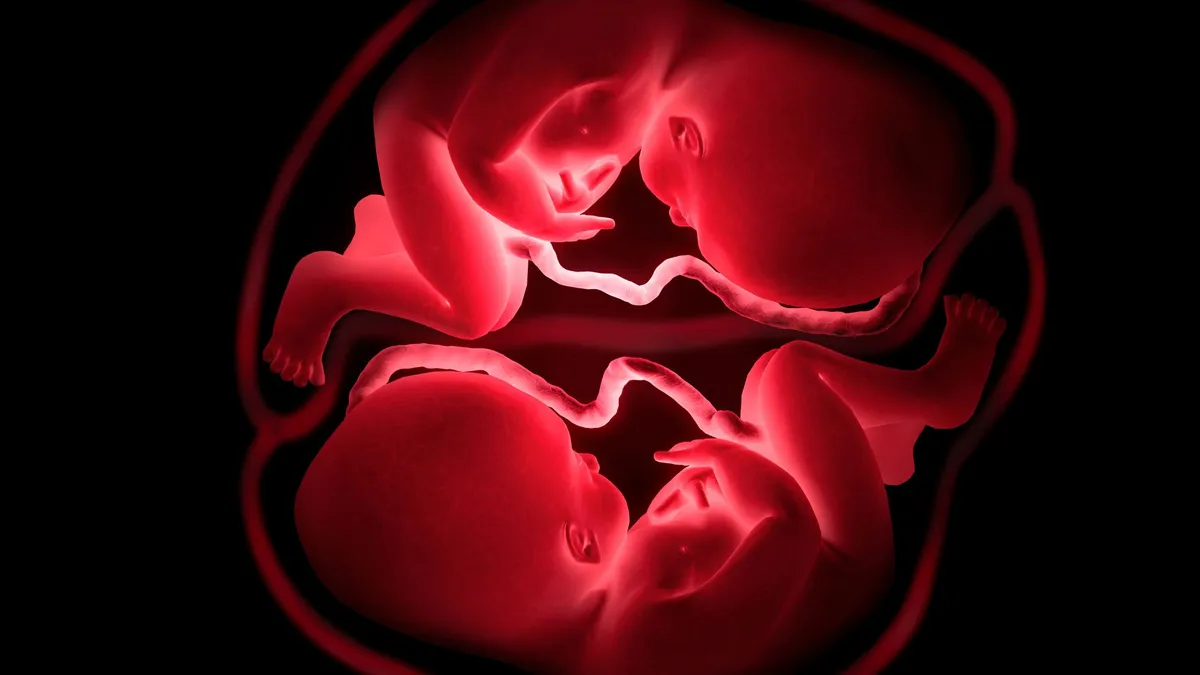
A facial mass detected before birth prompted the early delivery of identical twin sisters. A fetal MRI at 33 weeks showed the mass on one baby's face. When the sisters were born a week later, tumors were found in both. Two children had the same cancer, raising a question that their shared beginnings alone could not answer. Had the disease started separately in each sister, or had cancer cells crossed from one to the other before birth? Researchers turned to a record hidden within their cells. DNA changes, accumulated as their bodies developed, allowed the team to reconstruct events that had happened months before anyone saw a tumor. The study in Nature Communications shows that the cancer began in one sister and passed to the other in the womb, most likely through a single transfer late in the second trimester. The same investigation uncovered clues to how the sisters themselves had formed. The two girls, Amelia and Amaya, died soon after birth. Their family consented to post-mortem examinations for research. The authors dedicate the study to the sisters, whose mother wanted them acknowledged by name.
Is intelligence really passed down by our parents? What science says today - Futura, le média qui explore le monde

Simulations explore nuclear mitigation of asteroid threats - Phys.org
Lawrence Livermore National Laboratory researcher Isaiah Santistevan led the development of three-dimensional simulations exploring how a nuclear device could deflect or disrupt an asteroid threatening Earth. Credit: Blaise Douros/LLNL Lawrence Livermore National Laboratory (LLNL) researchers are developing three-dimensional simulations to examine how a nuclear device could be used to deflect or potentially disrupt an asteroid threatening Earth.
0 comments
No comments yet. Be the first to share your thoughts!