New study detects silent atherosclerosis in healthy young adults - News-Medical
This story deserves to be shared
Send it to someone who'd care, or post it on your networks.
This article is an excerpt. To read the full content, visit the original source. News-Medical
Related articles
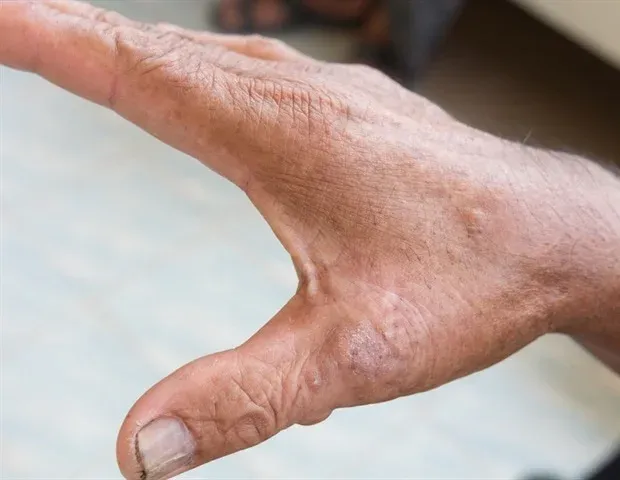
New imaging technique detects subtle skin changes in scleroderma patients - News-Medical
Scleroderma (systemic sclerosis) is a rare, chronic, autoimmune disease that causes the body to produce too much collagen, leading to the hardening and thickening of the skin and internal organs. For more than 50 years, physicians have relied on manually pinching the skin to assess its thickness, a subjective approach that remains central to the diagnosis of systemic sclerosis, assessment of disease extent and progression, and monitoring of response to treatment. Despite being the accepted standard practice, doctors can score the same patient differently based on their own unique touch and judgement, making it difficult to accurately track changes in skin thickening over time or assess a patient's response to treatment. For the first time, researchers at Boston University Chobanian & Avedisian School of Medicine and the Boston University Department of Biomedical Engineering have developed and tested a camera-based technique called spatial frequency domain imaging (SFDI) to assess skin changes in scleroderma patients. SFDI works by shining patterns of harmless light on the skin, without touching it, and measuring how the light bounces back.
Fauci: The Oracle Who Went Silent At The Wrong Time - Health Policy Watch

Synchrotron imaging detects hidden lung risk for female farmers - Canadian Occupational Safety
A USask mouse study combining endotoxin and glyphosate exposure found lung changes only synchrotron imaging could detect A University of Saskatchewan (USask) study has found that combined exposure to two common agricultural contaminants – endotoxin and the herbicide glyphosate – produced lung damage in female mice that standard biomedical testing missed entirely, and that only became visible through synchrotron imaging at the Canadian Light Source (CLS) in Saskatoon. The research, led by Dr. Shelley Kirychuk, director of the Canadian Centre for Rural and Agricultural Health (CCRAH) at USask, was published this year in the journal Scientific Reports.
Patient-centered financial navigation assistance helps reduce financial toxicity among cancer patients - Medical Xpress
Among cancer patients, the high financial cost of cancer care is a prevalent problem. This financial burden is also associated with potentially harmful behavioral strategies that patients might use to cope with costs, such as delaying or forgoing treatment and skipping medications. Collectively, researchers refer to this impact as financial toxicity.

Continuous glucose monitors help type 2 diabetes patients spend 5 more hours a day in healthy blood sugar range - Medical Xpress
Continuous glucose monitors (CGMs) could transform diabetes management for millions of Americans with type 2 diabetes who don't take insulin, according to findings published in the New England Journal of Medicine. The clinical trial found that adults using CGMs spent approximately five additional hours each day within their target blood sugar range compared with those receiving routine care. Nearly twice as many CGM users also achieved an A1c level below 7%, a common treatment goal for people with diabetes.
0 comments
No comments yet. Be the first to share your thoughts!