New “plant armor” more than triples strawberry yields - Science Daily
This story deserves to be shared
Send it to someone who'd care, or post it on your networks.
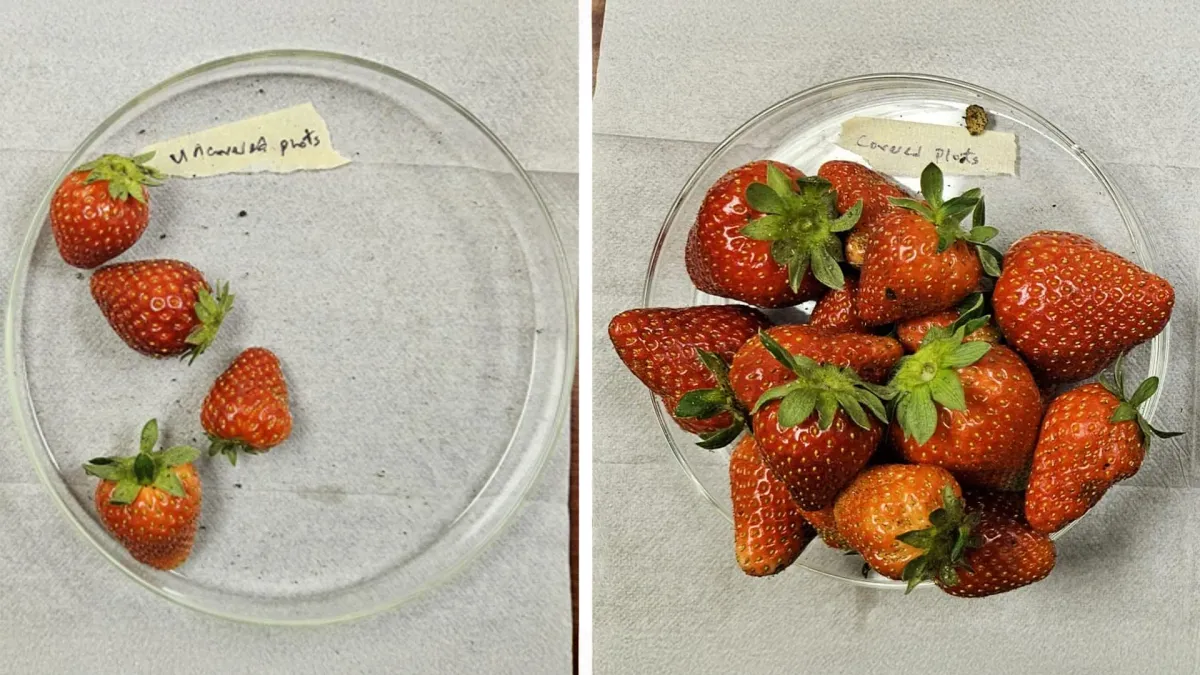
A newly developed textile covering helped strawberry plants produce more than three times as much fruit in tunnel field trials, while showing no harmful effects on plant health. Researchers say the technology may also offer a way to reduce water use and reliance on pesticides in strawberry production.
The fabric, called Plant Armor, is designed to be placed directly over strawberry plants. Its three dimensional structure creates a barrier that keeps insects from reaching the plants, while the layered material still allows sunlight, rain, and air to pass through.
This article is an excerpt. To read the full content, visit the original source. Science Daily
Related articles
Drape Some of This 'Plant Armor' Fabric Over a Strawberry Patch to Triple Yields with Less Pesticides - Good News Network
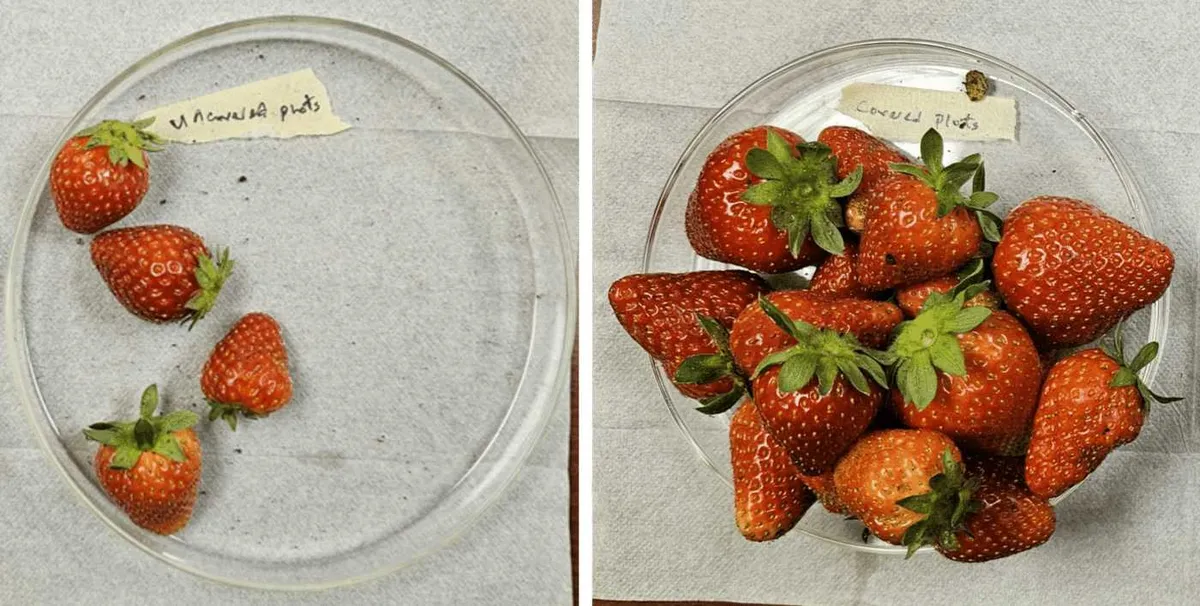
(Left) uncovered strawberry yield (right) yield from strawberries grown with Plant Armor – credit Gabriel Olawuyi, released by NCSU A new textile used to cover strawberry plants more than tripled fruit yields in field tests, without negatively impacting plant health.

SpaceX Sent 6,300 Pounds to the Space Station. The Strangest Cargo Was Grown in a Lab - Inc.com
The spacecraft delivered materials and equipment for new research studies to the station.

Ancient mud reveals a surprising secret about Greenland’s ice - Earth.com
Mud from a fjord shows an Atlantic air pattern brought wetter, colder spells to southern Greenland, a clue to how its ice may fare. Greenland’s ice is shrinking as the planet warms. But in the island’s southwest, rainfall and snowfall have been influenced by the same North Atlantic air-pressure pattern for at least 5,000 years. When that pattern tipped one way, the region turned wetter and colder. The record comes from mud on the floor of a Greenland fjord, and it suggests snowfall, not only temperature, shaped how the area’s ice grew and shrank. It doesn’t yet show how glaciers there will respond to the warming ahead. Johan Faust, a researcher at MARUM, the Center for Marine Environmental Sciences at the University of Bremen in Germany, led the work with colleagues in Germany, Norway, Denmark and Canada. A seesaw in the airThe pattern is called the North Atlantic Oscillation. It’s the difference in air pressure between a low that sits near Iceland and a high near the Azores, and it’s strongest in winter. When that difference is large, the pattern is in its positive phase. Northwestern Europe and southwestern Greenland both get more rain and snow.
0 comments
No comments yet. Be the first to share your thoughts!