Keeping Our Fiscal Powder Dry: Why Rising Public Debt Leaves Canada Less Prepared for the Next Crisis - C.D. Howe Institute
This story deserves to be shared
Send it to someone who'd care, or post it on your networks.
Federal and provincial governments need the fiscal capacity to borrow heavily when major crises occur. Drawing on five premises about public debt, fiscal policy, and public behaviour, this Commentary argues that preserving the necessary fiscal capacity requires reducing debt-to-GDP ratios after crises; otherwise, repeated borrowing from progressively higher debt levels risks undermining investor confidence, raising borrowing costs, and eventually forcing governments into painful tax increases or spending cuts.
Canada’s combined federal-provincial net debt-to-GDP ratio is now roughly 74 percent, placing it in a zone of “fiscal complacency.” This report divides public debt into three illustrative zones: “fiscal prudence” below roughly 67 percent, “fiscal complacency” between roughly 67 and 95 percent, and “forced austerity” above roughly 95 percent. These boundaries are deliberately approximate, but the framework highlights the value of maintaining enough fiscal room to absorb a large future shock without triggering higher borrowing costs.
This article is an excerpt. To read the full content, visit the original source. C.D. Howe Institute
Related articles

Whey up: Protein powder prices soar as global demand grows - CBC
BusinessFood manufacturers and fast food companies are cramming whey protein into everything. That’s causing shortages of the ingredient and pushing prices to record highs. Now whey protein is also a target in the U. S.-Canada trade war - increasing costs that may end up being passed on to customers. Consumers, companies feel squeeze of supply shortageNisha Patel · CBC News · Posted: Oct 06, 2026 4:00 AM EDT | Last Updated: October 7Listen to this articleEstimated 5 minutesThe audio version of this article is generated by AI-based technology. Mispronunciations can occur. We are working with our partners to continually review and improve the results. How counter-tariffs on the U. S. could backfire on Canadian whey protein companies (CBC News)Jennifer Mason is trying to eat more protein and has supplemented her diet with whey protein powder over the past few years. But lately, soaring prices are giving her sticker shock. And as a new mom with rising expenses, she's rethinking her shopping list. "I'm just cutting back. I'm trying to find protein in whole foods that I'm eating rather than actually getting products," she says.
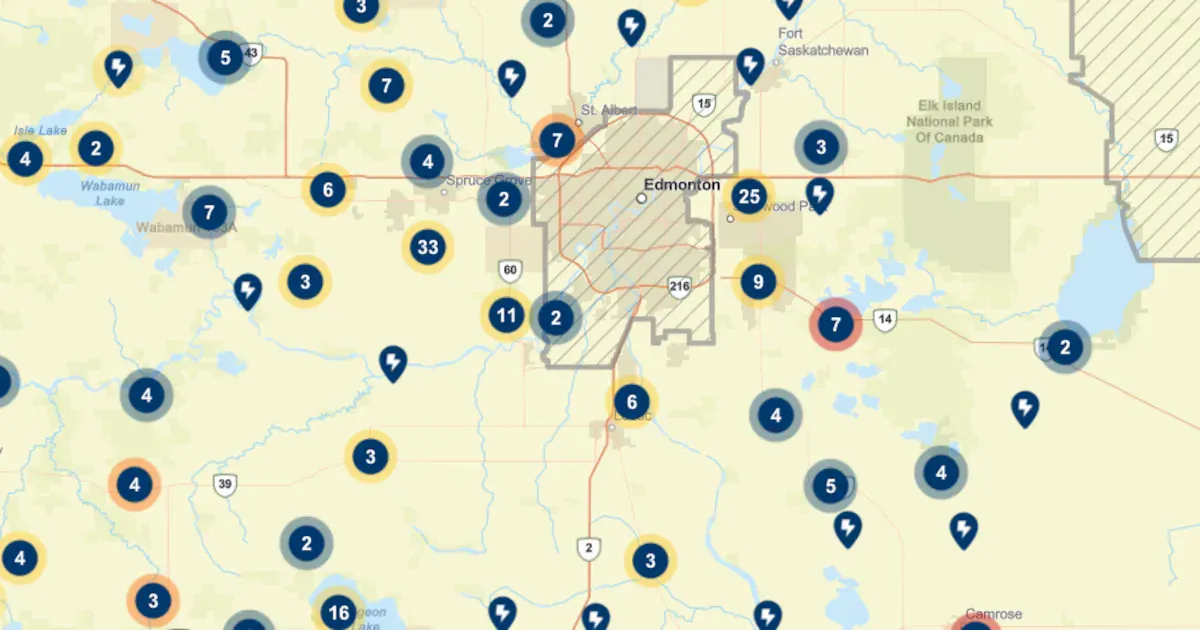
Power outages ramp up as windstorm sweeps through Edmonton and area - CTV News
AtlanticNova ScotiaNew BrunswickPrince Edward Island Newfoundland and LabradorCalgaryLethbridgeKitchenerGuelphNorthern OntarioSudburyNorth BaySault Ste. MarieTimminsOttawaKingstonBrockvillePembrokeReginaYorktonSaskatoonPrince AlbertTorontoWatchWeatherPeelHamiltonDurhamYorkHaltonNiagaraQueen's ParkToronto City HallIn PicturesVancouverVancouver IslandCanadaLocal SpotlightRoyal FamilyPoliticsNanosPower PlayQuestion PeriodFederal Election 2025WorldMideast ConflictRussia-Ukraine WarWatchLatestCaptured on CameraPoliticsLifestyleConsumerHealthExplainedEntertainmentTechnologyDeception DecodedAutosEnvironmentBusinessInflationReal EstateAutos

Electrocution that left Nova Scotia man dead happened during copper wire theft: RCMP - CTV News
AtlanticNova ScotiaNew BrunswickPrince Edward Island Newfoundland and LabradorCalgaryLethbridgeKitchenerGuelphNorthern OntarioSudburyNorth BaySault Ste. MarieTimminsOttawaKingstonBrockvillePembrokeReginaYorktonSaskatoonPrince AlbertTorontoWatchWeatherPeelHamiltonDurhamYorkHaltonNiagaraQueen's ParkToronto City HallIn PicturesVancouverVancouver IslandCanadaLocal SpotlightRoyal FamilyPoliticsNanosPower PlayQuestion PeriodFederal Election 2025WorldMideast ConflictRussia-Ukraine WarWatchLatestCaptured on CameraPoliticsLifestyleConsumerHealthExplainedEntertainmentTechnologyDeception DecodedAutosEnvironmentBusinessInflationReal EstateAutos

Runners Take on Cape to Cabot Challenge Tomorrow - VOCM
The 20th annual Cape to Cabot road race is taking place tomorrow. The grueling 20 km trek sees participants running from one historic landmark to another: From Cape Spear to Cabot Tower on top of Signal Hill. The race starts at 8 a.m., and because of that there are a few related road closures in St. John’s. Between 7:45 and 11a.m. there will be numerous road closures along the route. A full list can be found online at VOCM dot com. Expect traffic impacts from 7:45 a.m. to 11 a.m. on routes including Blackhead Road, Southside Road, Water Street, Harbour Drive, Duckworth Street, Temperance Street and Signal Hill Road.

Alberta referendum expected to bring finality, but also more questions on separation - Global News
On Monday, Albertans vote on whether to stay in Canada or hold another binding referendum on quitting Canada. If the vote goes as polls suggest, a majority of Albertans will mark an X to stay in Confederation, and Premier Danielle Smith has said if that’s so, she expects everyone to accept it and move on. Leaders of the independence movement contest that. And political watchers are divided about whether separation — previously a fringe sentiment — will now be a prominent, permanent feature of Alberta’s political landscape, as in Quebec. Julian Castro-Rea, a political-science professor at the University of Alberta who studies the separation debates in Quebec and Alberta, believes as long as Alberta feels alienated from the Canadian capital — feeling that Ottawa benefits from Alberta’s resource economy without giving back — the movement will have fuel. “Even if the referendum is lost, the westernization will still be around, because it’s kind of a way which, traditionally, Albertans have related to the rest of Canada,” says Castro-Rea, who believes western alienation may remain indefinitely. Story continues below advertisement
0 comments
No comments yet. Be the first to share your thoughts!