James Webb telescope detects 'galaxy-killing wind' near the dawn of time - Live Science
This story deserves to be shared
Send it to someone who'd care, or post it on your networks.
This article is an excerpt. To read the full content, visit the original source. Live Science
Related articles
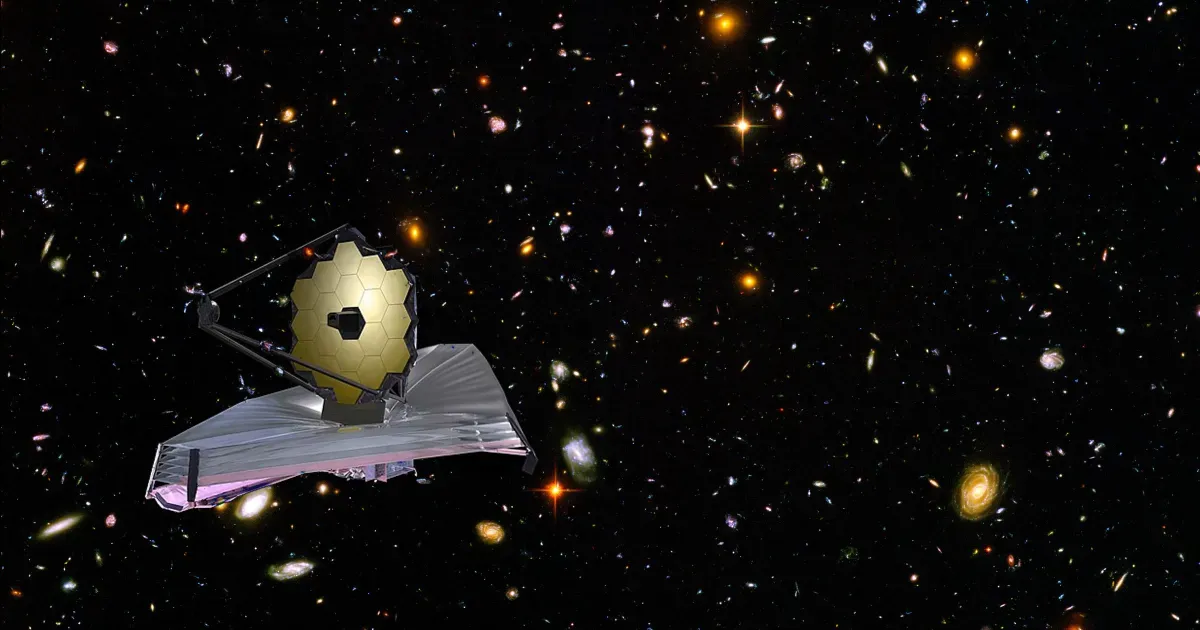
Scientists Puzzled as James Webb Detects Signal From Completely Empty Void in Space - Futurism
Using the NASA’s James Webb Space Telescope, a team of researchers led by University of Minnesota astrophysicist Mason Huberty had a closer look at a group of almost 10,000 galaxies spanning billions of light-years in the Fornax constellation. As detailed in a new paper published in The Astrophysical Journal, they honed in on a small space in the region that they thought was entirely unoccupied. But to their astonishment, they observed a single emission line emanating from it — twice over a span of just three months. Emission lines are bright, narrow bands of light emitted at a specific wavelength by distant celestial objects and other phenomena. Puzzlingly, prior observations from the same region didn’t feature the same reading.
NASA’s Webb Detects Methane on Interstellar Comet 3I/ATLAS - NASA Science (.gov)

Researchers identify first known juvenile fossil of Huphsuchus dating back approximately 247 mln years - Global Times
Researchers identify world’s 1st known juvenile fossil of Huphsuchus dating back around 247 mln years in C. China’s Hubei Reconstruction of a juvenile Huphsuchus in its natural habitat Photo: Courtesy of Hubei Institute of GeosciencesAn international collaborative study has recently confirmed the world’s first juvenile fossil of Huphsuchus, an extinct genus of small marine reptiles dating back approximately 247 million years, discovered in Yuan’an county, Central China’s Hubei Province, the Global Times learned from the Hubei Institute of Geosciences, Hubei Geological Bureau, on Sunday. The research has been published in the Zoological Journal of the Linnean Society. Wang Yinuo of Peking University, and Zou Yarui, a senior engineer from the Hubei Institute of Geosciences, Hubei Geological Bureau, are the paper’s co-first authors. Researched and named in 1972 by Chinese paleontologist Yang Zhongjian, Huphsuchus was a prehistoric marine reptile that lived in shallow marine waters during the Early Triassic, approximately 247 million years ago.
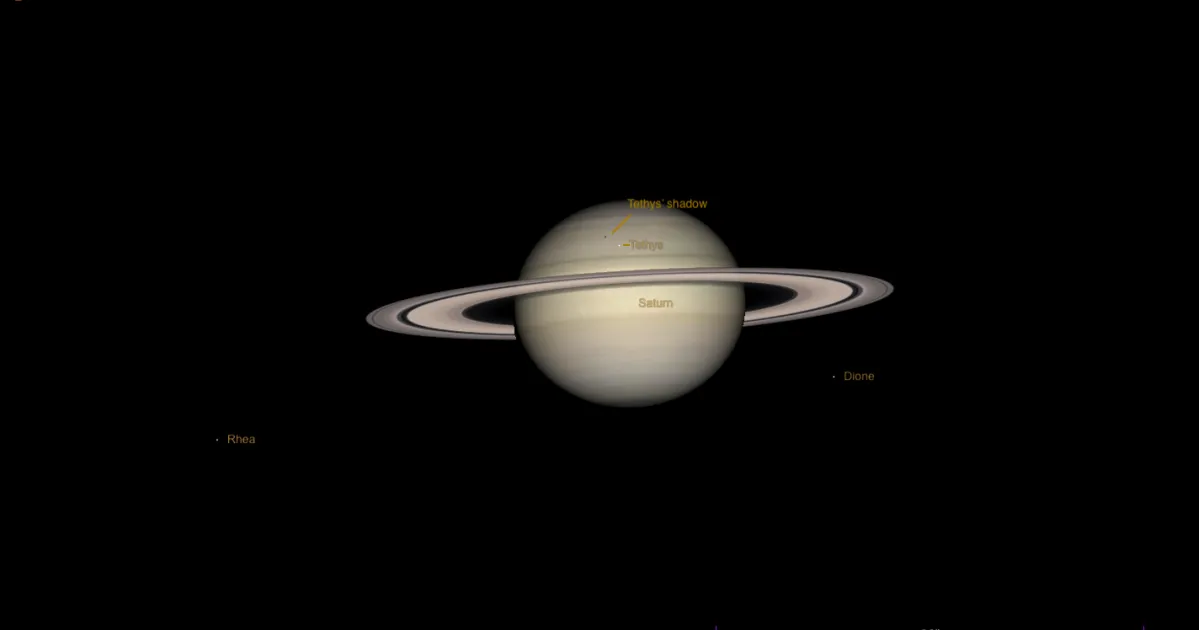
The Sky Today on Sunday, October 18: Another Tethys transit - Astronomy.com
Saturn’s small moon Tethys makes another transit across the disk along with its shadow; several other moons are observable as well. For a few hours on October 18, Tethys transits Saturn, accompanied by its shadow. Astroimagers may be able to capture its journey. Titan lies farther east, outside this field of view. Only moons brighter than 10th magnitude are shown. Credit: Alison Klesman (via TheSkyX)

A Deep-Sea Mining Trial Rapidly Threw The Seafloor Ecosystem Off Kilter - ScienceAlert
The deep sea may seem very far away, but it's more connected to our world than you might think. In the South China Sea, for instance, nutrient-rich waters well up from the deep, sustaining coastal fisheries that support the livelihoods of about 3.7 million people each year. Mining companies also have their eyes on the deep sea, where they can see riches in polymetallic nodules, cobalt-rich rocks, and other mineral deposits. A new paper from scientists at the Chinese Academy of Sciences gives a preview of how deep-sea mining can rapidly disrupt the microbes central to nutrient cycling on the South China Sea floor. The results are reported in the scientific journal Total Environment Microbiology. In 2020, samples of cobalt-rich rock were collected during a mining trial in the South China Sea, at around 1,300 meters below sea level. As is typical of deep-sea mining, the rocks were crushed into small pieces first, and then transported to the surface. "A large amount of sediment and other particulate matter were stirred up duringmining, and this process had several direct and indirect effects on the insitu microbial ecosystem," the authors note.
0 comments
No comments yet. Be the first to share your thoughts!