HPV Self-Sampling May Improve Cervical Screening Access - EMJ

HUMAN papillomavirus (HPV) self-sampling could offer a promising approach to improving cervical cancer screening access among socially vulnerable migrant women, according to a mixed-methods study conducted in Portugal.
Researchers found high levels of acceptability among women participating in a community-based HPV self-sampling intervention, with significant improvements in perceived comfort, confidence, and trust following the experience. The findings suggest that culturally adapted screening approaches delivered through trusted community organisations could help address persistent inequalities in cervical cancer prevention.
This article is an excerpt. To read the full content, visit the original source. EMJ
Related articles
How Self-Care Can Fill Gaps in Cervical Cancer Screening - Think Global Health
ARES-SI: adaptive reinforcement-enhanced sampling for suicidal ideation - Nature
We’re sharing this article early to provide faster access to peer-reviewed, accepted research. It is citable and carries a permanent DOI. This version is subject to further edits and will be replaced automatically by the final Version of Record. All legal disclaimers apply. AbstractSuicidal ideation (SI) fluctuates rapidly within individuals, but standard ecological momentary assessment (EMA) uses fixed schedules that miss critical risk windows. We present ARES-SI (Adaptive Reinforcement-Enhanced Sampling for Suicidal Ideation), a reinforcement learning system that personalizes EMA timing to individual risk patterns. ARES-SI combines random forest models to predict active SI probability and non-response likelihood with a Q-learning algorithm to determine optimal assessment intervals (30 min for high-risk states, 3 h for low-risk states, and next day to reduce burden). We trained the system using EMA data from 98 participants across three studies with varied sampling frequencies (4–15 assessments per day; 2359 positive active SI responses) over 28-day protocols.

Error Mitigation Cuts Sampling Overhead For Quantum Circuits - Quantum Zeitgeist
Researchers at Google Quantum AI and Cornell University have demonstrated a new error mitigation technique that surpasses existing methods by operating entirely in classical post-processing. Their work introduces virtual error cancellation, a method that reduces sampling overhead by using only syndrome records from quantum circuits, bypassing the need for prior noise characterization and modified circuits. Numerical simulations using a distance-7 rotated surface code show the full-stack dual-decoder algorithm achieves more than three orders of magnitude of suppression in error rate compared to standard decoding. This approach operates entirely through classical post-processing, offering a streamlined pathway to more reliable computation. The core of this advancement lies in the ability to avoid the typical requirements of noise learning and circuit alterations, both of which add complexity and overhead to quantum error mitigation.
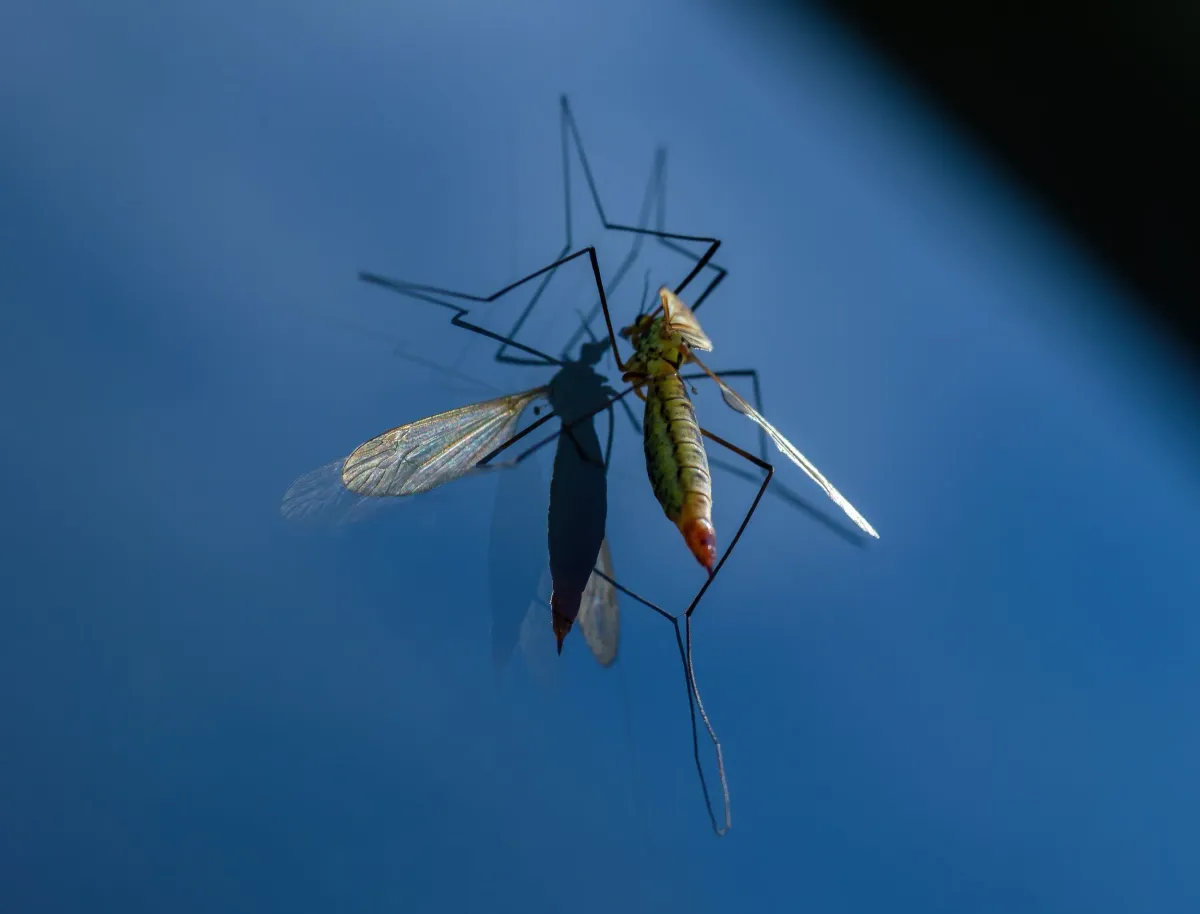
WOAH Warns of Sharp Rise in Vector-Borne Disease Reports - Vet Candy
New global surveillance data reveal dramatic increases in reported bluetongue and West Nile fever events, raising concerns about climate change, expanding disease territories, and the future of animal health. The world's disease map is changing, and veterinarians are being urged to pay attention. From biting midges carrying bluetongue virus across Europe to mosquitoes spreading West Nile fever, vector-borne diseases are emerging in new regions, creating growing challenges for animal health professionals, livestock producers, and public health officials. The World Organisation for Animal Health (WOAH) issued a warning on October 9, 2026, calling for stronger disease surveillance, earlier detection, and better international cooperation as reports of several vector-borne diseases continue to climb. An analysis of information submitted through the World Animal Health Information System (WAHIS) reveals a particularly striking increase in reported exceptional epidemiological events since 2023. The findings suggest that shifting environmental conditions, changing vector populations, and animal movements are reshaping where certain infectious diseases can spread.
0 comments
No comments yet. Be the first to share your thoughts!