From the lab to the marsh, Georgia Southern students lead summer science research - Georgia Southern University
This story deserves to be shared
Send it to someone who'd care, or post it on your networks.
This article is an excerpt. To read the full content, visit the original source. Georgia Southern University
Related articles
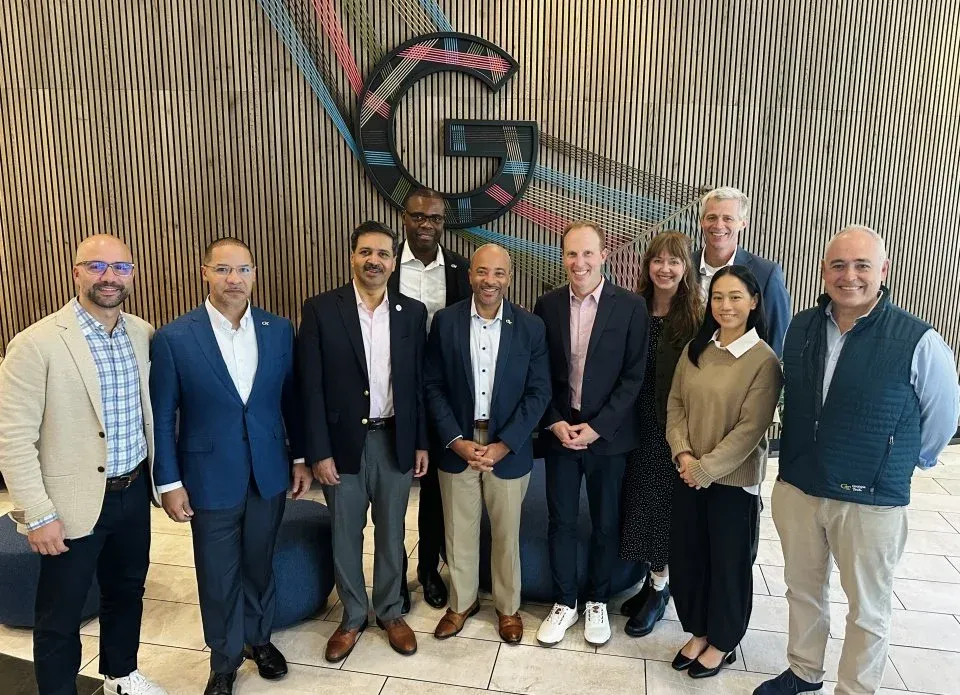
Georgia Tech secures $5m Google.org commitment to widen access to AI science - EdTech Innovation Hub
Georgia Institute of Technology will develop shared AI research tools and support scientists across the United States through a $5 million commitment from Google.org, with $2.25 million already received for the program’s first year. The initiative targets barriers that can prevent researchers from using AI: insufficient computing power, limited training and tools that work on one computing system but cannot easily transfer to another. Over three years, Georgia Tech plans to develop at least 15 reusable AI tools and workflows, fund 15 research projects and provide technical support to approximately 30 additional research teams. Training will reach more than 300 researchers and faculty, covering applications in both research and teaching. The program will focus on institutions that have historically had less access to powerful computing resources. “AI has the potential to reshape how science is done, but that transformation should not be limited to a small number of researchers or institutions,” says Tim Lieuwen, Executive Vice President for Research at Georgia Tech.

Simulations explore nuclear mitigation of asteroid threats - Phys.org
Lawrence Livermore National Laboratory researcher Isaiah Santistevan led the development of three-dimensional simulations exploring how a nuclear device could deflect or disrupt an asteroid threatening Earth. Credit: Blaise Douros/LLNL Lawrence Livermore National Laboratory (LLNL) researchers are developing three-dimensional simulations to examine how a nuclear device could be used to deflect or potentially disrupt an asteroid threatening Earth.
0 comments
No comments yet. Be the first to share your thoughts!