From stage to lab: SFU dancer fulfills scientific passion with degree in environmental science - Simon Fraser University
This story deserves to be shared
Send it to someone who'd care, or post it on your networks.
This article is an excerpt. To read the full content, visit the original source. Simon Fraser University
Related articles
Aligning principles with ambition: Alexander Hodaly’s SFU Journey - Simon Fraser University
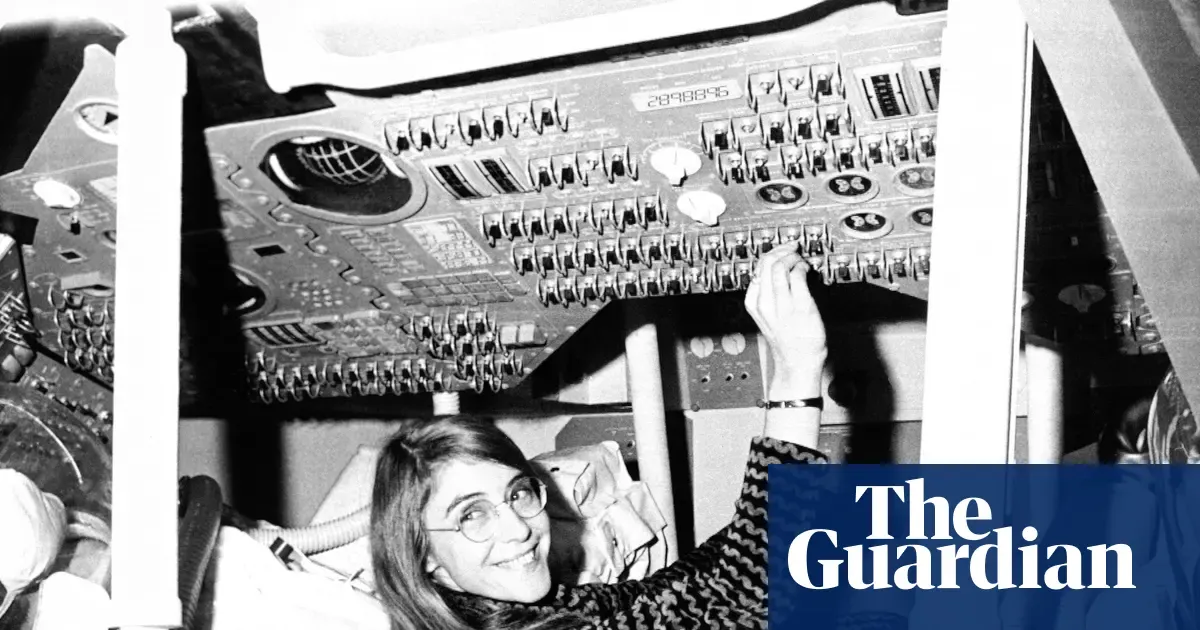
Margaret Hamilton obituary - The Guardian
Apollo was a bold, innovative project. It tested the boundaries of technology and human achievement, and took people to the moon. However, one thing it failed to challenge was the prevailing hierarchy. Nearly everyone involved in Nasa’s space programme in the 1960s was male and white. If you weren’t, you needed to be exceptional at what you did. Margaret Hamilton, who has died aged 90, was one of those exceptional people. Without her input, sending spacecraft into lunar orbit, and putting Neil Armstrong and his successors on to the surface of the moon, might have been impossible. Hamilton directed the software engineering division at the Massachusetts Institute of Technology (MIT) Instrumentation Laboratory, which had been charged with developing the computer systems for Apollo. The result of this work was the Apollo Guidance Computer (AGC). This provided the astronauts with a computer-linked keypad, similar in appearance to a calculator and known by the acronym DSKY – short for Display and Keyboard – which they used for navigating and controlling the direction and manoeuvrability of the spacecraft.
Researchers for 1st time observe solar-storm-like eruptions near black hole - Xinhua
JERUSALEM, Oct. 18 (Xinhua) -- An international team of researchers has discovered eruptions similar to solar storms near a giant black hole, the Israel Institute of Technology (Technion) said Sunday. Published in the Astrophysical Journal Letters, the study provides the first evidence that the physical processes driving solar storms can also occur near supermassive black holes. Solar storms occur when energy stored in magnetic fields is suddenly released, producing bursts of radiation and streams of charged particles that can disrupt satellites and communications on Earth. The researchers analyzed X-ray emissions from the region around a black hole in the galaxy NGC 3783, using the XRISM and XMM-Newton space telescopes to track changes in radiation. They identified a pattern known as the "Neupert effect," first discovered on the Sun in 1968 but never previously observed near a black hole. The discovery suggests that powerful magnetic eruptions may occur across vastly different cosmic environments, from the Sun to black holes millions of times more massive, the researchers say. ■
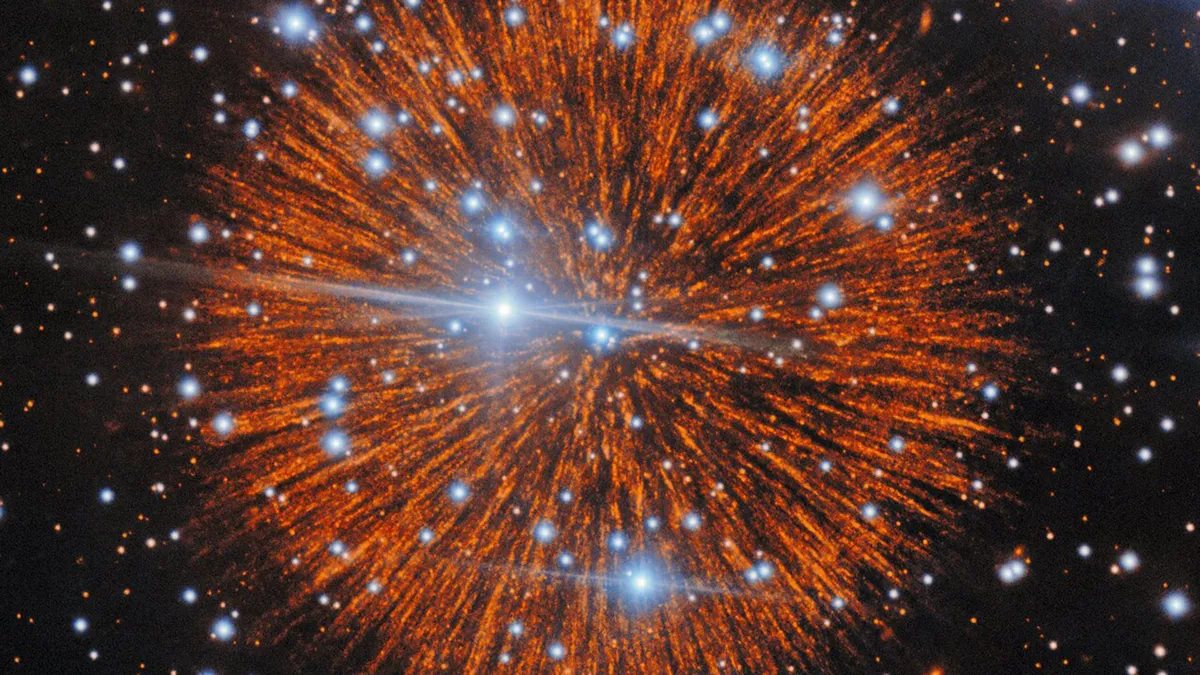
Famous supernova that lit up skies in 1181 is now full of mysterious knots — Space photo of the week - Live Science
Pa 30, linked to a supernova seen in 1181, reveals chains of tiny gas knots in a new image from the Gemini North telescope in Hawaii.
0 comments
No comments yet. Be the first to share your thoughts!