Detection of Helicobacter pylori in dental plaque among children with gastrointestinal disorders in a hospital-based cross-sectional study - Nature
This story deserves to be shared
Send it to someone who'd care, or post it on your networks.
We’re sharing this article early to provide faster access to peer-reviewed, accepted research. It is citable and carries a permanent DOI. This version is subject to further edits and will be replaced automatically by the final Version of Record. All legal disclaimers apply.
AbstractHelicobacter pylori is responsible for gastritis and peptic ulcers, as well as gastric cancer. This bacterium can also be isolated from dental plaque, suggesting that the oral cavity may serve as a reservoir, contributing to reinfection after systemic antibiotic therapy. The present study was conducted to determine the presence of H. pylori and associated virulence genes in dental plaque from children with gastrointestinal disorders using PCR, and to investigate the relationship between the infection and dental caries experience (DMFT/dmft), tooth-brushing frequency, and dental visit frequency. In this cross-sectional study, 100 children with gastrointestinal disorders who were referred to Mofid Children’s Hospital in Tehran between 21 March 2023 and 19 March 2024 were included.
This article is an excerpt. To read the full content, visit the original source. Nature
Related articles

Maternal Vaccine Receipt, Intentions, and Refusal Among Pregnant Women Attending Antenatal Care in Panama City: A Cross-Sectional Study - Cureus
Background/objectives Maternal vaccination surveys often combine willingness and receipt, potentially obscuring differences between these measures. We quantified self-reported vaccine receipt, intention without receipt, complete reported receipt, and refusal in an urban Panamanian convenience sample and examined their relationship with vaccination recommendation. Methods We analyzed an anonymous cross-sectional survey completed from March 26 to July 25, 2026, by 204 pregnant women aged 18 years or older recruited in health-related settings in Panama City. Self-reported receipt meant reporting at least one maternal vaccine during the current pregnancy. Intention without receipt meant planning at least one vaccine without reporting receipt of any specific vaccine. Complete reported receipt was the independent response "already received all," rather than verified completion of a vaccination schedule. Modified Poisson regression with robust variance estimated prevalence ratios (PRs). A secondary, post hoc evaluation examined six rating items without claiming formal questionnaire validation. Results The number of women who chose self-reported receipt was 128/204 (62.7%; exact 95% confid

Maternal Vaccine Receipt, Intentions, and Refusal Among Pregnant Women Attending Antenatal Care in Panama City: A Cross-Sectional Study - Cureus
Background/objectives Maternal vaccination surveys often combine willingness and receipt, potentially obscuring differences between these measures. We quantified self-reported vaccine receipt, intention without receipt, complete reported receipt, and refusal in an urban Panamanian convenience sample and examined their relationship with vaccination recommendation. Methods We analyzed an anonymous cross-sectional survey completed from March 26 to July 25, 2026, by 204 pregnant women aged 18 years or older recruited in health-related settings in Panama City. Self-reported receipt meant reporting at least one maternal vaccine during the current pregnancy. Intention without receipt meant planning at least one vaccine without reporting receipt of any specific vaccine. Complete reported receipt was the independent response "already received all," rather than verified completion of a vaccination schedule. Modified Poisson regression with robust variance estimated prevalence ratios (PRs). A secondary, post hoc evaluation examined six rating items without claiming formal questionnaire validation. Results The number of women who chose self-reported receipt was 128/204 (62.7%; exact 95% confid
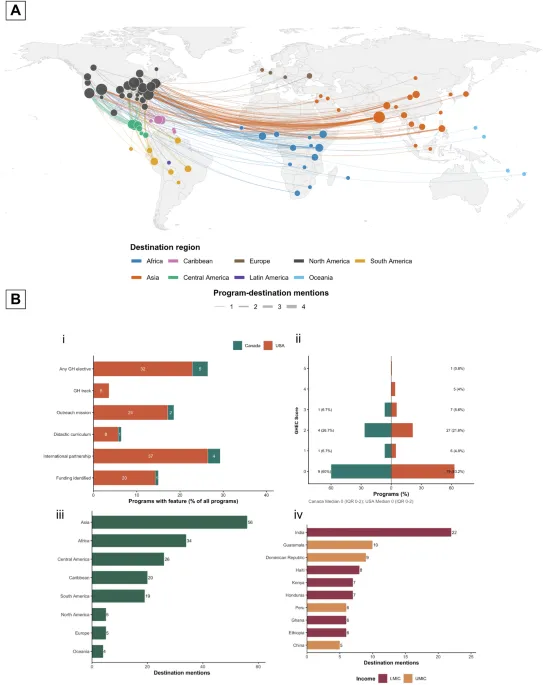
Global health training in North American ophthalmology residency programs: a cross-sectional study - Nature
Preventable vision loss is a disproportionate global burden affecting low- and middle-income countries [1]. While contemporary frameworks highlight the pivotal role of sustained, capacity-building partnerships to address these inequities, current institutional offerings often fall short of this model [2]. Notably, prospective trainees seeking global health tracks may face limited publicly available information on structured opportunities across North America. Herein, we aimed to evaluate the documented global health training across accredited Canadian and US ophthalmology residency programs. We hypothesised that global health infrastructure remains limited and inequitably distributed. This cross-sectional study was conducted in accordance with Strengthening the Reporting of Observational Studies in Epidemiology (STROBE) guidelines.
Hybrid dual attentional-based pyramidal deep learning model for liver tumor detection - Nature
We’re sharing this article early to provide faster access to peer-reviewed, accepted research. It is citable and carries a permanent DOI. This version is subject to further edits and will be replaced automatically by the final Version of Record. All legal disclaimers apply. AbstractLiver tumors are life-threatening diseases that occur due to the rapid growth of liver cells and even result in a chronic condition. Nevertheless, conventional liver tumor detection struggled with the limitations of poor robustness, difficulties in identifying the complex boundaries, and inconsistent segmentation. Hence, the research introduced a hybrid dual attention-based pyramidal deep convolutional network and deep belief network (HDPCBN) for accurate liver tumor detection. Significantly, the HDPCBN approach deployed a pyramidal architecture to learn deep hierarchical features and intricate patterns of the tumor effectively. Moreover, the integration of the dual attention technique gathers the long-range relationships of both spatial and channel dimensions for accurate liver tumor detection.
0 comments
No comments yet. Be the first to share your thoughts!