Closing surveillance detection gaps for emerging digital drug discourse with ontology-enhanced large language models - Nature
This story deserves to be shared
Send it to someone who'd care, or post it on your networks.
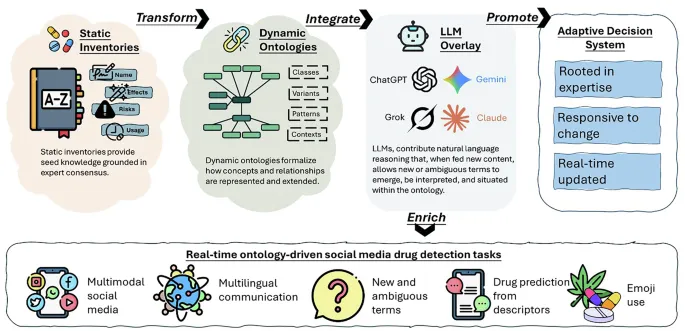
IntroductionThe age-adjusted rate of drug-involved deaths in the US was ~250% higher than two decades ago1, despite a 24% reduction in overdose-related fatalities between 2023 and 20242. Adverse outcomes from overdoses extend beyond fatalities to other forms of measurable harm, including increased strain on the medical system. In 2024 alone the Drug Abuse Warning Network (DAWN) reported more than 8.4 million nonfatal drug-related emergency department (ED) visits in the US3. Meanwhile, the National Drug Early Warning System (NDEWS) identified parallel social media conversations around emerging drugs separately linked to increased ED visits in 2025, including synthetic opioids (e.g., nitazenes), opioid-like compounds (e.g., kratom), and polydrug-use combinations (e.g., benzodiazepines, kratom, or ketamine combined with fentanyl)4. Proactively addressing drug harm requires clinicians, health professionals, and policymakers to understand contemporary and evolving drug use trends as they emerge. Yet traditional epidemiologic surveillance systems (e.g., DAWN and others) contain built-in lags ranging from months to years5.
This article is an excerpt. To read the full content, visit the original source. Nature
Related articles

Two projects on the front lines of income security discourse in Canada - The Hill Times
A guaranteed basic income would ensure that individuals and families are able to live healthier and safer lives while infusing money into local economies. People walk along Rideau Street in downtown Ottawa on May 15. A livable guaranteed basic income would be a nation-building project that cares for Canadians, providing income security and autonomy for those who need it, when they need it, write Senator Kim Pate and Trish Altass. The Hill Times photograph by Andrew Meade

Continuous glucose monitors help type 2 diabetes patients spend 5 more hours a day in healthy blood sugar range - Medical Xpress
Continuous glucose monitors (CGMs) could transform diabetes management for millions of Americans with type 2 diabetes who don't take insulin, according to findings published in the New England Journal of Medicine. The clinical trial found that adults using CGMs spent approximately five additional hours each day within their target blood sugar range compared with those receiving routine care. Nearly twice as many CGM users also achieved an A1c level below 7%, a common treatment goal for people with diabetes.
Wearing headphones during surgery may reduce nausea and vomiting afterward - Medical Xpress
Patients who wore noise-canceling headphones during minimally invasive gynecological surgery were significantly less likely to experience postoperative nausea and vomiting (PONV), suggest findings from a randomized clinical trial presented at the Anesthesiology 2026 annual meeting.

Kefah Mokbel: Can Whole-Genome Sequencing-Based ctDNA Monitoring Help Personalize Adjuvant Treatment? - Oncodaily
“Beyond Detecting Cancer Recurrence: Can Whole-Genome Sequencing-Based ctDNA Monitoring Help Personalize Adjuvant Treatment? An exciting new study published in The Oncologist highlights the clinical potential of Signatera Genome, a whole-genome sequencing (WGS)-based, tumor-informed circulating tumor DNA (ctDNA) assay, not only for detecting molecular residual disease (MRD), but also for potentially informing adjuvant treatment decisions.
0 comments
No comments yet. Be the first to share your thoughts!