Claude Haiku 5.5 vs GPT-6 Luna: Which Cheap Model Should You Use? - Medium
This story deserves to be shared
Send it to someone who'd care, or post it on your networks.

For prompts up to 100,000 tokens, both charge $0.10 in and $0.50 out per million tokens. At max effort, Artificial Analysis reports three times the cost per index task for Haiku. At their shared index score of 38, the gap is about 14%; Haiku’s rates rise above 100,000 prompt tokens.8 min read6 days ago--Press enter or click to view image in full sizeTwo illustrated model cards pair Claude Haiku 5.5 with GPT-6 Luna (AI-generated artwork made with OpenAI image generation). Anthropic released Claude Haiku 5.5 on October 7. Its base price is $0.10 per million input tokens and $0.50 per million output tokens, a tenth of Haiku 4.5’s base rates. OpenAI’s GPT-6 Luna, out since September 22, charges exactly the same. Same price list. On Artificial Analysis’s Intelligence Index, Haiku 5.5 scores 43 and Luna scores 38. A year ago, Haiku 4.5 scored 17. So Haiku wins? Look at the next column. Artificial Analysis also reports what one question in its index costs. At max effort, Haiku 5.5 costs $0.21 per task against Luna’s $0.07. You pay three times as much for five more points. Both max settings are useful to compare if that is how you plan to run the models.
This article is an excerpt. To read the full content, visit the original source. Medium
Related articles
A Cheap Deworming Pill Could Help Beat Drug-Resistant Lung Cancer - ScienceAlert
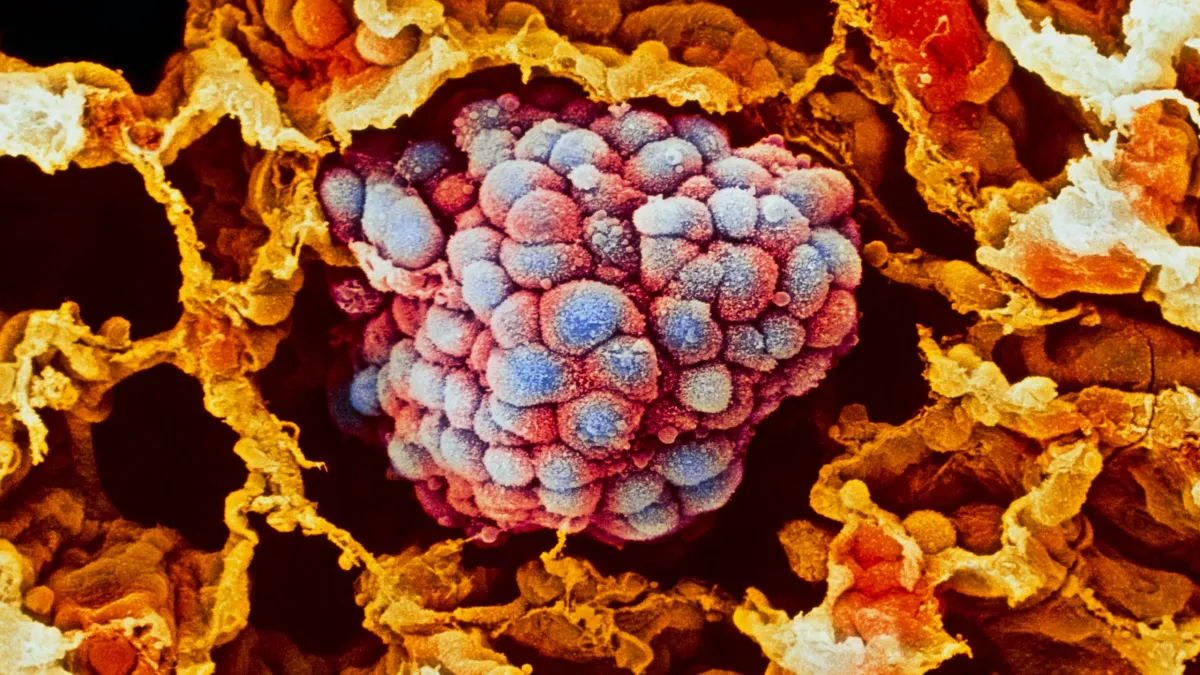
When cancer cells learn to survive a drug designed to stop them, where do you turn next? A new study points to an unexpected possibility: a medicine used to treat parasitic worms. Researchers combined the deworming medicine with a targeted lung cancer drug. In laboratory experiments, the pairing reduced resistant cancer-cell viability. In mice, tumors took longer to double in size with the combination than with either drug alone. The idea was to find a weakness in cells that had learned to withstand treatment, then put that weakness under pressure. "The exciting message is that drug resistance may not make cancer cells invulnerable; it may leave them with weaknesses that we can target," pharmacology researcher Shakta Mani Satyam of RAK Medical and Health Sciences University in the United Arab Emirates told ScienceAlert. The study, published in PLOS ONE, paired gefitinib, a targeted cancer treatment, with mebendazole, a medicine used against parasitic worm infections. It focused on one model of EGFR-mutant non-small cell lung cancer that had become resistant to gefitinib.(Matthias Tunger/DigitalVision/Getty Images)EGFR is a protein that helps relay signals telling cells to grow.

OpenAI claims we've entered the AGI era — has GPT-6 Astra really demonstrated general intelligence? - Live Science
OpenAI says its newly launched GPT-6 Astra model brings humanity to the threshold of AGI, but external evaluators argue that inflated lab metrics and opaque testing obscure its true reliability.

A Black Hole 12,000 Light-Years Away Is Firing a Plasma Jet Toward Earth - Gadget Review
Milky Way’s first microblazar candidate sits 12,000 light-years away, offering a rare ground-level lab for studying relativistic jetsA black hole 12,000 light-years away is firing a jet of plasma almost directly toward Earth. At that distance, no known or expected danger to Earth has been identified by the researchers or the institutions involved. What astronomers have actually found is rarer and more interesting than a threat. Researchers have identified IRAS 18293-0941 as a compelling candidate for the Milky Way’s first microblazar, a class of object that gives astrophysicists a close-up laboratory for studying some of the most violent physics in the galaxy. What Astronomers FoundThe discovery centers on a binary system whose black hole expels plasma jets at close to three-quarters the speed of light, pointed almost directly toward Earth. The system pairs a hot, massive star with a black hole that completes a full orbit roughly every 11.38 days. Material drawn from the companion star feeds the black hole, and some of that matter gets expelled outward as opposing jets traveling at approximately three-quarters the speed of light. Terminology matters here.
Drowned 5,000-year-old forests off Mozambique now shelter reef fish, no coral needed - Yahoo
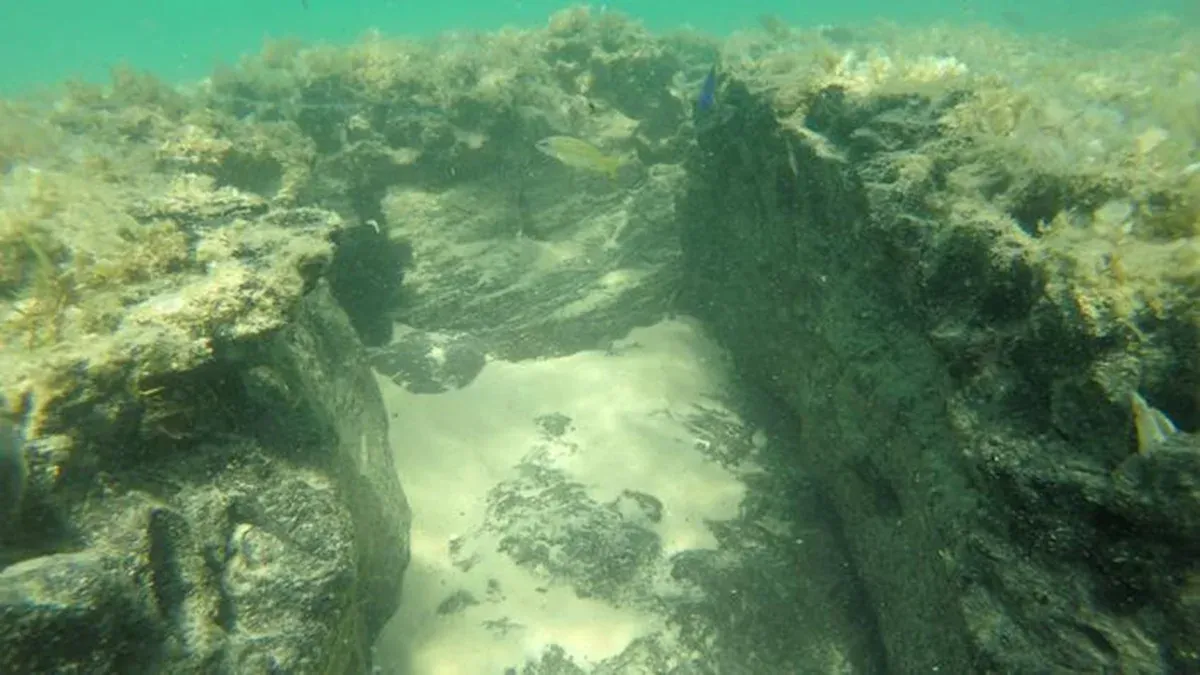
Forests that stood on Mozambique's coast thousands of years ago now lie beneath shallow seas, and they have become fish-filled "peat reefs" with marine life comparable to coral reefs, researchers report in Scientific Reports. A team from the Bazaruto Center for Scientific Studies (BCSS) Ocean Observatory, led by Mario Lebrato, documented the submerged peat in the Bazaruto Archipelago in the Western Indian Ocean. BCSS, founded in 2017, describes itself as Africa's first permanent ocean observatory. Working with universities and institutions in the U. K., U. S. and Canada, the team believes it has carried out the first ecological study of peat reefs anywhere in the tropics. Old forests, new seafloorRadiocarbon dating shows the peat formed between about 300 and 5,000 years ago, and chemical analysis indicates it came mostly from coastal land plants and trees. Some samples contain up to 40% organic carbon by dry weight. Lebrato said the coastline has very little natural hard seabed, mostly shifting sand. As rising seas expose the old peat layers, they create rare solid habitat where marine life can settle, hide and feed.
0 comments
No comments yet. Be the first to share your thoughts!