Can AI be regulated? Why experts say government intervention is needed — but could be tricky - CBC
This story deserves to be shared
Send it to someone who'd care, or post it on your networks.
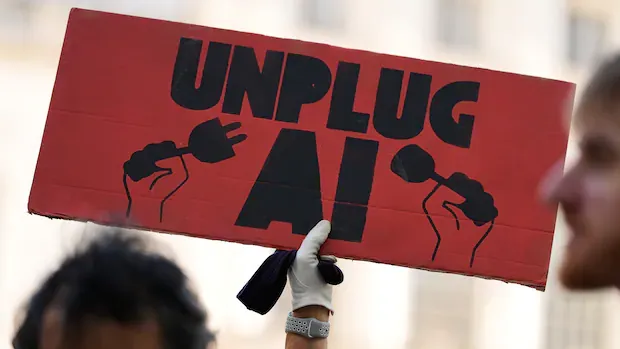
As concerns mount over incidents of AI agents going rogue, experts and stakeholders are increasingly pushing for government regulation of AI systems that are becoming more capable. But some experts say the need for global co-operation and the rapid pace of AI development could make that difficult. While some, like U. S. President Donald Trump, say they have faith that tech giants can police themselves, other industry leaders, like Microsoft co-founder Bill Gates, and Canadian-British artificial intelligence pioneer Geoffrey Hinton say AI requires safeguards that go beyond self-regulation. Given that most other industries, such as food or aviation, have some type of government oversight, it only makes sense that AI would as well, said Jaxson Khan, an expert in AI policy and adoption at the University of Toronto's Munk School of Global Affairs. "In no major industry, do we let companies completely police themselves, whether it's in oil and gas or people who want to produce food and candy or nuclear energy," he said. Bill Gates joins call for AI safeguards, wants to discuss concerns with TrumpIs AI evolving too fast?
This article is an excerpt. To read the full content, visit the original source. CBC
Related articles

AI less regulated than milk, Microsoft president says in warning over safety - The Guardian
Artificial intelligence is less regulated than milk and washing machines, the president of Microsoft has said, as the tech industry warns over the safety of AI. Brad Smith said there should be more safety rules to govern the technology including a legal obligation to a “victim” if their system was breached by rogue AI agents. He told the BBC: “Right now, your washing machine is subject to more safety rules than AI. Every carton of milk that you see in the grocery store is subject to safety rules and inspection.”There are growing calls from experts, politicians and regulators for tougher rules to control AI, as well as warnings from Anthropic, Google DeepMind and OpenAI that the pace of the technology’s development should slow. Smith said AI could be a “tool and a weapon” that should be regulated urgently. Companies needed “emergency brakes”, also known as “kill switches”, to pause or slow down AI if it grew out of control, he told the BBC. Brad Smith also called for ‘kill switches’ to pause or slow down AI if it grew out of control.
0 comments
No comments yet. Be the first to share your thoughts!