Banting Postdoctoral Fellow joins Waterloo to advance exoplanet research | Science - University of Waterloo
This story deserves to be shared
Send it to someone who'd care, or post it on your networks.
This article is an excerpt. To read the full content, visit the original source. University of Waterloo
Related articles

Job advertisement: 2 Postdoctoral researchers - Sciences Po
Home>Job advertisement: 2 Postdoctoral researchers12 October 2026AFFIPRO Project explores how movements between professions reveal occupational affinities and differences in symbolic capital, combining quantitative and ethnographic approaches across three national contexts. We welcome applicants with a PhD in the social sciences, preferably sociology or political science, strong qualitative research skills, and an interest in social inequality. The successful candidates will coordinate ethnographic research and contribute to collaborative publications and the project’s scientific development. One-year, full-time CNRS contracts, with a possible extension subject to performance and funding. Fluency in French and proficiency in English are required. Apply before November 2. Positions start no later than January 1, 2027. See here for the full job description and application details.
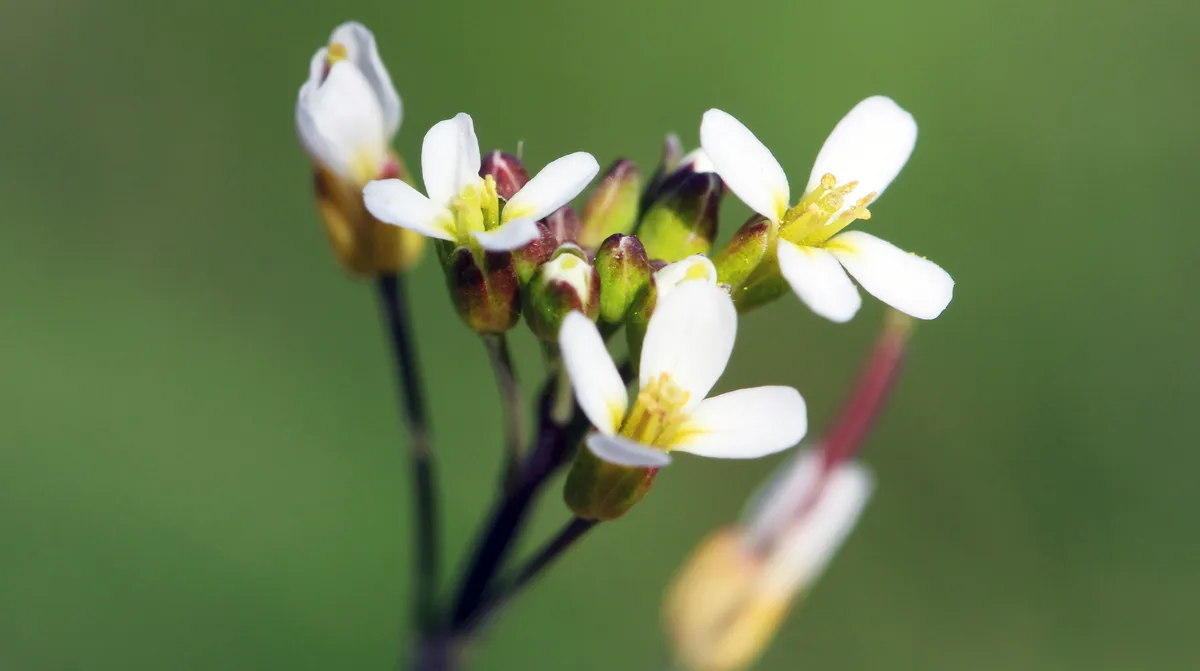
Applications Open for Simons Postdoctoral Fellowships in Plant Biology - Simons Foundation
The Simons Foundation’s Life Sciences division is now accepting applications for its Simons Postdoctoral Fellowships in Plant Biology. The application deadline is December 3, 2026, at 12 p.m. (noon) EDT. These postdoctoral fellowships support candidates who intend to pursue a career in basic research on fundamental problems in plant biology. This program supports researchers seeking to understand the inner workings of plants at the level of the whole organism or below. We are interested in applicants with training in disciplines that can be brought to bear on plant biology, including but not limited to engineering, computational modeling, theory, chemistry, synthetic biology and physics, as well as applicants already involved in the plant sciences.
Wavefront-Conditioned Photon Measurements for Exoplanet Spectroscopy: Contrast Limits and Conditional Gains - Astrobiology Web
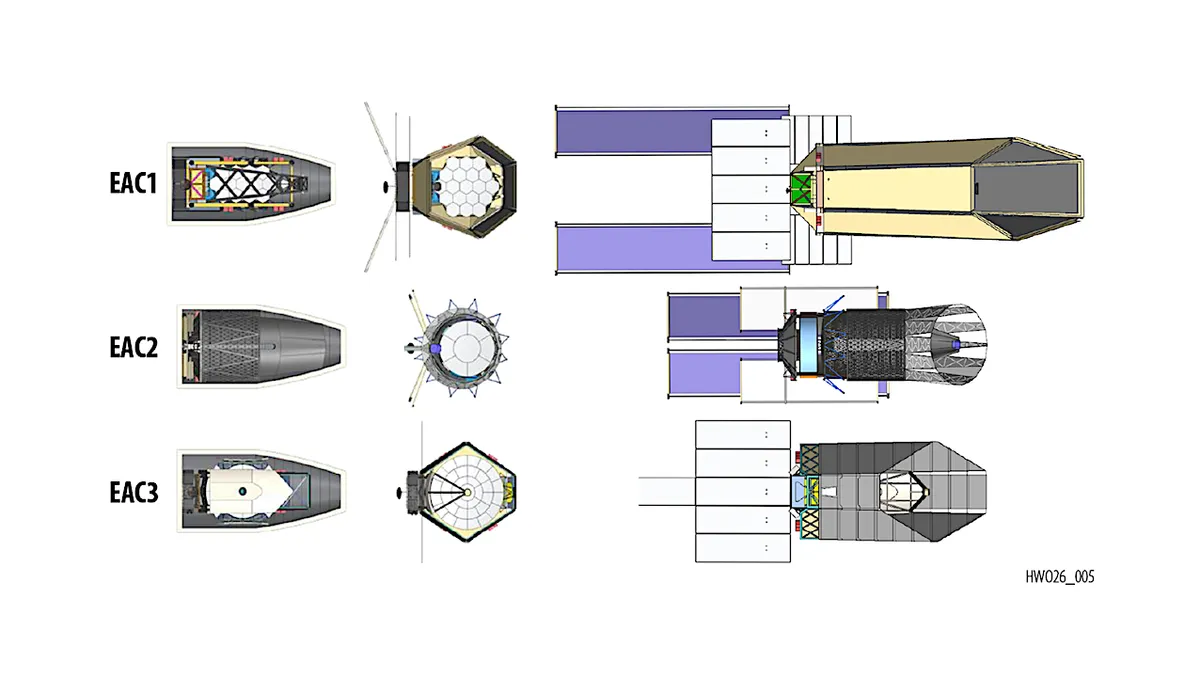
The EAC-1 (top row), EAC-2 (middle row), and EAC-3 (bottom row) designs shown to relative scale. The left column shows the stowed, launch configuration for each architecture and its fit inside the representative Starship fairing. The middle column is looking down the telescope boresight, and the right column shows the top-down view. A series of well-established deployments are used to transform between the stowed and operational configurations. -- astro-ph. IM [astro-ph. IM]. A wavefront-sensor (WFS) prediction can select the photon measurement before detection or condition its likelihood afterward.

JWST finds hidden structure in a hot exoplanet’s atmosphere 1,300 light-years away - The Brighter Side of News
Webb observations reveal a hotter, more extended evening edge in the atmosphere of the giant exoplanet WASP-17b. A method called transmission strings maps atmospheric differences around the planet’s apparent outline during transit. The inferred temperature contrast is about 650 kelvin, while water and carbon dioxide abundances remain broadly consistent around the limb. One edge of WASP-17b stretches farther into space than the other. Around this swollen gas giant, intense heating and atmospheric circulation produce differences that disappear when astronomers treat the entire atmosphere as one uniform ring. A new analysis has recovered some of that missing structure from starlight filtered through the planet’s atmosphere. The findings, published in Nature Astronomy, concern a hot Jupiter roughly 1,300 light-years from Earth. A team co-led by Cornell University and the University of Bristol applied a method called transmission strings to James Webb Space Telescope observations. The approach traces atmospheric properties at different positions around the planet’s apparent edge.
0 comments
No comments yet. Be the first to share your thoughts!