Aged aircraft exhaust poses a rising threat to human health - News-Medical
This story deserves to be shared
Send it to someone who'd care, or post it on your networks.

Fine particulate matter consists of tiny particles with diameters in the nanometer range. They are produced, for example, by fuel combustion, remain suspended in the air and can penetrate deep into the respiratory tract. There, they can trigger oxidative stress, a process that promotes inflammation and, over the long term, can lead to serious health problems such as respiratory or cardiovascular diseases. Scientists call this harmful property the particles' oxidative potential.
However, fine particles usually remain in the atmosphere for hours or even several days before people inhale them. Little is known about how these particles' harmful properties change over time. A research team led by Professor Markus Kalberer therefore investigated how the oxidative potential, and thus the toxicity, of fine particles emitted by a small aircraft jet engine and a marine diesel engine develops over time.
This article is an excerpt. To read the full content, visit the original source. News-Medical
Related articles
Fine particles from aircraft exhaust become more harmful over time, lab tests suggest - Phys.org
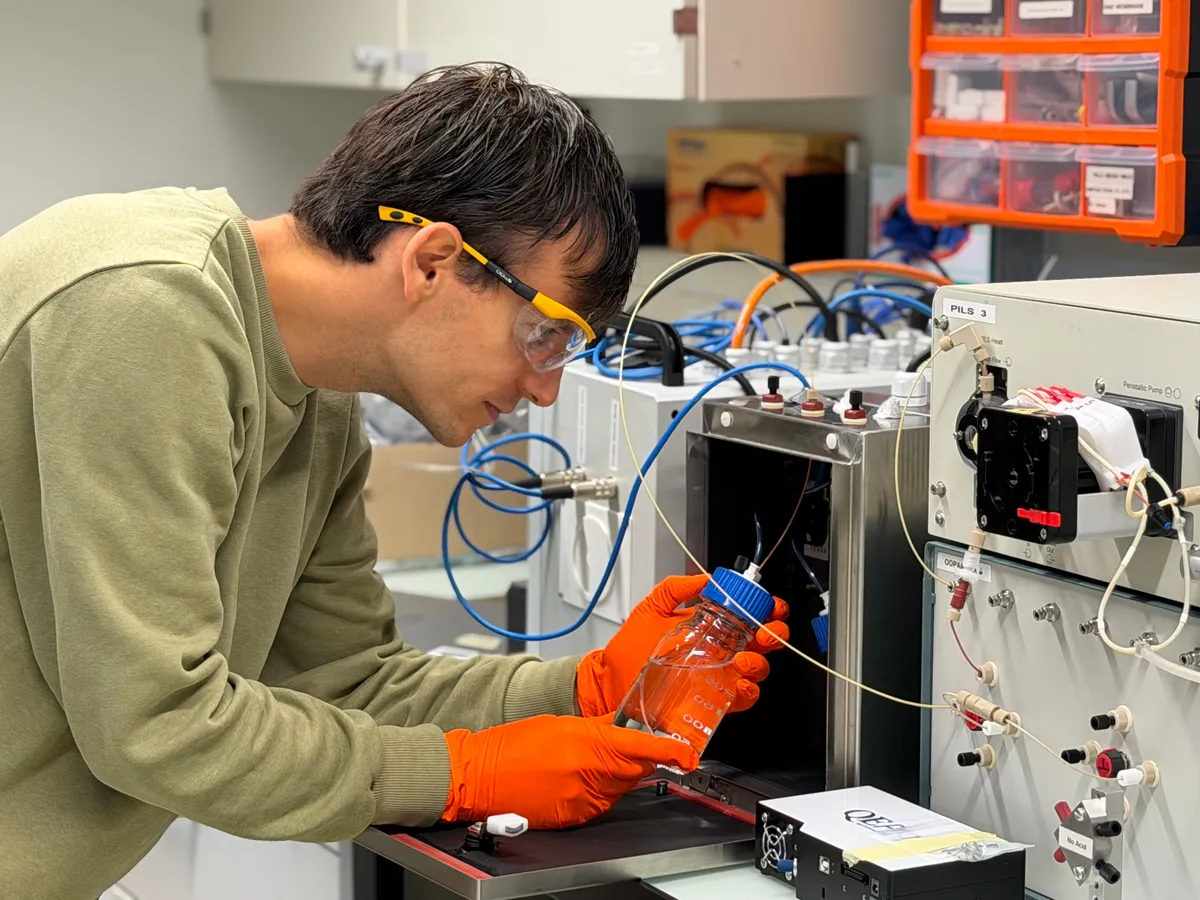
Battist Utinger is studying the oxidative potential of fine particulate matter in the laboratory. A device developed at the University of Basel can measure how much these particles can trigger harmful oxidative reactions. Fine particulate matter consists of tiny particles with diameters in the nanometer range. They are produced, for example, by fuel combustion, remain suspended in the air and can penetrate deep into the respiratory tract. There, they can trigger oxidative stress, a process that promotes inflammation and, over the long term, can lead to serious health problems such as respiratory or cardiovascular diseases.

Fine particles from aircraft exhaust become more harmful over time - chemeurope.com
Researchers at the University of Basel have investigated how fine particles in exhaust emissions from aircraft and marine engines change in the atmosphere. Their findings show that aircraft emissions in particular become more toxic over time. Fine particulate matter consists of tiny particles with diameters in the nanometer range. They are produced, for example, by fuel combustion, remain suspended in the air and can penetrate deep into the respiratory tract. There, they can trigger what is known as oxidative stress – a process that promotes inflammation and, in the long term, can lead to serious health problems such as respiratory or cardiovascular diseases. Scientists refer to this harmful property of the particles as their oxidative potential.

No V12 Required: Argentina's Mid-Engine Supercar Packs An American V8 Punch - CarBuzz
Classic gems, tasteful customs, legendary supercars - for Silvian, they're all fair game. He's been in love with cars and motorcycles for as long as he can remember, so it made perfect sense to eventually turn that passion into a full-time writing career. Around six years and more than 3,000 articles later, he is still going strong and doesn't plan on hitting the brakes anytime soon. Argentina is a country known for its natural beauty, soccer legends, and chainsaw-wielding president, but it probably isn’t the first place you’d expect a rad V8 supercar to be developed. However, that assumption might change once you learn about a company called Valtor, the brainchild of engineer-turned-CEO Sergio Arias. He leads a small but ambitious team of designers and engineers like himself, who’d previously caught people’s attention with the Azor GT concept last year. Now they’re back at it once again with the Eaglon, an evolution of the Azor and something that could easily be mistaken for a Ferrari by those who don’t know their automotive lore.

Game developers cancel upcoming public demo out of fear of AI copycats - Mashable
There's currently some tension between the video game industry and the proliferation of AI tools. You can see the evidence of this in a recent development regarding the upcoming indie game Drunken Goddess Reflux. It's a game with the objective of imbibing alcohol until a demon vomits up her soul, a decidedly unique premise that would be hard for any AI to come up with. As spotted by Rock Paper Shotgun, though, the developers had to cancel an upcoming public demo session. The decision is partly due to concerns that AI could quickly clone it for someone else's financial benefit. Instead, they will hold closed sessions for a "limited number of participants. "
0 comments
No comments yet. Be the first to share your thoughts!