A Yale physicist — and IceCube member — salutes this year’s Nobel Prize winner - YaleNews
This story deserves to be shared
Send it to someone who'd care, or post it on your networks.
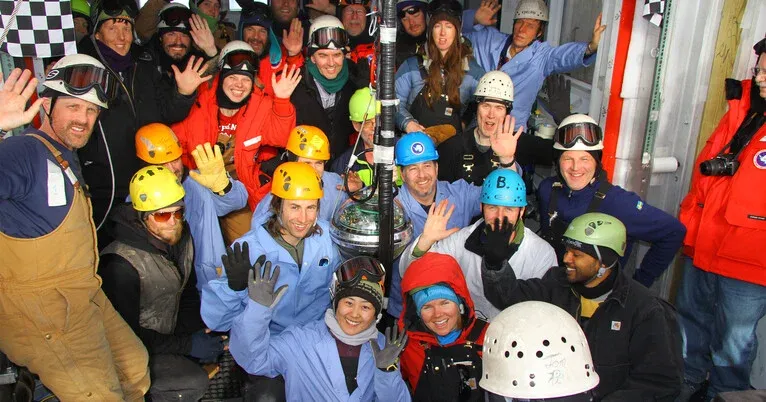
For physicist Reina Maruyama, the 2026 Nobel Prize in physics brought back warm memories of cold moments. The prize, awarded earlier this week, went to Francis Halzen of the University of Wisconsin-Madison, the principal investigator for the groundbreaking neutrino experiment IceCube, which is based at the South Pole. Launched officially in 1999 with an ambitious experiment proposal, the IceCube Neutrino Observatory, located deep beneath an ice sheet near the Amundsen-Scott South Pole Station in Antarctica, would go on to discover high-energy neutrinos that originate in deep space and travel unimpeded through the universe. The experiment grew to include more than 450 researchers from 58 institutions in 14 countries.
The IceCube Neutrino Observatory was completed in December 2010, ahead of schedule. Physicist Reina Maruyama, a member of the collaboration, is shown helping to hold the celebration banner.
This article is an excerpt. To read the full content, visit the original source. YaleNews
Related articles
Behind Nobel-Winning IceCube Science Lies a Decade of SDSC Computing Expertise - UC San Diego Today
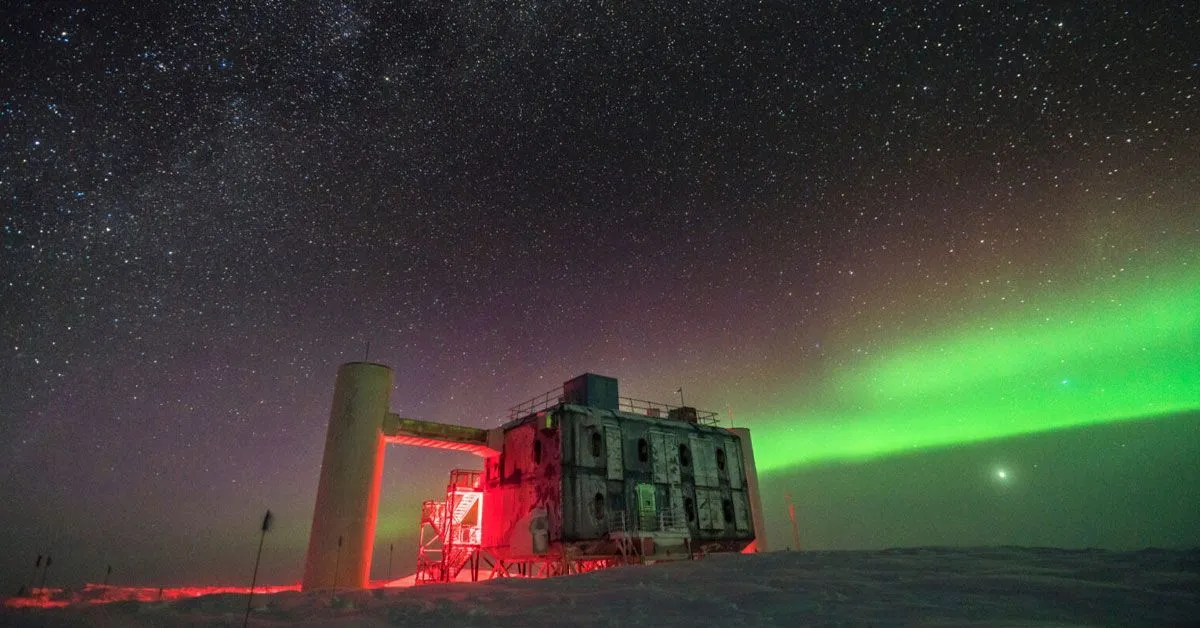
A long-standing collaboration with the San Diego Supercomputer Center (SDSC) at the University of California San Diego has helped provide the computing expertise for the search for high-energy neutrinos from space, work recognized this week with the 2026 Nobel Prize in Physics. Francis Halzen, the University of Wisconsin–Madison physicist whose vision and leadership helped establish the IceCube Neutrino Observatory, was awarded the prize on October 6 “for decisive contributions to the IceCube Neutrino Observatory and the discovery of high-energy neutrinos of astrophysical origin.” The recognition also marks a moment of celebration for SDSC – a division of the Halıcıoğlu School of Data Science and Computing – which has partnered with IceCube for more than a decade to advance the computing infrastructure supporting its science

Simulations explore nuclear mitigation of asteroid threats - Phys.org
Lawrence Livermore National Laboratory researcher Isaiah Santistevan led the development of three-dimensional simulations exploring how a nuclear device could deflect or disrupt an asteroid threatening Earth. Credit: Blaise Douros/LLNL Lawrence Livermore National Laboratory (LLNL) researchers are developing three-dimensional simulations to examine how a nuclear device could be used to deflect or potentially disrupt an asteroid threatening Earth.
0 comments
No comments yet. Be the first to share your thoughts!