A Strange Heat “Anomaly” Deep Inside Mars Has Scientists Searching for Answers - ZME Science
This story deserves to be shared
Send it to someone who'd care, or post it on your networks.
This article is an excerpt. To read the full content, visit the original source. ZME Science
Related articles
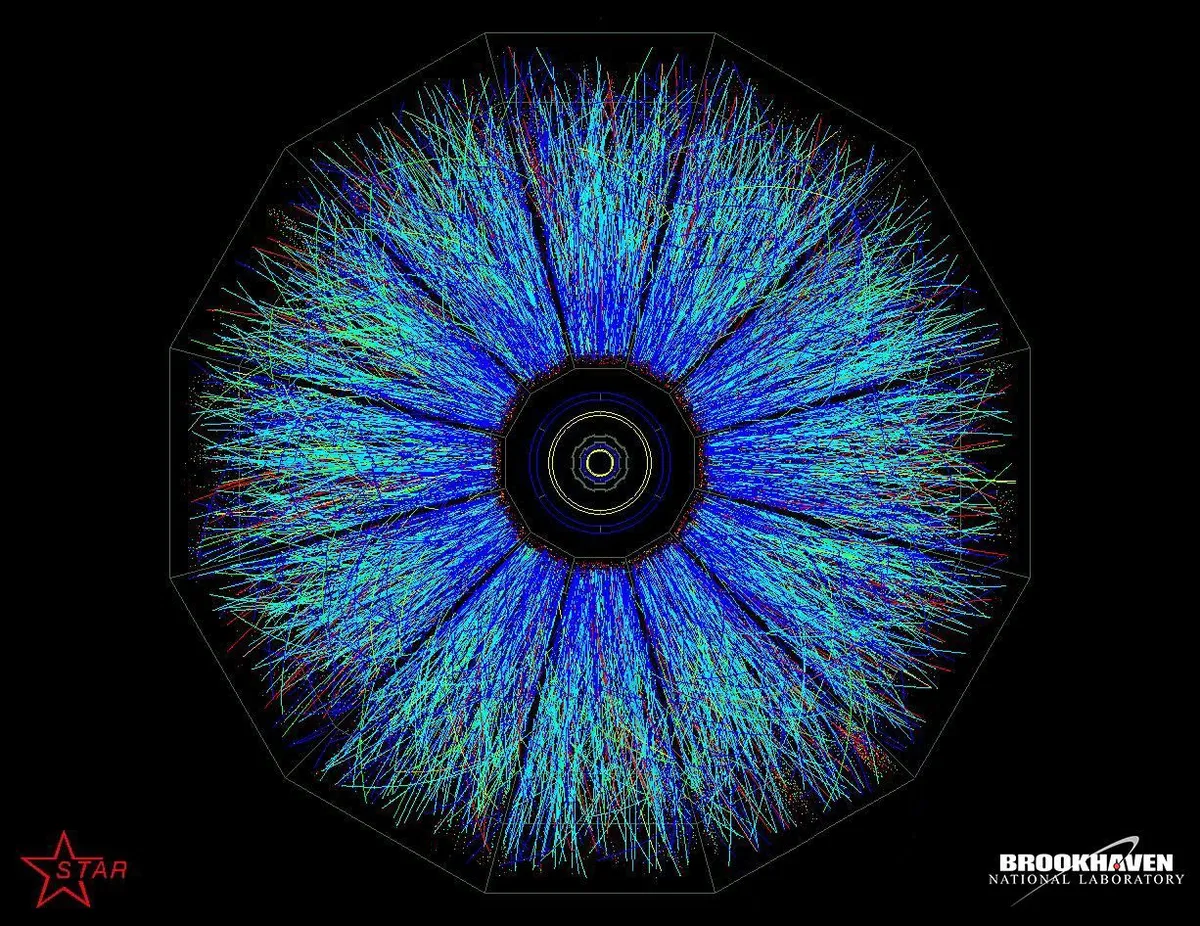
💥 An anomaly discovered in highly compressed gold - Techno-Science
Collisions between gold nuclei have revealed unexpected behavior in matter compressed to extreme densities. The experiment takes place at the RHIC collider in the United States. Gold nuclei are accelerated there and then projected at one another. For a fraction of a second, the collision creates matter far denser than that found in an ordinary atomic nucleus.

Consciousness May Be 500 Million Years Old. Scientists Are Searching for It in the Brain’s Ancient Core. - Popular Mechanics
Here’s what you’ll learn when you read this story:A team of researchers at MIT believes vertebrates may have first developed the neural pathways for consciousness 500 million years ago. Ancient deep brain structures from the thalamus to the medulla could hold the keys to specific conscious experiences like thirst. Using transcranial focused ultrasound, the scientists are trying to map where those conscious experiences live in the brain. We’ve been poking around inside each other’s heads since the Stone Age, but we still don’t know what consciousness is or where it comes from. Now, a research team at MIT is suggesting that it’s partly a question of how you define consciousness in the first place—and only once you’ve defined consciousness can you attempt to hunt it down in the brain. “Some people see consciousness as very much tied to cognition, your capacity for complex thought,” explains Daniel Freeman, PhD, one of the MIT scientists involved with a new study probing the brain for the source of consciousness.

Simulations explore nuclear mitigation of asteroid threats - Phys.org
Lawrence Livermore National Laboratory researcher Isaiah Santistevan led the development of three-dimensional simulations exploring how a nuclear device could deflect or disrupt an asteroid threatening Earth. Credit: Blaise Douros/LLNL Lawrence Livermore National Laboratory (LLNL) researchers are developing three-dimensional simulations to examine how a nuclear device could be used to deflect or potentially disrupt an asteroid threatening Earth.

A Black Hole 12,000 Light-Years Away Is Firing a Plasma Jet Toward Earth - Gadget Review
Milky Way’s first microblazar candidate sits 12,000 light-years away, offering a rare ground-level lab for studying relativistic jetsA black hole 12,000 light-years away is firing a jet of plasma almost directly toward Earth. At that distance, no known or expected danger to Earth has been identified by the researchers or the institutions involved. What astronomers have actually found is rarer and more interesting than a threat. Researchers have identified IRAS 18293-0941 as a compelling candidate for the Milky Way’s first microblazar, a class of object that gives astrophysicists a close-up laboratory for studying some of the most violent physics in the galaxy. What Astronomers FoundThe discovery centers on a binary system whose black hole expels plasma jets at close to three-quarters the speed of light, pointed almost directly toward Earth. The system pairs a hot, massive star with a black hole that completes a full orbit roughly every 11.38 days. Material drawn from the companion star feeds the black hole, and some of that matter gets expelled outward as opposing jets traveling at approximately three-quarters the speed of light. Terminology matters here.
0 comments
No comments yet. Be the first to share your thoughts!