A 72-year-old photo is revealing new clues about 'Meretneith,' a powerful woman who may have ruled Egypt 5,000 years ago - Live Science
This story deserves to be shared
Send it to someone who'd care, or post it on your networks.
This article is an excerpt. To read the full content, visit the original source. Live Science
Related articles
Salt crystals could hold clues to life beneath Enceladus's ice - Phys.org
The ocean beneath Saturn's moon Enceladus lies under kilometers of ice, but some of its contents do reach the surface. Jets near the south pole spray out water vapor and icy particles, offering a way to investigate the hidden ocean without drilling down to it.
Deleted AI Chats May Leave Clues Behind | Newswise - Newswise
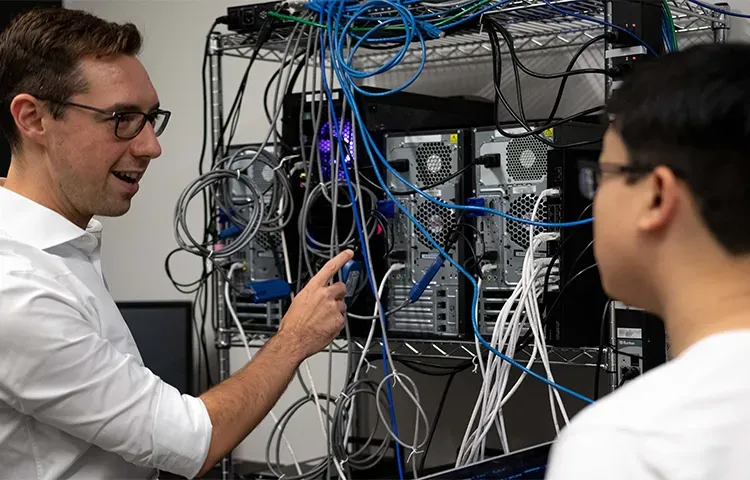
Newswise — Deleting a conversation with an artificial intelligence (AI) assistant may not erase everything the assistant remembers. Georgia Tech researchers have developed a tool that can recover deleted conversations from AI assistants running on Android phones. The tool, called ORISA, can also rebuild the recovered information into a working AI session. The findings show that deleting an AI conversation on a phone does not necessarily mean it removes every trace. The research could give digital investigators a new way to recover information from phones. It also raises privacy concerns for people who use AI assistants that run locally on their devices. Local AI assistants run directly on a phone rather than sending conversations to a cloud service. While the local assistant is running, information from conversations can remain in the phone’s working memory even after it is deleted. ORISA searches this memory for pieces of deleted conversations. In one experiment, researchers created a fictional AI assistant called “Project Note Keeper” using the ChatterUI Android app. They gave it 100 fictional facts about a project, then deleted the conversation.
The receptor behind chili-pepper burn may hold clues to pain treatments - Medical Xpress
Scientists have long known that capsaicin, the ingredient that makes chili peppers feel hot and is used in some pain-relief creams, works by activating a pain-sensing receptor known as TRPV1.
Unusual supernova solves 1,000 year mystery revealing a third way stars might explode - The Brighter Side of News
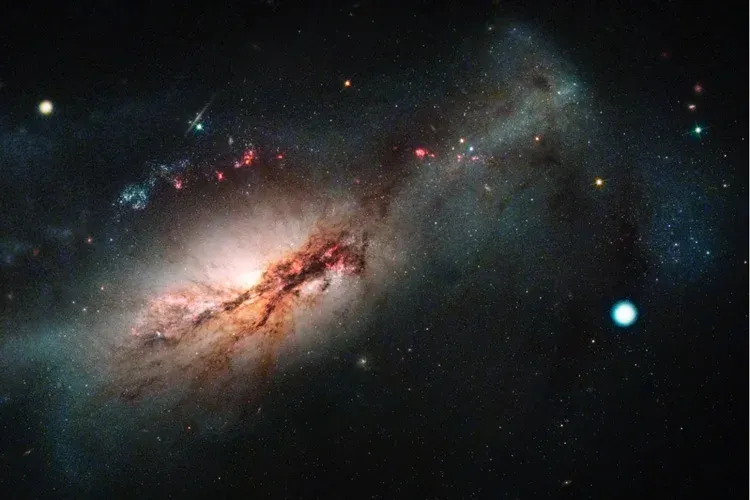
SN 2018zd matched six predicted signatures of an electron-capture supernova in a 2021 study, making it a leading candidate. Electron capture can remove pressure supporting a stellar core, triggering collapse in a narrow range of stellar masses. Competing interpretations and later Webb observations leave both SN 2018zd’s mechanism and the Crab Nebula’s origin unresolved. An unusual supernova reveals a possible third way stars explodeA fading star in a nearby galaxy offered astronomers an unusually complete set of clues about a long-predicted stellar death. Its surroundings, changing brightness and chemical signatures pointed toward an electron-capture supernova, an explosion triggered when a stellar core loses part of its internal support. The finding also raised hopes of explaining the explosion that created the Crab Nebula in 1054. However, subsequent research has complicated that connection. Both objects remain valuable tests of stellar physics, rather than settled examples of one explosion mechanism. The host galaxy and post- and pre-explosion images of SN 2018zd.
0 comments
No comments yet. Be the first to share your thoughts!