Will you get the job? What will the medical test results show? And what’s with that ominously vague email your boss sent?
Uncertainty and change have always been challenging to handle, for some people more than others, said Michel Dugas, a psychology professor at the University of Québec in Outaouais. There’s also today’s rapid changes in politics, technology and more.
Is simply letting nature take its course enough to stay healthy as we age? In this episode of CGTN's Health Talk, Prof. Andrea Maier, Dr. Camillo Ricordi and Dr. Tim Shi share practical advice on healthy longevity and discuss the shared challenges facing global healthcare. The experts explain how modern lifestyles disrupt the body's internal balance and suggest proactive daily habits, including intermittent fasting, cutting back on high-carb breakfasts and combining exercise with cognitive tasks.
Beyond individual habits, they stress that shifting healthcare from reactive treatment to proactive disease prevention remains a major global challenge – one that requires cross-border collaboration and resource sharing to overcome. Supervisor: Zhang JingwenProducer: Yang ShaDirectors: Chen Chen and Lu WeiVideo Editors: Zhong Xia, Chen Chen, Wang YuxinCopy Editors: Wu Gang, Shanaaz Prince, Xu WenCover Image Designers: Huang Ruiqi, Zhu Shangfan
In the annals of 'cat parasite' research, Toxoplasma gondii grabs most of the headlines. The mysterious pathogen, which may infect up to one-third of the global population, is famous for altering the behavior of its hosts, and it's also of serious concern for its varying effects on human health. But T. gondii isn't the only parasite that cats and humans have the misfortune of sharing. In a new study published in PLOS One, scientists shine a spotlight on a protozoan pest called Giardia duodenalis, and the research team says it's the largest investigation to date on the parasite's prevalence in domestic cats in North America. While most infections with G. duodenalis don't produce symptoms, it can result in the disease giardiasis in both humans and animals, which can cause diarrhea, abdominal pain, weakness, and other signs of poor health, including failure to grow in animals. In the study, led by veterinarian and first author Margaret Wingerd from VCA SouthPaws Veterinary Specialists & Emergency Center in Fairfax, Virginia, researchers analyzed more than 157,000 stool samples collected from domestic cats across the US and Canada. Scanning electron micrograph image of G. duodenalis.
Stroke risk is primarily linked to differences in traditional stroke risk factors, like diabetes and high blood pressure, rather than ethnicity, according to findings from a new south London study conducted at King's College London.
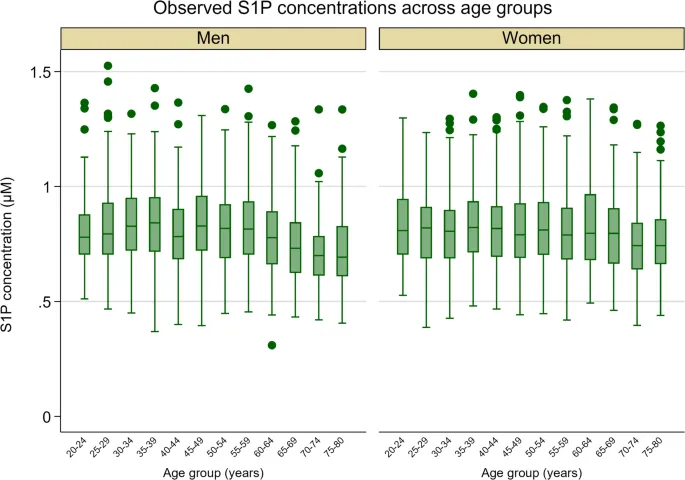
IntroductionSphingosine-1-phosphate (S1P) is a bioactive molecule involved in different pathways from cell development to disease1,2. S1P relates with several biological processes, including immune trafficking, vascular homeostasis and metabolic pathways, whereas dysregulation of S1P signaling has been implicated in multiple diseases such as cancer, atherosclerosis, diabetes, and osteoporosis3. While extensive research has explored the role of S1P in cardiovascular disease4,5,6, its potential association with obesity—a major global health concern—remains elusive. A growing body of evidence suggests that obesity may influence S1P levels. In genetically obese (ob/ob) mice plasma S1P levels are higher compared to those in lean mice7. Additionally, clinical research has confirmed that markers of adiposity, including total body fat, body mass index (BMI), waist circumference, and metabolic parameters such as fasting insulin, homeostatic model assessment for insulin resistance (HOMA-IR), glycated haemoglobin (HbA1c), and low-density lipoprotein cholesterol (LDL-C) are positively correlated with plasma S1P concentrations8.
Skip to mainSat, October 17, 2026 at 12:03 a.m. UTCHealth care and other front-line workers received the Ervebo vaccine on Friday in Beni, Democratic Republic of Congo, which has proved effective in previous outbreaks caused by the more common Zaire strain of Ebola. As of Wednesday, the country had recorded The Health Ministry reported 9,066 confirmed cases and 4,381 deaths, according to government figures.
Local officials gathered at the Thunder Bay Paddlesport Club to celebrate the opening of a new accessible dock and walkway.
VIDEO: Oliver Paipoonge mayoral candidates debate community growth at Rosslyn forum
Therapy targeting the immune system's B cells might offer better odds against relapses in the early stages of multiple sclerosis (MS), a new study reports. People taking IV drugs that lower immune B-cell levels had a 62% lower rate of relapse than those taking pills frequently prescribed for early MS, the study team found.
In a follow-up on the measles outbreak in Sweden, no new cases of measles linked to the Urkult festival in Västernorrland have been reported in Sweden since the last update on September 9. The outbreak has been declared over as of October 14. A total of 40 cases were reported in the outbreak. In 28 cases, the spread of infection occurred during the Urkult festival. 12 people are considered to have been infected after contact with a person who was infected at the festival. The majority of the cases are school-age children and young adults. Most of the cases have been unvaccinated against measles. The cases have been reported from ten regions: Gotland (4 cases), Jämtland Härjedalen (6 cases), Skåne (2 cases), Stockholm (12 cases), Sörmland (3 cases), Uppsala (1 case), Värmland (2 cases), Västerbotten (7 cases), Västernorrland (2 cases) and Västra Götaland (1 case). One case has been reported from Finland. The regions’ infection tracing of the outbreak cases showed that the source of the outbreak was infected abroad.
NEWYou can now listen to Fox News articles!
A rare fungal infection that can strike healthy people is rising across the U. S., prompting calls from public health officials for heightened awareness and national tracking. Cladophialophora bantiana (C. bantiana) is a black yeast-like mold that can infect the brain and contains a dark pigment called melanin, according to a new report from the Centers for Disease Control and Prevention. Data from a microbiology laboratory at the University of Washington shows that detection of the fungus nearly quadrupled between 2023 and 2025. LOUISIANA GIRL, 8, DIES AFTER CONTRACTING SUSPECTED BRAIN-EATING AMOEBA LINKED TO LAKE SWIMBetween January 2009 and July 2026, researchers identified 48 confirmed cases and one probable case of C. bantiana in tissue samples from 21 states and the District of Columbia. The median patient age was 68 years old. Unlike many fungal infections that mainly affect people with weakened immune systems, about half of C. bantiana infections occur in otherwise healthy people. Cladophialophora bantiana (C.
A recent study evaluated whether laboratory markers, including serum adipokines and cytokines, could distinguish between patients with psoriasis who have concurrent metabolic dysfunction-associated steatotic liver disease (MASLD) and those without the condition. A team of researchers from Germany conducted the study and published their findings in Psoriasis: Targets and Therapy. The investigators explained that MASLD “frequently remains undetected in clinical routine diagnostics” and that they wanted to investigate the condition in the context of psoriasis as an “independent risk factor for MASLD.”Eligible patients for the single-center retrospective study included individuals with moderate-to-severe plaque psoriasis who were admitted to the hospital between 2015 and 2024.
The author and neuroscientist explore how altered states challenge our understanding of the mind — and why consciousness is more than a problem to solve.
During a psychedelic experience in his garden, Michael Pollan became convinced that the plants around him were conscious. They seemed to be returning his gaze, he said — benevolent and perhaps grateful for his gardening. Back in ordinary consciousness, the author and UC Berkeley journalism professor emeritus faced a harder question: What should he do with that conviction? Was it an insight into reality, or simply an effect of the drug?
Results from a recent matching-adjusted indirect comparison (MAIC) analysis indicated clinical favorability of retifanlimab versus avelumab for the treatment of metastatic Merkel cell carcinoma (MCC), which investigators described as “a rare and aggressive skin cancer with poor prognosis and low survival rate. A team of researchers from Italy conducted the study and published their findings in Advances in Therapy. Both retifanlimab and avelumab are classified as monoclonal immune checkpoint inhibitor (ICI) antibodies, and investigators highlighted that both medications are approved for the treatment of metastatic or locally advanced recurrent MCC. They explained that the goal of their research was to assess clinical outcomes of both ICIs via a MAIC analysis of data from the phase 2 POD1UM-201 trial and part B of the phase 2 JAVELIN Merkel 200 trial. Patient data from each trial were used in the analysis, with data from POD1UM-201 informing the retifanlimab group and aggregate data from JAVELIN Merkel 200 informing the avelumab treatment group. Investigators also underscored that the data cutoff of POD1UM-201 was July 2024.