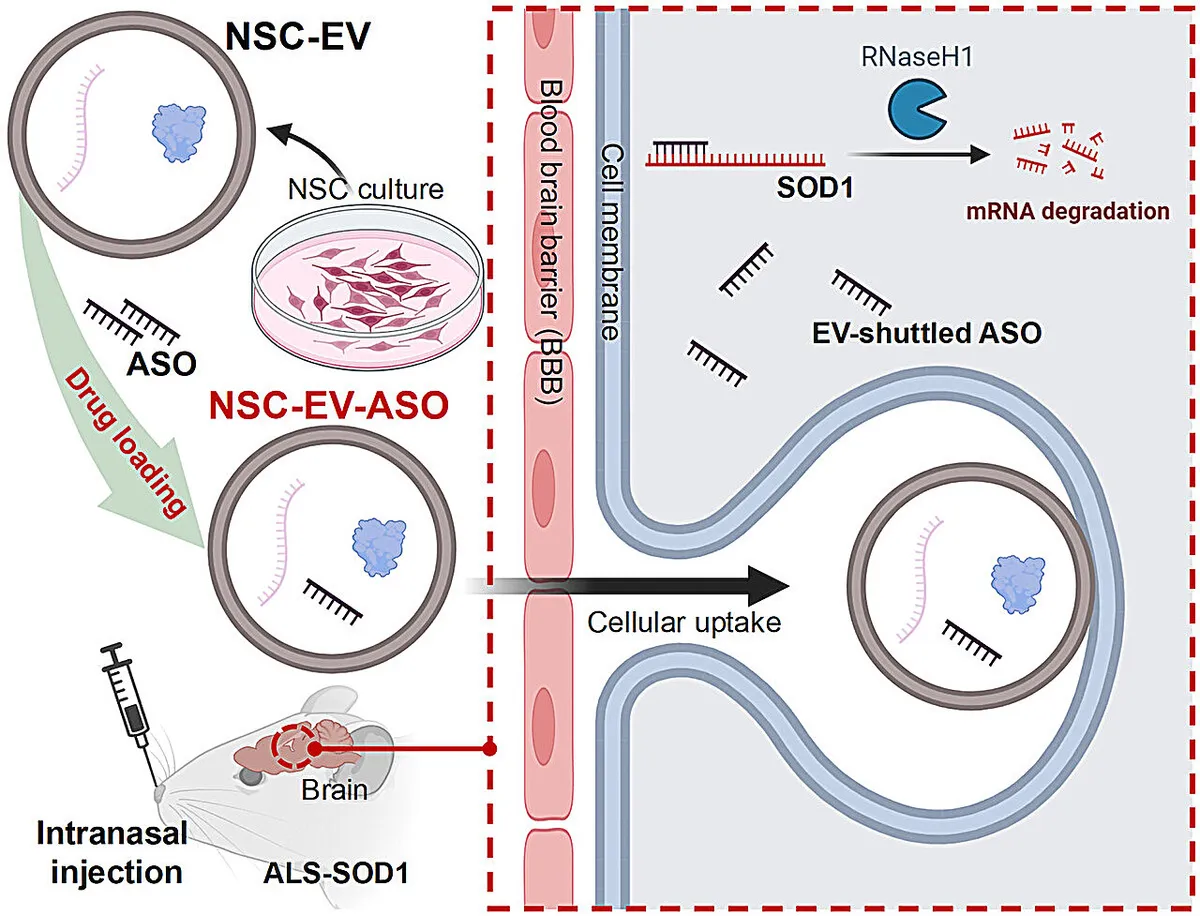
Credit: Journal of Extracellular Vesicles (2026). One of the great challenges in treating diseases like amyotrophic lateral sclerosis (ALS) is not necessarily finding a promising drug. It is getting the drug to the right place. New research from the University of Georgia's Regenerative Bioscience Center (RBC) is revealing how tiny, naturally produced carriers could help deliver medicines to the cells that need them most.
Earlier this month, the Wetaskiwin Health Foundation (WHF) opened ticket sales for ‘The Final Harvest Barn Dance,’ set for Saturday, Nov’.14, at Co-op Place.
Marking the 19th and final chapter of the annual tradition, the foundation is inviting neighbours, long-time attendees, and new friends alike to gather for one last night of celebration, storytelling, and community impact.
Chilliwack municipal candidates are calling on provincial candidates to pledge their support for health-care improvements in the city if elected.
Jason Lum, a mayoral candidate who serves on the Fraser Valley Hospital Board, issued a call to Chilliwack MLA candidates to commit to bringing an MRI to Chilliwack General Hospital, with the project beginning within one year, and to reinstate the Bradley Centre redevelopment project.
TEXAS — Maybe it’s putting groceries back, delaying a doctor’s appointment or watching a credit card balance climb. When the money coming in doesn’t cover the bills going out, the worry can feel relentless.
For many Americans, the stress of making ends meet doesn’t end at the checkout counter.
It may be time to rethink those late-night raids on the fridge or the cookie and chip cupboard: A new study has linked out-of-hours snacking with two types of liver disease, cirrhosis and metabolic dysfunction-associated steatotic liver disease (MASLD). Published in Clinical Gastroenterology and Hepatology, the comprehensive study analyzes data from 199,155 individuals, with a median age of 59. Participants are enrolled in ongoing health research and complete food and lifestyle questionnaires every 2–4 years. The authors of the new study, from Oregon Health and Science University (OHSU) and Massachusetts General Hospital, found a 28 percent higher risk of cirrhosis and a 36 percent higher risk of MASLD among late-night eaters compared to those with more standard eating times. Late-night eating was defined as eating "after bedtime" or "between dinner and bedtime. "To put that increased risk into perspective, cirrhosis remained uncommon, with 315 cases among nearly 200,000 participants over the follow-up period. The researchers think that our circadian rhythms, the built-in cycles that sync our bodies with daytime and nighttime, may explain the link.
Alberta health officials have accelerated the flu shot campaign, instructing pharmacies across the province to begin scheduling vaccinations immediately, rather than waiting for the original start date of October 19. According to Primary care Alberta, influenza cases have surged ahead of the typical timeline, leaving hospitals full, and frontline workers unprotected. Provincial data show more than 400 confirmed flu infections so far. Infectious-disease specialist Dr. Lynora Saxinger of the University of Alberta Hospital explains that this year’s dominant strain is circulating vigorously because it differs enough from prior versions that residual immunity offers little defence. She urges people to arrange a shot without delay, stressing that the body needs time to build protection once the vaccine is given. Officials advise Albertans to contact their neighborhood pharmacy first to confirm vaccine availability. High-risk and immunocompromised residents have already started receiving doses. Appointments can also be made online or by calling Health Link at 811.
Niagara Health has received two provincial awards for organ and tissue donation.
The Trillium Gift of Life Network handed Niagara the Hospital Achievement Award, which was also given to 48 other hospitals, and the Award of Excellence
A large national survey has found a high prevalence of binge eating—eating an unusually large amount of food while feeling a loss of control—among U. S. high school students.
The survey’s findings were outlined in an Oct. 15 report from the Centers for Disease Control and Prevention (CDC). Co-authors included two researchers affiliated with Harvard T. H. Chan School of Public Health, S. Bryn Austin and Ariel Beccia.
A new study found that two very different eating patterns shared a nutritional problem: inadequate fiber intake. Among 64 adults preparing for weight-loss surgery, approximately 83% consumed less fiber than recommended, regardless of their broader dietary profile. The Concordia University findings, publicized October 13, also revealed something unexpected. Participants who consumed more calories, fats, sugars, and nutrients showed no statistically significant differences in several heart and metabolic health markers compared with those consuming less. Next: I'm a Trainer: Americans Are Obsessed With Protein, but Most Are Missing One Key NutrientTwo Diets, One Common ProblemPublished in the journal Obesity Surgery, the study examined adults averaging 48 years old, with an average body mass index of 45. Researchers identified two dietary profiles. One featured higher consumption of sugar, fat, and overall nutrients. The other contained fewer vitamins and less fiber. "The high sugar and high fat group might be eating more fatty food like beef as opposed to chicken, or even putting more sugar in their coffee," said Concordia professor Simon Bacon, PhD.
Berlin, 15 October 2026 (PAHO) – Pan American Health Organization (PAHO) Director and WHO Regional Director for the Americas Dr. Jarbas Barbosa called for countries and regional institutions to have a stronger role in shaping ongoing reforms of the global health system during the World Health Summit 2026 in Berlin this week, arguing that clearer responsibilities across national, regional and global levels can reduce duplication and help limited health resources deliver greater impact. His call comes as WHO Member States and global health partners are examining how health cooperation is governed, financed and delivered amid tighter financial conditions and concerns over fragmentation and duplication. The reform process is considering how responsibilities, coordination and financing should be aligned across country, regional and global levels, with final recommendations expected to be considered by the World Health Assembly in 2027. Drawing on the experience of the Americas, Dr. Barbosa highlighted how regional cooperation can bridge global health commitments and action within countries.
Toronto, Ontario--(Newsfile Corp. - October 15, 2026) - Christine Brezden-Masley, Medical Oncologist and the Director of the Marvelle Koffler Breast Centre at Mount Sinai Hospital and Medical Director of Cancer Program for Sinai Health System in Toronto, Dr. Sean Egan, Senior Scientist in the Cell and Systems Biology program at The Hospital for Sick Children ("SickKids") and a professor in the Department of Molecular Genetics at the University of Toronto, Antonio Cassano, Research Coordinator, Department of Surgery, Women's College Hospital, and Kimberly Carson, Chief Executive Officer, Breast Cancer Canada, joined Brenda Cunnington, Managing Director, Americas, Trayport at TMX Group, and Board Director for The Lobular Breast Cancer Alliance ("LBCA") to close the market in recognition of Lobular Breast Cancer Awareness Day. October is Breast Cancer Awareness month, and the 15th was selected as Lobular Breast Cancer Awareness Day to shine a spotlight on the 15% of breast cancer diagnoses each year that are invasive lobular carcinoma (ILC), also known as lobular breast cancer. As the second most common type of breast cancer, ILC receives less than 1% of breast cancer research funding
This browser does not support the video element.
DETROIT -- Hot Stove season doesn’t begin until next month, but the Tigers already got a big addition to their rotation entering next year. Right-hander Troy Melton, given a clean bill of health, looms large again as a potential frontline starter in a group of talented young arms.
Gilead is back with the latest iteration of its HIV prevention initiative Care for the Culture — this time with a focus on the Latino and Black communities.
Launched on National Latino AIDS Awareness Day, the new campaign revolves around the slogan “Ahorita Mismo,” which means “Right now” in Spanish. It’s designed to reach Latino and Black communities, specifically men who have sex with men — a group still disproportionately affected by HIV.