In a province where 53 per cent of adults in New Brunswick face literacy challenges, lovers of literature came together for the first ever Writers of the Realm Literary Festival in Fredericton on Sept. 19.
Sakura Blue Studios held the inaugural festival at the Fredericton Inn.
This edition of the NB Update features reports from an ongoing series of media workshops at Elsipogtog First Nation hosted by the NB Media Co-op.
The first interview highlights an alternative court program in Elsipogtog that aims to divert Indigenous people from the prison system, where they remain overrepresented due to the forces of systemic racism.
In early September, the organization behind Canada’s push for small modular nuclear reactors (SMRs) quietly signalled their demise.
In 2016, the president of Canadian Nuclear Laboratories proclaimed that “SMRs can live among the annals of great Canadian innovations.” Ten years later, the organization announced the termination of its two programs to support SMR development.
The Maple has published several articles about the Israel lobby in Canada in the past, examining and critiquing its activities. This one will be a bit different, in that we’ll share the names of the people and groups who make it up. The conception of the Israel lobby generally used in past articles drew from Stephen Walt and John Mearsheimer’s 2007 book The Israel Lobby and U. S. Foreign Policy, seeing it as a “loose coalition of individuals and organizations that actively works to move [Canadian] foreign policy in a pro-Israel direction” and promote pro-Israel domestic policies. Importantly, Walt and Mearsheimer add that “it is not a single, unified movement with a central leadership,” though the groups in it often do work together. In this article we’ll narrow the conception of the lobby down to actual registered lobby groups in Canada that spend at least some of their efforts on the aforementioned activities. These groups are required to publish reports on who they lobbied, when they did it and a general idea of what they discussed. They’re also required to publish the names of all of their registered lobbyists.
Defence Minister David McGuinty today announced a new $4 billion investment to support “capabilities” for Canada’s new fleet of American-made F-35 fighter jets at Cold Lake, Alta. The Liberal government has committed to purchasing 16 F-35 fighter jets made by American arms company Lockheed Martin, but has been reviewing plans to purchase more for over 18 months. Asked at a press conference at CFB Edmonton if the new investment signalled a step towards purchasing a full fleet of 88 jets, McGuinty stressed that Canada was committed to buying 16 jets and that the aircraft require “highly sophisticated” infrastructure. “The question of where we’re going next is under review,” he said. “We’re going to take the time we need to make sure that this is gotten right.”The review was announced amid Canada’s ongoing trade war with the United States and President Donald Trump’s repeated threats to turn Canada into the “51st” American state. The F-35 in particular has become a flash point due to Canada’s heavy military dependency on the U. S. and the fact that the American president could choose to block software updates for the Canadian jets.
In 2024, more than 342,000 lost-time claims were made in Canada while roughly 1,046 workers died from workplace accidents or occupational diseases. Provincial workers’ compensation insurance systems are supposed to be there when injured workers or the survivors of deceased workers need them. Yet these bodies are often plagued with issues, from employer claim suppression and inadequate benefits, to the stigmatization of injured workers and policies geared more toward returning workers to the job than protecting their long-term health. This week I sat down with Marion Endicott and Steve Mantis, the authors of Who Killed Sir William?, published by FriesenPress, to talk about the plight of injured workers and their efforts to build community-based research and change. Endicott worked for 40 years as an advocate for injured workers. In addition to being a leader in the community-based research project detailed in Who Killed Sir William?, Marion’s principle work was at the Injured Workers Community Legal Clinic. Mantis was the community lead in the Research Action Alliance on the Consequences of Work Injury (RAACWI).
When I first heard about the “Cornell 7,” I was waiting in line at my university’s café, scrolling on Instagram. I didn’t feel shocked. In fact I felt almost nothing at all. The world continued to bustle around me — students picked out their lunches from the fridge behind me while my eyes stayed glued to my screen.
For a moment, this was just another story that many of us know more intimately than we’d like to admit — or than we’re allowed to admit. I didn’t need to know the details to understand what the story was about. My body knew before my mind.
Canada’s Department of National Defence (DND) has already more than doubled the total value of its new contracts signed with American tech giants this year, according to a new analysis by The Maple. So far in 2026, DND has signed new contracts worth a total of $67.7 million with Microsoft, Amazon, Google and their Canadian subsidiaries, up from $30.3 million signed in 2025. The department’s hike in new contracts with the companies comes despite Prime Minister Mark Carney repeatedly claiming that Canada is reducing its reliance on U. S. contractors. During the 2025 election, Carney explicitly pledged to cut back on government contracts with American tech giants as part of a “Buy Canadian” procurement strategy. This week, the Toronto Star revealed that Carney’s government has signed a total of $7.8 billion worth of federal contracts with American companies since 2025, increasing the share of all federal contracts with U. S. firms by 11 percentage points. Carney has also spoken about creating a “sovereign cloud,” or a computing environment in which data and infrastructure are regulated under Canadian jurisdiction.
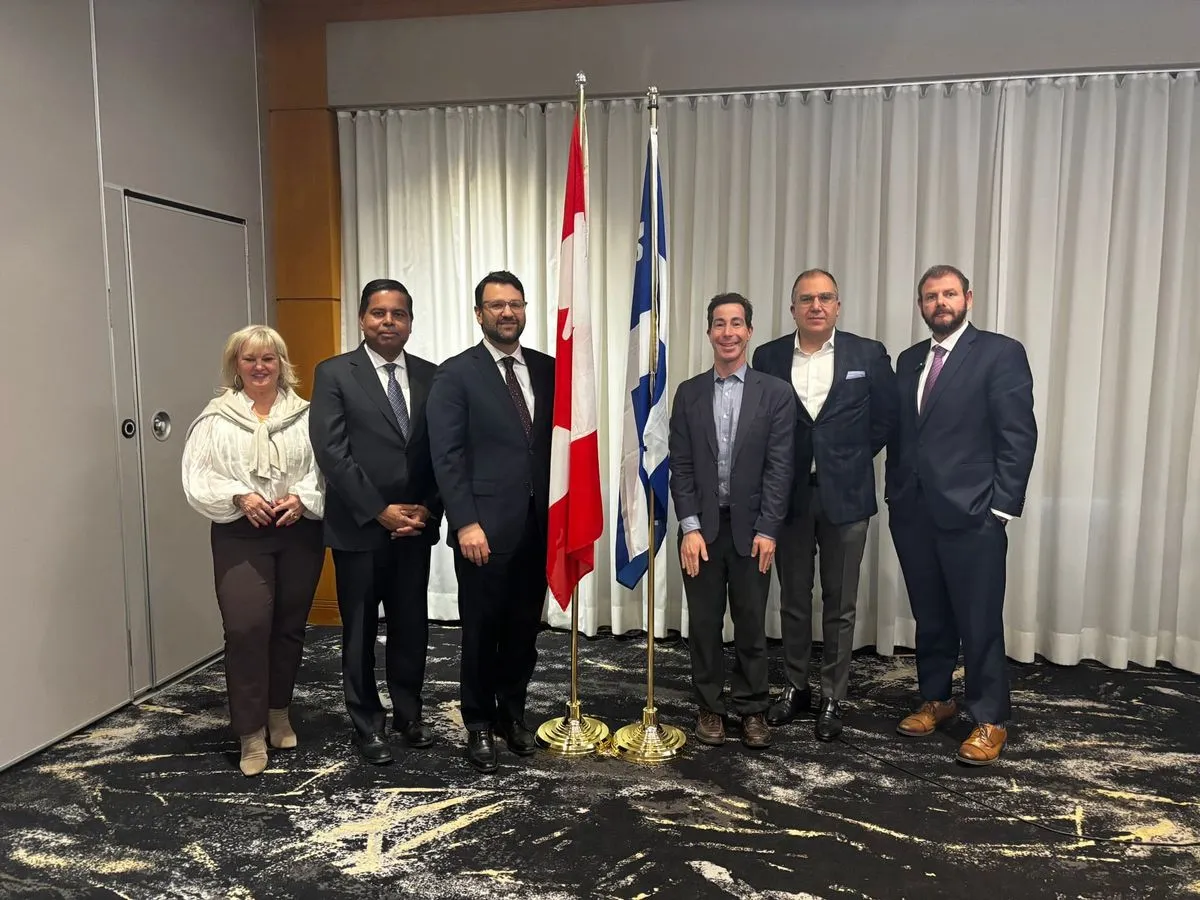
The Centre for Israel and Jewish Affairs (CIJA) is a Zionist registered lobby group that counts “rebuilding the Canada-Israel partnership” as one of its top priorities. CIJA states that it “educates Canadians about the important role that the people and land of Israel play in Jewish life and identity with the objectives of deepening Canadians’ understanding about the Jewish community and, to the benefit of Canadians and Israelis alike, strengthening ties between Canada and Israel.”The organization has taken MPs on sponsored trips to Israel in the past, and currently lobbies them as well as other members of government. Its lobby goals have included:making it easier for the Canadian government to revoke citizenship;training law enforcement officials to identify alleged hate speech using the IHRA definition of antisemitism;Canada-Israel military cooperation;Canada not resuming diplomatic relations with Iran;additional funding for police hate-crime units;intensifying the monitoring done by RCMP and CSIS. A review of Canada’s lobby registry on September 29 revealed that CIJA had lobbied at least 61 MPs by that point, some of them on multiple occasions.
Writer Taina Da Silva reflects on how Anishinaabe activist Gwawich’s work has helped her to remember the power of her treaty rights — and why utilizing them is crucial
Anishinaabe Elder Gwawich’s Land Back Garden on the outskirts of the Grassy Narrows First Nation. Photo by Taina Da Silva
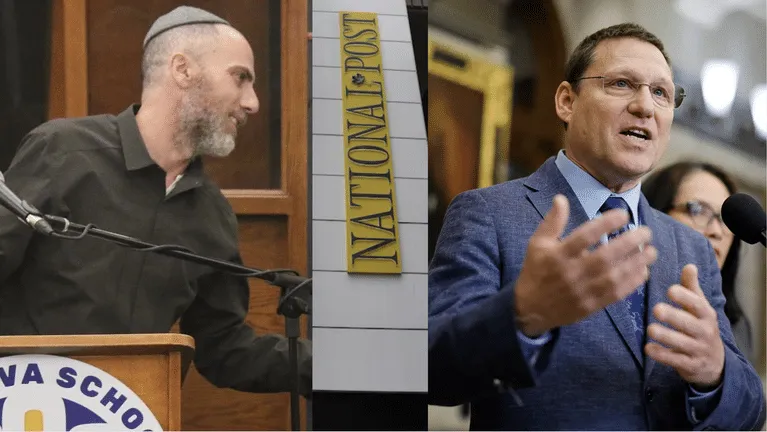
There is a line a responsible newspaper should never cross casually: the line between condemning a political opponent and portraying that opponent as a threat who must be dealt with. The National Post crossed that line in Yoni Goldstein’s column, “Jewish law tells us how to deal with Avi Lewis.” The problem is not that Goldstein criticizes Lewis. Political leaders are supposed to be criticized, and Lewis, like every other public figure, is subject to scrutiny over his political positions and statements. The problem is the framework Goldstein chose to use.
Goldstein places a living Canadian political figure inside Jewish legal concepts including moser and rodef. In traditional Jewish law, a rodef is a person who is actively pursuing another person with the intention of killing or causing potentially grave harm. The legal concept known as din rodef (“the law of the pursuer”) concerns the obligation of every community member to intervene to stop an immediate and serious threat.
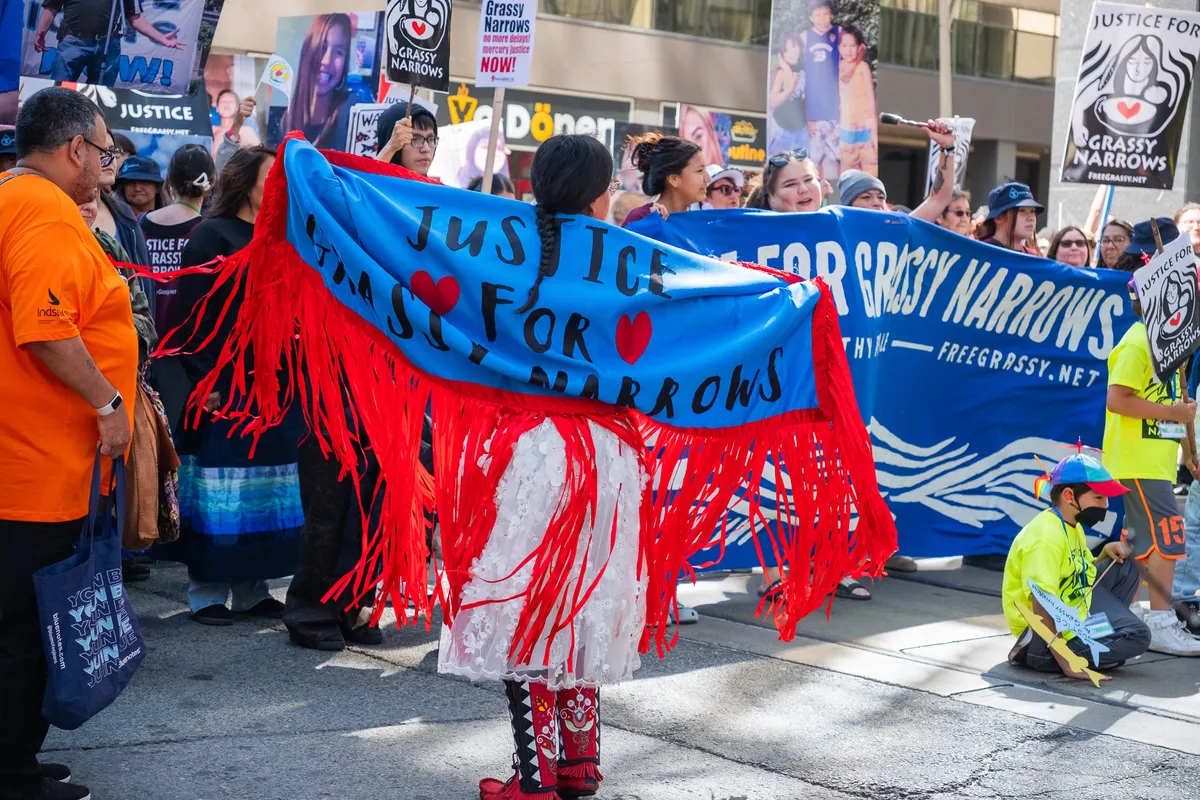
Community members and allies marched to Queen’s Park demanding fair compensation and the closure of the Dryden mill
On Wednesday, Sept. 23, members of Grassy Narrows First Nation, Whitedog, and organizers in Tkarón:to came together for the annual Grassy Narrows River Run. Photo by Daniel Opasinis
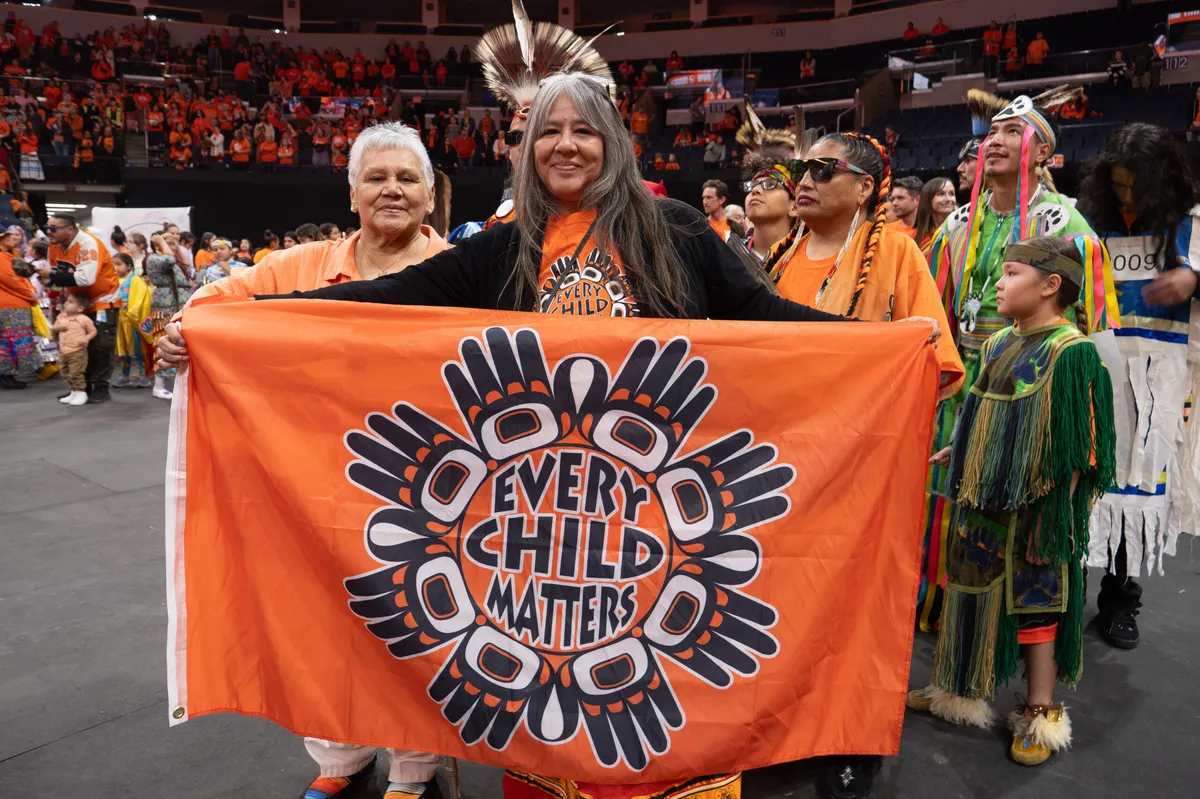
With events including a powwow and a commemorative walk, people on the prairies honoured survivors of residential ‘schools’ — and all those who never made it home
Daniella Peltier with an Every Child Matters flag at the Southern Chiefs’ Organization’s Orange Shirt Day powwow at the Canada Life Centre in Winnipeg on September 30. Photo by Crystal Greene
Mississauga is one of a growing number of municipalities pushing back against data centres in their communities.
On September 16, Mississauga passed an interim control by-law pausing approval on all data centres with a peak power draw of over 10MW for the next year.
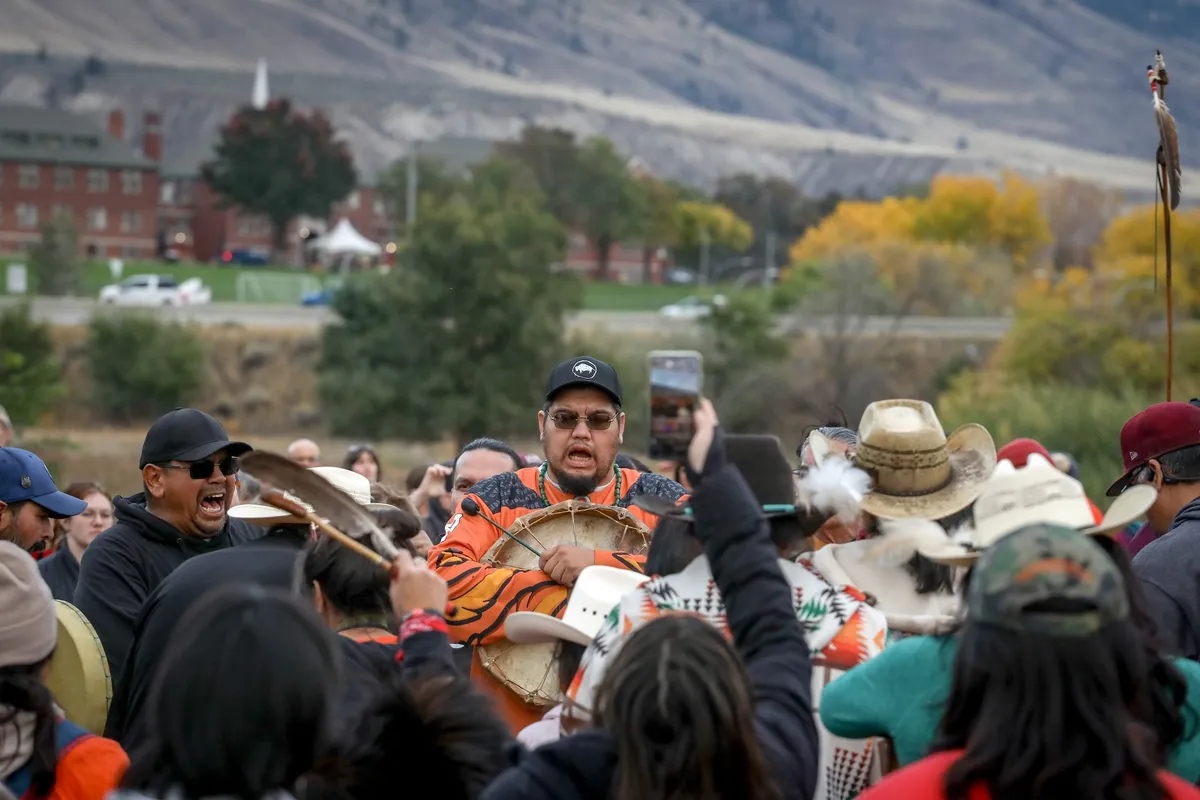
During two events this week, people came together to support survivors and their families in the wake of masked denialists demonstrating on the reserve: ‘They don’t win, and they’re not going to’
At the same site where a white nationalist demonstration occurred in Tk̓emlúps te Secwépemc on Sunday, more than 100 Secwépemc people and their allies returned to the area two days later to reclaim the space. They drummed, sang and prayed to cleanse the spot, which is located a few hundred metres away from the former Kamloops Indian Residential School. Photo by Aaron Hemens
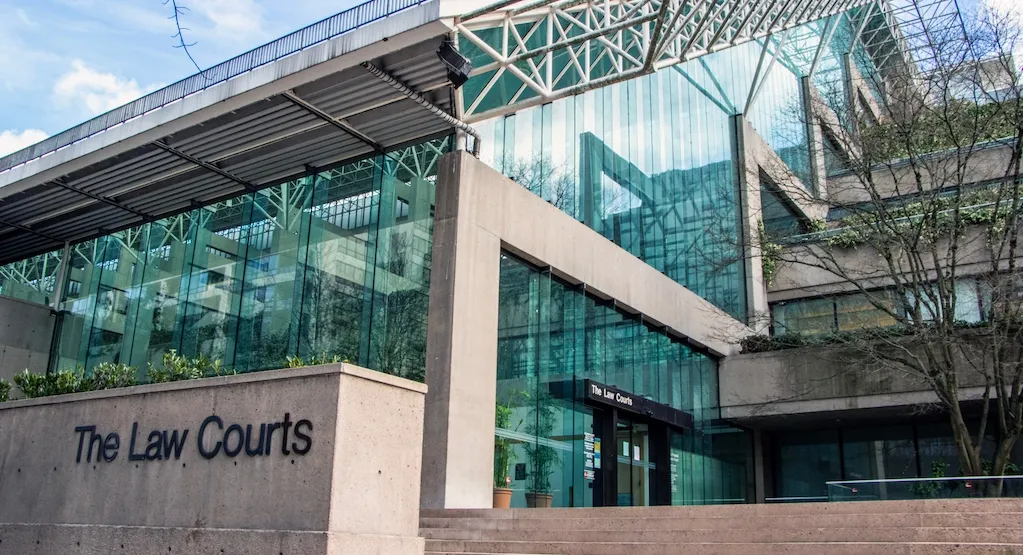
Drug User Liberation Front (DULF) co-founders won’t go to jail as BC Supreme Court judge rules CSDA violates members’ “right to life and security”
Many in the crowd that had gathered for the verdict in Drug User Liberation Front’s constitutional challenge at BC Supreme Court smiled through tears as Justice Catherine Murray read a short excerpt of her ruling, which found that Section 5(2) of the Controlled Drugs and Substances Act (CDSA) violates DULF members’ right to life and security of the person and right to equality on the ground of disability, in this case, substance use disorder.
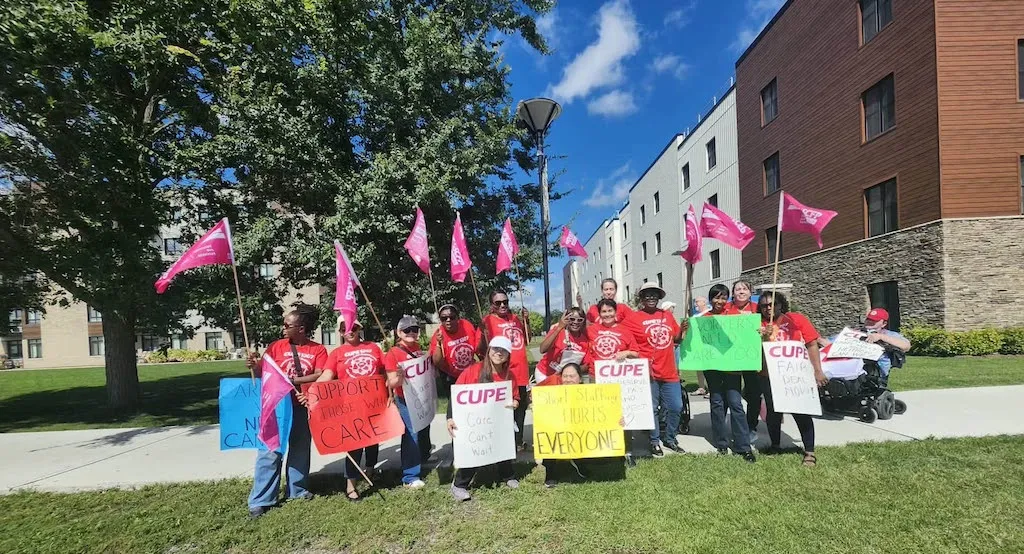
The union representing workers at a chain of for-profit long-term care homes in Ontario is accusing the company of intentionally delaying bargaining and relying on decades-old legislation that forbids healthcare workers in the province from striking.
The Canadian Union of Public Employees (CUPE) represents over 1100 workers at several Extendicare long-term care homes across Ontario who are bargaining for improved wages, staffing and workload levels, and safety issues that the union said have gone unaddressed in previous rounds of bargaining.
Drawing on personal accounts and historical evidence, ‘Truth Before Reconciliation: Confronting Residential School Denialism’ was launched in Winnipeg on Sept. 17
Pre-signed copies of ‘Truth Before Reconciliation’ were made available for audience goers of the September 17 launch in Winnipeg. Photo by Crystal Greene