WVU researcher digs into soil science with back-to-back national fellowships - WVU Today
This story deserves to be shared
Send it to someone who'd care, or post it on your networks.
This article is an excerpt. To read the full content, visit the original source. WVU Today
Related articles
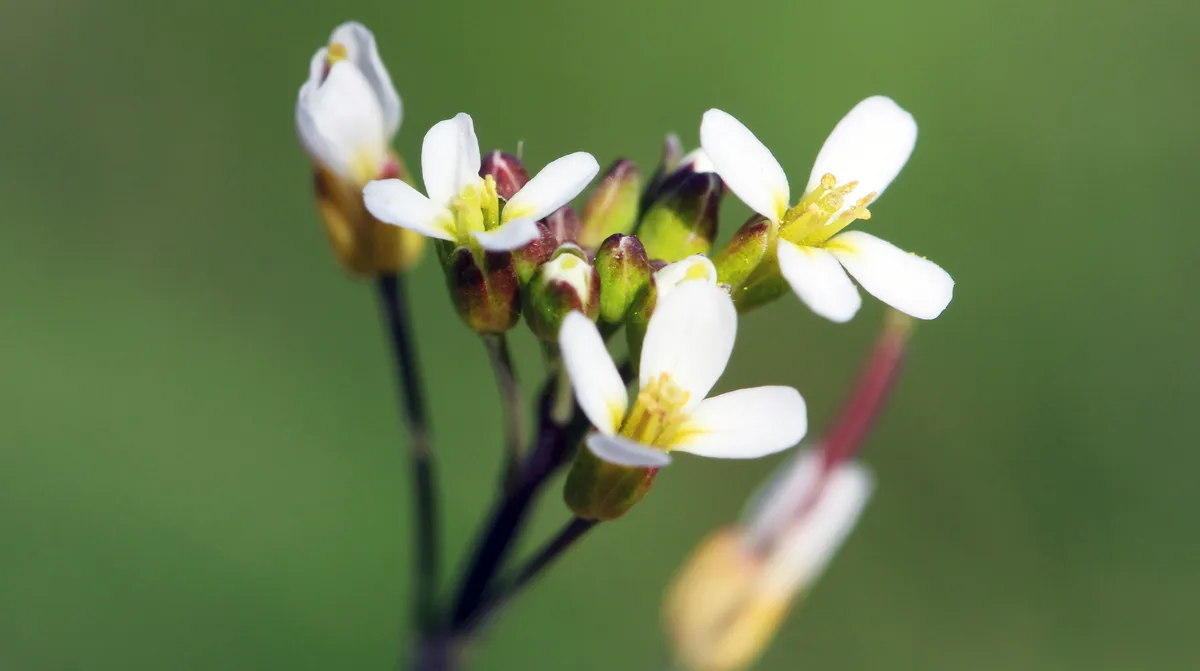
Applications Open for Simons Postdoctoral Fellowships in Plant Biology - Simons Foundation
The Simons Foundation’s Life Sciences division is now accepting applications for its Simons Postdoctoral Fellowships in Plant Biology. The application deadline is December 3, 2026, at 12 p.m. (noon) EDT. These postdoctoral fellowships support candidates who intend to pursue a career in basic research on fundamental problems in plant biology. This program supports researchers seeking to understand the inner workings of plants at the level of the whole organism or below. We are interested in applicants with training in disciplines that can be brought to bear on plant biology, including but not limited to engineering, computational modeling, theory, chemistry, synthetic biology and physics, as well as applicants already involved in the plant sciences.

Asia Pacific Foundation of Canada Announces Recipients of 2026-27 Media Fellowships - Asia Pacific Foundation of Canada
VANCOUVER, BC – October 7, 2026 – The Asia Pacific Foundation of Canada is pleased to announce its two Media Fellowship recipients for 2026-27. The annual APF Canada Media Fellowship Program offers Canadian journalists the opportunity to spend time in Asia researching and preparing stories for Canadian audiences. The goal of the program is to help Canadian journalists become better informed about this dynamic part of the world in order to write and broadcast insightfully on Asia and the Canada-Asia relationship.

SpaceX Sent 6,300 Pounds to the Space Station. The Strangest Cargo Was Grown in a Lab - Inc.com
The spacecraft delivered materials and equipment for new research studies to the station.

Ancient mud reveals a surprising secret about Greenland’s ice - Earth.com
Mud from a fjord shows an Atlantic air pattern brought wetter, colder spells to southern Greenland, a clue to how its ice may fare. Greenland’s ice is shrinking as the planet warms. But in the island’s southwest, rainfall and snowfall have been influenced by the same North Atlantic air-pressure pattern for at least 5,000 years. When that pattern tipped one way, the region turned wetter and colder. The record comes from mud on the floor of a Greenland fjord, and it suggests snowfall, not only temperature, shaped how the area’s ice grew and shrank. It doesn’t yet show how glaciers there will respond to the warming ahead. Johan Faust, a researcher at MARUM, the Center for Marine Environmental Sciences at the University of Bremen in Germany, led the work with colleagues in Germany, Norway, Denmark and Canada. A seesaw in the airThe pattern is called the North Atlantic Oscillation. It’s the difference in air pressure between a low that sits near Iceland and a high near the Azores, and it’s strongest in winter. When that difference is large, the pattern is in its positive phase. Northwestern Europe and southwestern Greenland both get more rain and snow.

Simulations explore nuclear mitigation of asteroid threats - Phys.org
Lawrence Livermore National Laboratory researcher Isaiah Santistevan led the development of three-dimensional simulations exploring how a nuclear device could deflect or disrupt an asteroid threatening Earth. Credit: Blaise Douros/LLNL Lawrence Livermore National Laboratory (LLNL) researchers are developing three-dimensional simulations to examine how a nuclear device could be used to deflect or potentially disrupt an asteroid threatening Earth.
0 comments
No comments yet. Be the first to share your thoughts!