What Lies Ahead For Canadian Utilities (TSX:CU) Utility Stocks Next? - Kalkine Media
This story deserves to be shared
Send it to someone who'd care, or post it on your networks.
This article is an excerpt. To read the full content, visit the original source. Kalkine Media
Related articles
Canadian financiers face exposure in fight over U.K. utility’s future - The Globe and Mail
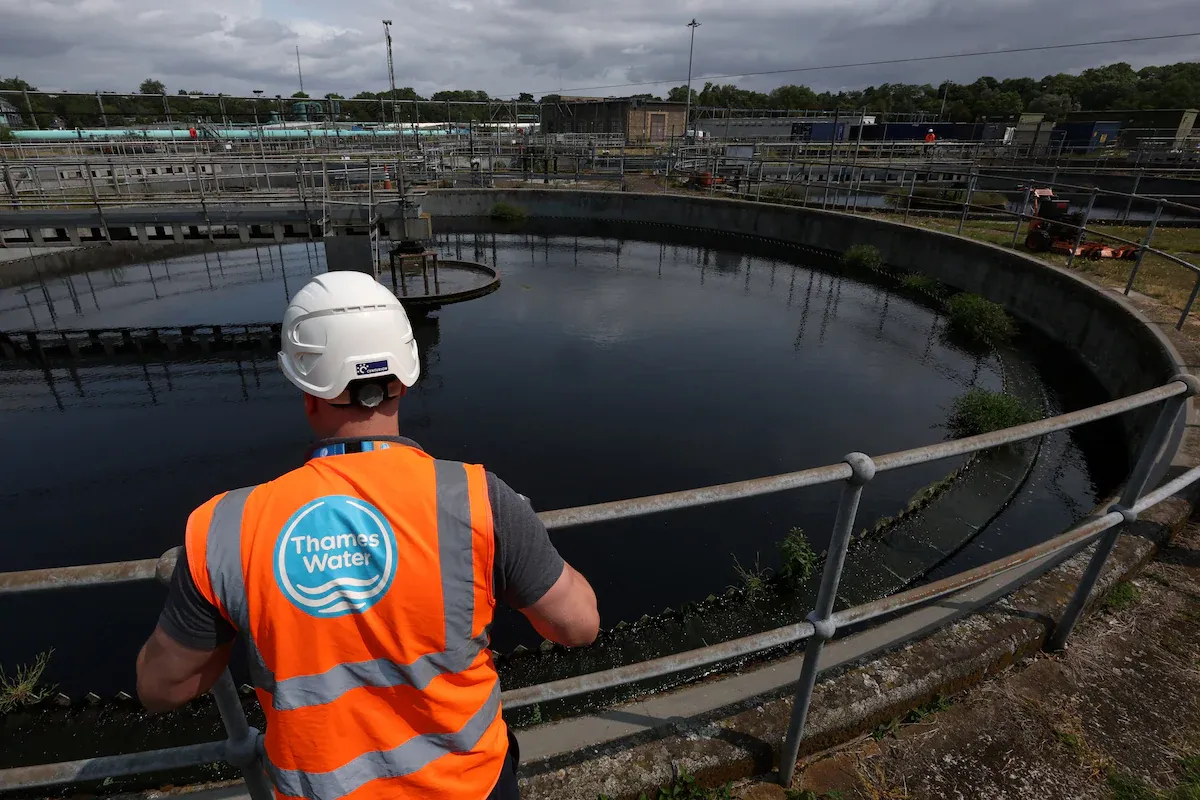
Open this photo in gallery:Settlement tanks at Mogden Sewage Treatment Works, operated by Thames Water, in London, Britain, in June, 2025. Toby Melville/ReutersCanadian financial institutions have landed in the crosshairs of a major nationalization debate in Britain, raising concerns among creditors over the fate of the country’s largest water provider. Thames Water, which serves about 16 million customers in England, has been teetering on the edge of collapse for years. Large Canadian banks, pension funds and asset managers have grappled with managing their links to the flailing utility, and business leaders have warned that public ownership of the utility could harm investment in Britain. The Canadian companies that have had exposure, or are currently exposed, to Thames Water include the country’s largest lender, Royal Bank of Canada RY-T, pension funds Ontario Municipal Employees Retirement System (OMERS) and British Columbia Investment Management Corporation (BCI), asset manager Fiera Capital Corp. FSZ-T, and Export Development Canada (EDC). Thames Water is wrestling with £20-billion in debt and has faced mounting public outrage over sewage spills.
A Canadian utility rover on the Moon | Canadian Space Agency - Agence spatiale canadienne
Beyond the Headlines: Where Canada’s Household Debt Problem Lies - C.D. Howe Institute
Canada’s high household debt warrants concern, but the aggregate data do not point to a systemic debt crisis. The debt-service ratio (DSR), a more timely measure of financial strain than the debt-to-income ratio, has eased from its 2023 peak and sits slightly below its pre-pandemic level. Canada’s DSR is also not an international outlier, and the financial system has absorbed the recent rate cycle without widespread distress. National averages, however, conceal acute financial strain among particular groups. Lower-income households are increasingly spending more than their disposable income, while younger Canadians report greater difficulty meeting debt obligations. Pressure is also concentrated among highly leveraged homeowners in Toronto and Vancouver renewing mortgages at higher rates. Rising insolvencies are another warning sign, but existing data cannot distinguish cash-flow problems from cases in which debts exceed assets.

Runners Take on Cape to Cabot Challenge Tomorrow - VOCM
The 20th annual Cape to Cabot road race is taking place tomorrow. The grueling 20 km trek sees participants running from one historic landmark to another: From Cape Spear to Cabot Tower on top of Signal Hill. The race starts at 8 a.m., and because of that there are a few related road closures in St. John’s. Between 7:45 and 11a.m. there will be numerous road closures along the route. A full list can be found online at VOCM dot com. Expect traffic impacts from 7:45 a.m. to 11 a.m. on routes including Blackhead Road, Southside Road, Water Street, Harbour Drive, Duckworth Street, Temperance Street and Signal Hill Road.

Alberta referendum expected to bring finality, but also more questions on separation - Global News
On Monday, Albertans vote on whether to stay in Canada or hold another binding referendum on quitting Canada. If the vote goes as polls suggest, a majority of Albertans will mark an X to stay in Confederation, and Premier Danielle Smith has said if that’s so, she expects everyone to accept it and move on. Leaders of the independence movement contest that. And political watchers are divided about whether separation — previously a fringe sentiment — will now be a prominent, permanent feature of Alberta’s political landscape, as in Quebec. Julian Castro-Rea, a political-science professor at the University of Alberta who studies the separation debates in Quebec and Alberta, believes as long as Alberta feels alienated from the Canadian capital — feeling that Ottawa benefits from Alberta’s resource economy without giving back — the movement will have fuel. “Even if the referendum is lost, the westernization will still be around, because it’s kind of a way which, traditionally, Albertans have related to the rest of Canada,” says Castro-Rea, who believes western alienation may remain indefinitely. Story continues below advertisement
0 comments
No comments yet. Be the first to share your thoughts!