We're all on the ice: It's time to put prevention at the centre of heart health - University of Ottawa Heart Institute
This story deserves to be shared
Send it to someone who'd care, or post it on your networks.
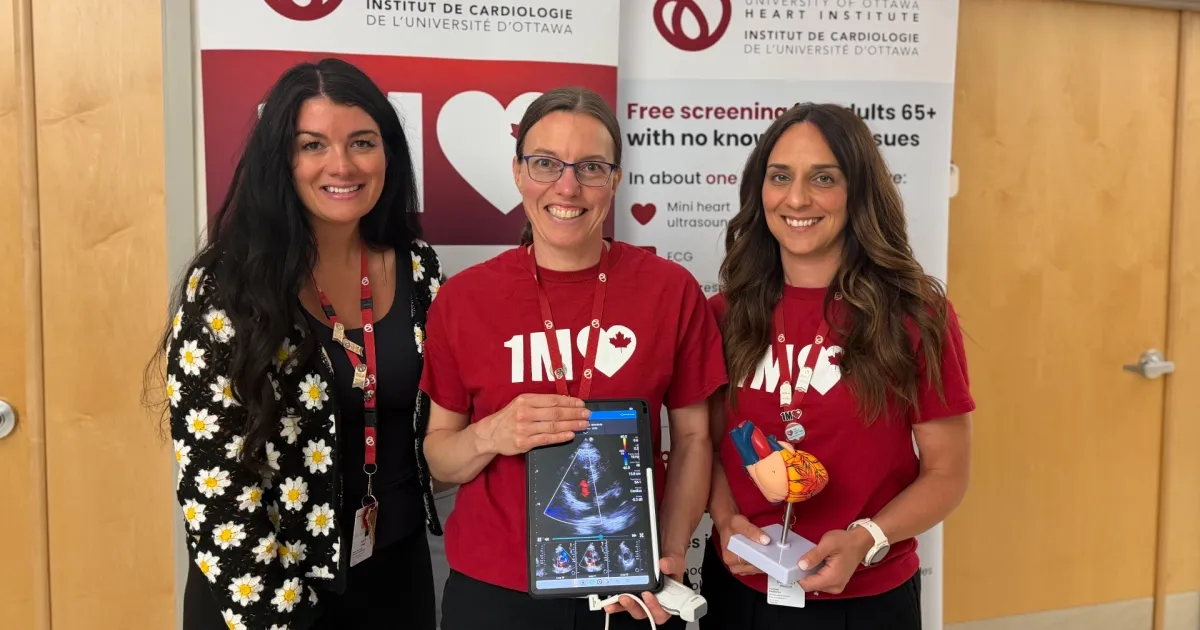
What if Canada’s healthcare system were designed not only to treat disease, but to find it earlier, and whenever possible, prevent it altogether?
Canada is at an important moment in our history. We are being asked to think differently about what we can build for ourselves, how we strengthen our economy, and build resilient communities. In his Forward Guidance address to Canadians in September, Prime Minister Mark Carney put it plainly: when it comes to Canada's future, “nobody in this country is in the stands. Forty million of us are on the ice.”That same spirit should apply to healthcare. For generations, Canada has built a healthcare system that is exceptional at treating people when they become sick. We have world-class hospitals, highly skilled clinicians and remarkable technologies that save lives when serious illness occurs. But what if we could change the starting point? What if our healthcare system were designed not only to treat disease, but to find it earlier, and whenever possible, prevent it altogether? We can do that with cardiovascular disease. In fact, we already are.
This article is an excerpt. To read the full content, visit the original source. University of Ottawa Heart Institute
Related articles

Continuous glucose monitors help type 2 diabetes patients spend 5 more hours a day in healthy blood sugar range - Medical Xpress
Continuous glucose monitors (CGMs) could transform diabetes management for millions of Americans with type 2 diabetes who don't take insulin, according to findings published in the New England Journal of Medicine. The clinical trial found that adults using CGMs spent approximately five additional hours each day within their target blood sugar range compared with those receiving routine care. Nearly twice as many CGM users also achieved an A1c level below 7%, a common treatment goal for people with diabetes.
Wearing headphones during surgery may reduce nausea and vomiting afterward - Medical Xpress
Patients who wore noise-canceling headphones during minimally invasive gynecological surgery were significantly less likely to experience postoperative nausea and vomiting (PONV), suggest findings from a randomized clinical trial presented at the Anesthesiology 2026 annual meeting.

Kefah Mokbel: Can Whole-Genome Sequencing-Based ctDNA Monitoring Help Personalize Adjuvant Treatment? - Oncodaily
“Beyond Detecting Cancer Recurrence: Can Whole-Genome Sequencing-Based ctDNA Monitoring Help Personalize Adjuvant Treatment? An exciting new study published in The Oncologist highlights the clinical potential of Signatera Genome, a whole-genome sequencing (WGS)-based, tumor-informed circulating tumor DNA (ctDNA) assay, not only for detecting molecular residual disease (MRD), but also for potentially informing adjuvant treatment decisions.
0 comments
No comments yet. Be the first to share your thoughts!