Wellcome Global Monitor 2026: Trust in science under pressure - Wellcome Trust
This story deserves to be shared
Send it to someone who'd care, or post it on your networks.
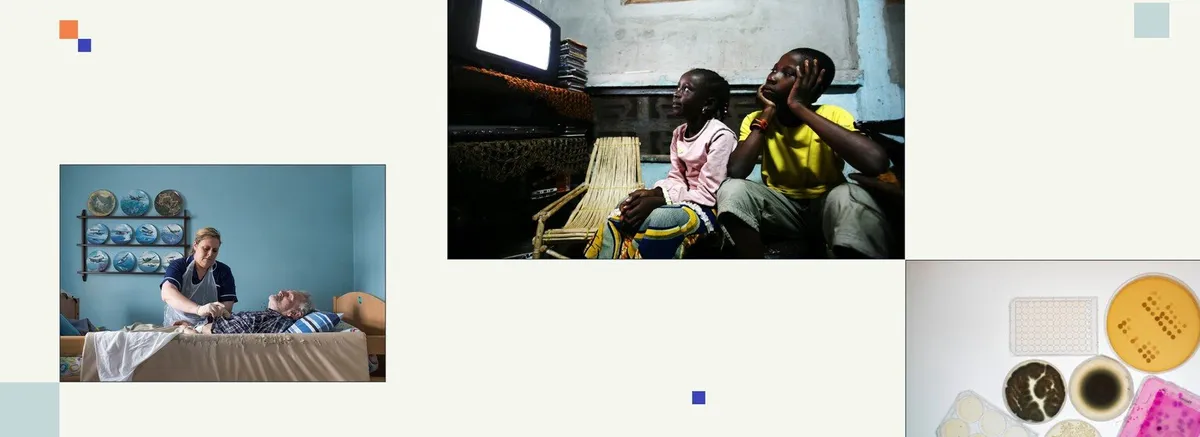
Skip to main contentThis website will not work correctly in Internet Explorer 11 and it is strongly recommended that you upgrade to an up-to-date browser. Internet Explorer 11 will go out of support and be retired on June 15, 2022. For more information on upgrading please see browser-update.org. OverviewThe Wellcome Global Monitor is the world's largest study of how people think and feel about science and health. The 2026 edition draws on surveys of more than 140,000 people in 140 countries, making it a uniquely rich and globally comparable data set on public trust in science. This is the third wave of the Wellcome Global Monitor, following surveys in 2018 and 2020. Over the course of these surveys, we saw trust rise during the pandemic, when science was more visible in people's lives, but that rise has not been sustained. Today, trust in science is below 2018 levels globally. Global averages only tell part of the story. Trust levels vary widely between and within countries, and it is closely linked to people's everyday experiences of healthcare, of public institutions and of whether they feel they are getting by.
This article is an excerpt. To read the full content, visit the original source. Wellcome Trust
Related articles
Wellcome Global Monitor 2026: Trust in science has declined worldwide, but the picture varies sharply by region - Wellcome Trust
Skip to main contentThis website will not work correctly in Internet Explorer 11 and it is strongly recommended that you upgrade to an up-to-date browser. Internet Explorer 11 will go out of support and be retired on June 15, 2022. For more information on upgrading please see browser-update.org. Listen to this articleWellcome Global Monitor 2026: Trust in science has declined worldwide, but the picture varies sharply by region Audio time scrubber 00:00 / 00:00Elapsed time:00:00Total time:00:00Your browser does not support the audio element. Download the audioinstead. Trust in science has fallen since the Covid-19 pandemic, according to the world's largest study of public attitudes to science. The Wellcome Global Monitor 2026, published today, finds that 72% of people trust science 'some' or 'a lot', down from 80% in 2020. The proportion of people who trust science 'not much' or 'not at all' has risen from 13% to 19%. Scientists remain one of the most trusted groups in society, behind doctors and nurses and ahead of journalists and national governments. But trust in scientists has been the least stable.
Foreword to the Wellcome Global Monitor 2026 - wellcome.org
Trust reveals itself in the choices we make when faced with uncertainty. It influences how we feel about competing claims, which information we believe, whose advice we follow, and where we look for reassurance. The Wellcome Global Monitor gives us the clearest picture of the state of public trust in science, both today and over time, and the dynamics that earn and sustain it. Some years ago, when I was responsible for the national vaccination programmes in Norway, I participated in televised debates about reported side-effects from HPV vaccines that were being rolled out to prevent cervical cancer. The evidence mattered, but it was not the only thing people were weighing up. They were also asking who they could rely on, whether their concerns were being heard, and whether the institutions speaking to them understood their lives. Fifteen years after HPV vaccination programmes were introduced across Europe, vaccine uptake has generally been high, with significant reductions in HPV infections and declining cervical cancer rates among vaccinated women. But the questions and considerations raised in the debate, and how they related to trust, have stayed with me.

Simulations explore nuclear mitigation of asteroid threats - Phys.org
Lawrence Livermore National Laboratory researcher Isaiah Santistevan led the development of three-dimensional simulations exploring how a nuclear device could deflect or disrupt an asteroid threatening Earth. Credit: Blaise Douros/LLNL Lawrence Livermore National Laboratory (LLNL) researchers are developing three-dimensional simulations to examine how a nuclear device could be used to deflect or potentially disrupt an asteroid threatening Earth.

A Black Hole 12,000 Light-Years Away Is Firing a Plasma Jet Toward Earth - Gadget Review
Milky Way’s first microblazar candidate sits 12,000 light-years away, offering a rare ground-level lab for studying relativistic jetsA black hole 12,000 light-years away is firing a jet of plasma almost directly toward Earth. At that distance, no known or expected danger to Earth has been identified by the researchers or the institutions involved. What astronomers have actually found is rarer and more interesting than a threat. Researchers have identified IRAS 18293-0941 as a compelling candidate for the Milky Way’s first microblazar, a class of object that gives astrophysicists a close-up laboratory for studying some of the most violent physics in the galaxy. What Astronomers FoundThe discovery centers on a binary system whose black hole expels plasma jets at close to three-quarters the speed of light, pointed almost directly toward Earth. The system pairs a hot, massive star with a black hole that completes a full orbit roughly every 11.38 days. Material drawn from the companion star feeds the black hole, and some of that matter gets expelled outward as opposing jets traveling at approximately three-quarters the speed of light. Terminology matters here.
0 comments
No comments yet. Be the first to share your thoughts!